


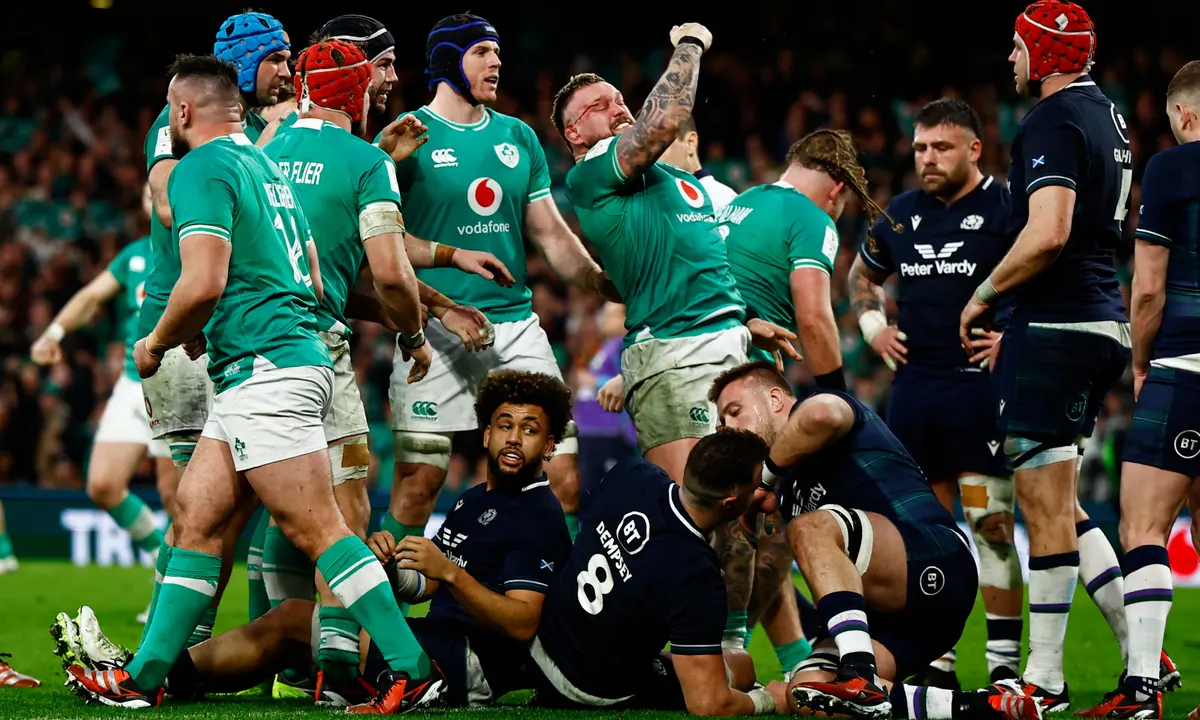
It wasn’t like this in the 90s. I should know, I was there. Ireland lost over and over and over again in the Six Nations to the point that even scoring a try in a game – never mind winning it – was something worth losing the head over. We used to love the idea of flipping off the All Blacks at the end of a haka because, well, it wasn’t like we would be beating them at the rugby so we might as well have fun.
The idea that, in the future, Ireland would be winning Six Nations titles and feeling mostly “yeah, nice, good one” about it rather than getting lost for a few days slugging pints was fanciful to these people but… that was a long time ago. We “won” our last wooden spoon in 1998. In week one of the then Five Nations, we lost at home to Scotland. Our head coach at the time, Brian Ashton, resigned afterwards to be replaced by Warren Gatland.
In week three – we had a bye-week in week two – we lost away to France. Then we lost 21-30 to Wales in Lansdowne Road a week later, before finishing off the tournament with a 35-17 whooping over in Twickenham. If you told the people watching back then about the success Ireland would have in the next 11 years, never mind the unprecedented success of the last 10 years where we’ve won five out of the ten available Championships, they wouldn’t have believed you.
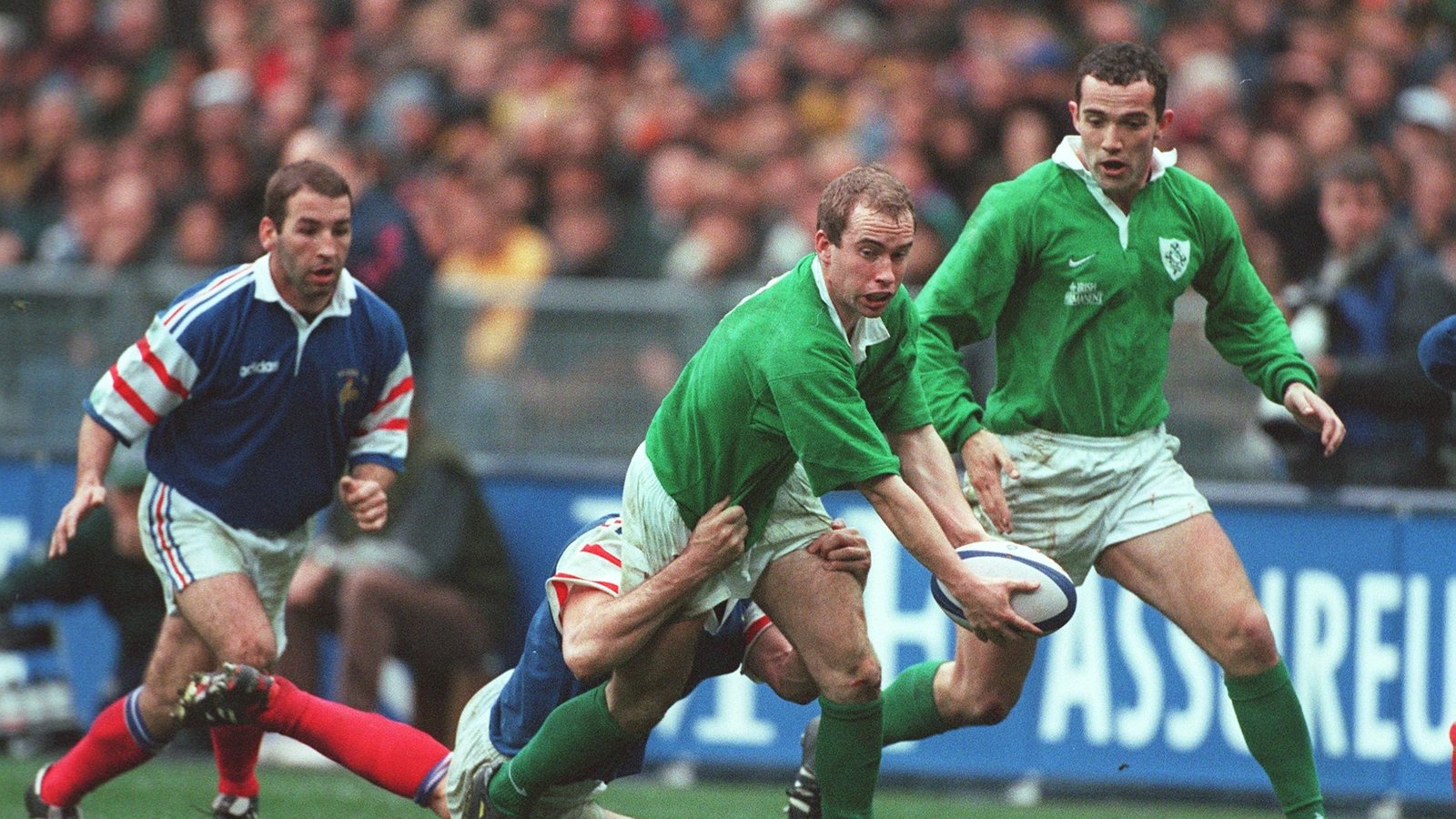
But that’s how time works. You only see how long ago it was when you look at the photos or see it on TV but it was a long time ago.
If I went back in time and told my sixteen-year-old self in 1998 that, in 2024, I’d be running a rugby website on the internet – the thing that goes beep boop on the family PC when I want to look up very low-quality wrestler music – in 2024 I’d have probably said, oh my god you’re fucking bald?
It was 26 years ago.
My internal metrics tell me a lot of my subscribers are between the ages of 18 and 25 so, youthful and vigorous as they are, they have no memory of the two wooden spoons Ireland picked up in the 90s, or that Ireland only won eight games in the Five Nations between 1990 and 1999.
Since then, the world has changed multiple times over. Irish Rugby has evolved to the point that it’s unrecognisable. The memory of when we were rubbish is still there but how long do we let that define us? There is a group of people who are reading this right now who only know Ireland as being competitive at the top level at the very least.
Success is expected now, not hoped for.
And I think when you appreciate that expectation as a good thing, rather than “pressure” or a “jinx”, you can truly begin to shed the small-time mindset that I believe still keeps us on a tier below New Zealand, South Africa and even Australia, England and France in some ways, despite recent results.
We are one of the best teams in the world and should achieve results commensurate with that. When we look through this lens we see the truth; that this was an unusually weak Six Nations that should have seen Ireland win a historic, never-before-seen back-to-back Grand Slam and, while the Six Nations title is more than welcome for even just the money it brings, we can’t lose sight of the fact that our performances degraded from week one to week five, trophy or not.
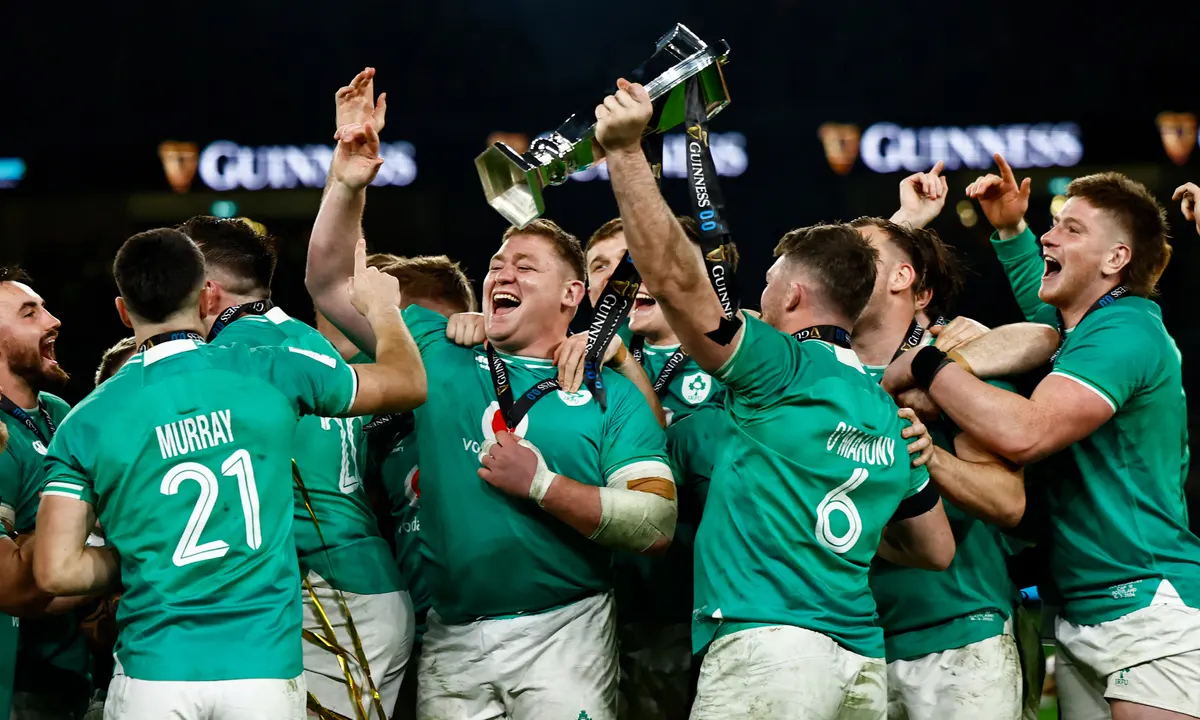
We can look on the bright side, and appreciate the achievement for what it is but also try to pull apart what we saw against Scotland and why, at times, it felt like a regression from what we saw at the World Cup.
***
If Ireland looked tired and flat in this game, it’s probably got a lot to do with the 41.2 minutes of Ball In Play – one of the highest Ireland have played in the last year or more.
Against France, there were 35.3 minutes of BiP. Against Italy, it was 38.7 minutes. Against Wales, it was 43 minutes – the highest of the tournament – before dropping back to 34.4 minutes against England.
Both Wales and Scotland would engage in high BiP games for more or less the same reason; essentially looking to burn Ireland out on-ball and counter-punch us on transition. Wales blew it by conceding too many penalties at the scrum blowing key transition defensive sets with errors or penalty concessions.
Scotland, on the other hand, almost managed it perfectly.
They did so by muscling up in close on repeated 5m sets – lived on the edge at times – but mainly by off-balling Ireland with long counter-transition starter kicks, sticking with our backfield transition runners, swamping our forwards on on the next phase of offensive transition by cluttering their tip on and screen lines and stuffing our ability to short pass around obstacles by filling the field and baiting us into kicking to space.
Before the game, I saw Matt Williams talking about Scotland leaving space in the backfield as if it was some kind of mistake they had forgotten to address as opposed to a key part of their plan against teams they expect to give up a lot of possession to, which is most teams.
I wrote before the game that Scotland are, essentially, playing off-ball rugby these days, so conservative is their kicking game from almost everywhere outside the opposition’s 10m line. In many ways, they play quite similarly to England except their kicking focus is mostly off #10, as opposed to #9.
Scotland knew that their plan would see them defending in their own 50-22 zone for long periods but they make calculated gambles by playing a 14-1 pendulum defensive system in this zone to ensure Ireland couldn’t pick off any soft edges or isolate players in the 3/4 space.
White or Russell would kick long from defensive positions but, crucially, keep the kick infield. Scotland wanted a high ball in play time to tax Ireland athletically. Defending is easier, from a cardiovascular perspective, than attacking is. Especially if you run a pretty high-speed 3-2-X system that has a lot of pass action and, following from that, a lot of rucks to support.
So what Scotland did was the following;
Kick long and infield to bait Ireland into a transition. Ireland will always look for the middle of the field on long transition runbacks. With Larmour playing, instead of Keenan, Scotland knew they would have more time to charge upfield on defensive transition as Larmour can get lost stepping around beating empty defenders without a subsequent linebreak.
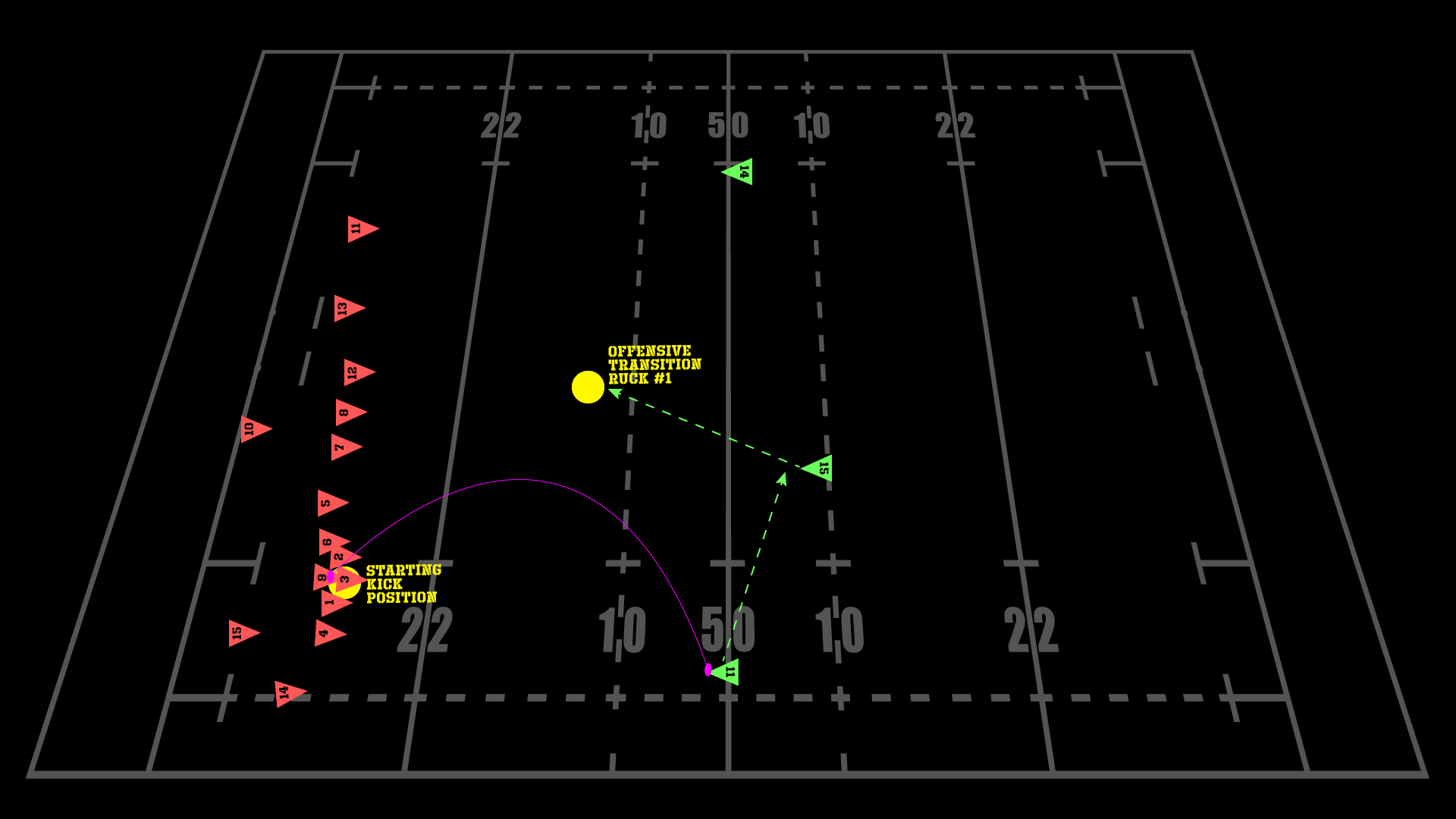
Doris, Aki, Van Der Flier and Beirne are usually the first Irish breakdown specialists to arrive at these central transition rucks, so the key for Scotland is for their core of midfielders and light build back row – two small forwards and a tackle-focus combo-flanker – to meet Larmour or Lowe or Nash or Crowley at that first central ruck.
From there, Scotland could harry Ireland in the tackle with attempted choke hold-ups – to draw Irish ruck support to the contact point – and then have one man go at the ruck when they aren’t bound or capable of being bound to that point.
This slowed our possession and mostly ensured we had basic options to work with on the first phase of the kick transition.
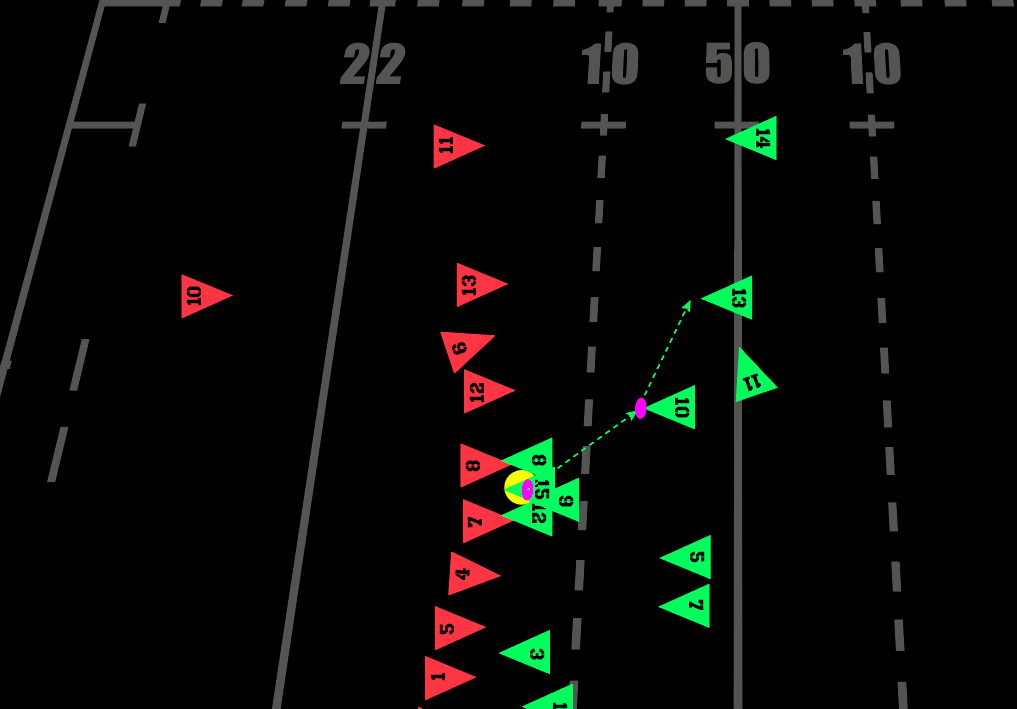
In this zone, Scotland would go full 14-1 on the defensive press to ensure that we couldn’t pass around them. Scotland didn’t blitz as hard as England did either because they were wary of Ireland using layers to break that blitz, as we did against England and France. They stayed out of rucks they could be bound in and gave Ireland no corners to play around.
So Scotland jockeyed instead of blitzed, stayed active on every contact point off #9 to make sure we couldn’t tip on or screen pass guys into space and, to boil it down, they said “use your footwork because we will always have numbers to cover”.
Ireland are a team with a high Pass Per Carry ratio in almost every game we play with, specifically, the highest number of short passes in the tournament. This translates into our forwards passing more than any other team – tip-ons or screen/sweep passes – and our outside backs making short, choppy passes to looping options in the second/third layer of the attack. This is our answer to teams who try to blitz us; we try to pull out their blitz and pass around it with a specific blitz-breaking structure.
Scotland made life difficult for us by… not blitzing. Even in the above sample, look at how Kyle Steyn behaves on the edge of the play. He doesn’t shoot up on Henshaw like this.
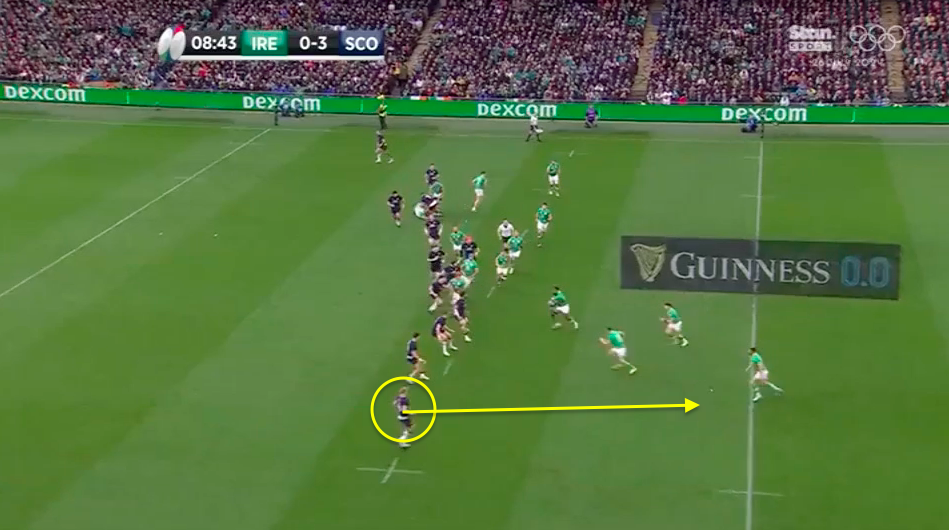
He… waits. And he jockeys. So now Ireland can’t play around him so have to come back inside. Even in the build-up to this pass, you can see the limitation of playing a 3-2 forward shape on settled phase play. When Crowley progressed on phase two in the clip above (which was from a won Irish restart) you can see how playing with two forwards in that pod leaves a lane open for Christie to advance into without a blocker.
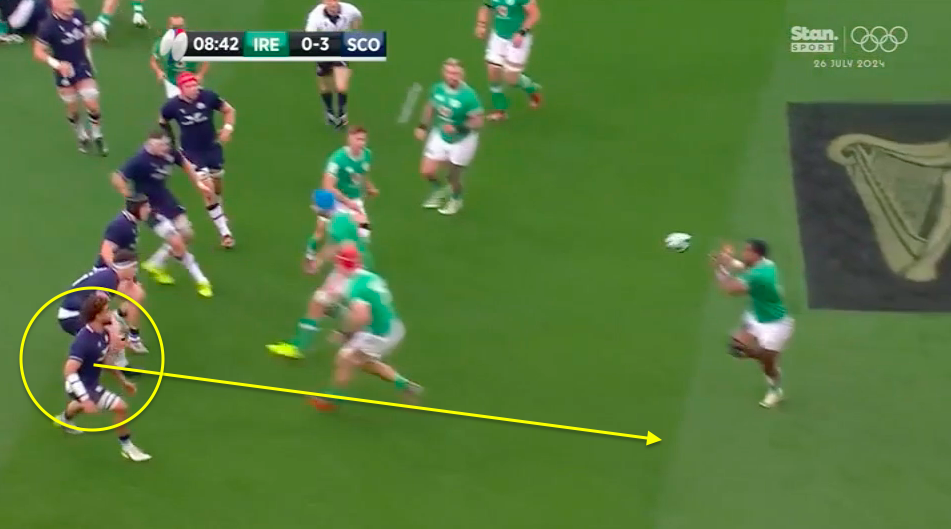
When neither of Ireland’s midfielders are partocularly “creative” in their build – none of the primary four midfielders Ireland use have that profile – I feel this limits us against teams who understand our playing concepts.
Scotland were happy enough to take the deep lineout here off Crowley’s kick because they would have accepted and drilled scenarios just like this.
Watch how they played off the lineout win – a long exit they keep infield where they meet Ireland in between the 15m lines with their backrow and midfield. Watch how little compressions Ireland have to work with as we progress through this sequence.
In the end, we have to kick again but Scotland will live with that. They had us numbered up all the way through that sequence and get the ball back to live again with Ireland having burned a little more energy.
Scotland’s defensive structure was built on these concepts. Kick long, beat Ireland to the transition ruck, push us to the edges – by jockeying rather than blitzing and stay alive on every ruck. You can see every bit of that concept on this long exit from a 22 drop out, which is the concept laid out in black and white.
Look at how little Bundee Aki has on this phase – every option other than carrying it directly is cut off to him.
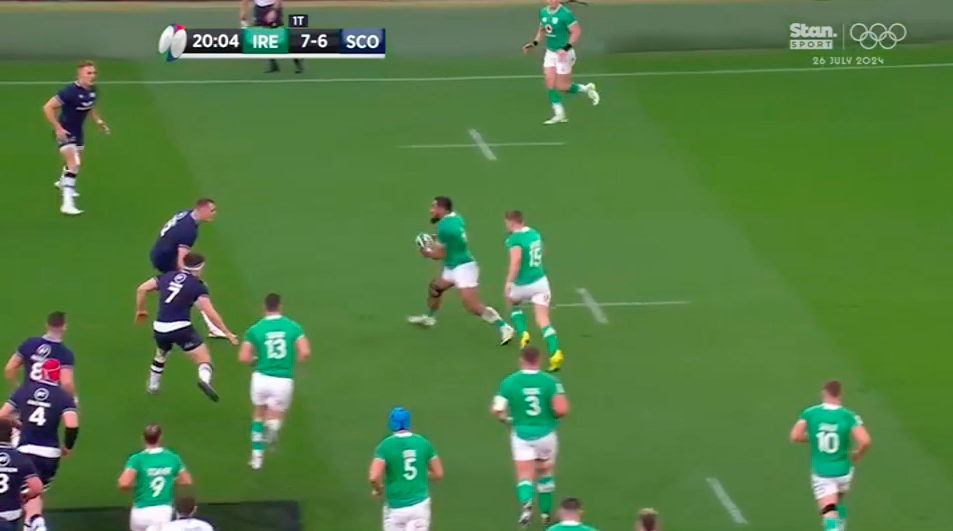
All that buys time and energy for Scotland and makes the next phase that bit harder.
Look at how Scotland paid close attention to our carriers body shape too. Ashman only steps off Beirne’s dummy inside line when Sheehan commits to the carry with his shoulder. That gives Ashman the cue to double tackle him with Christie.
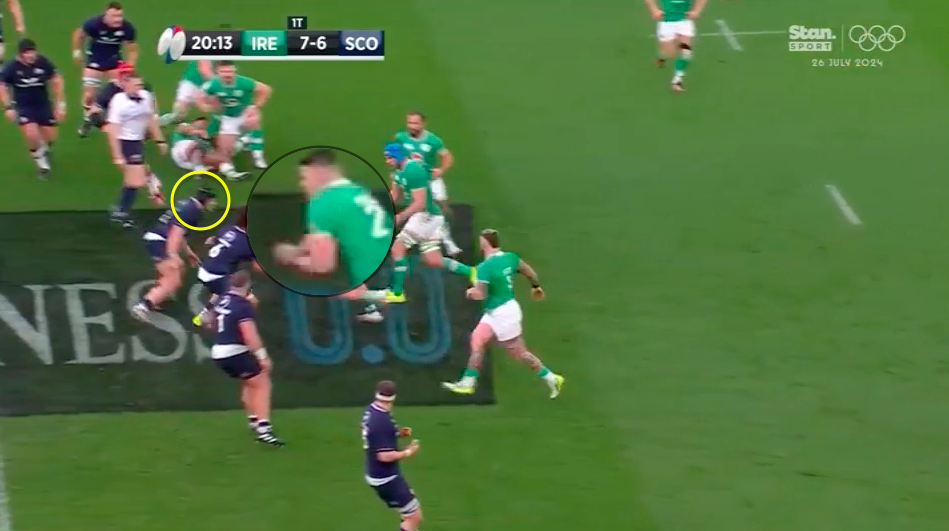
That took both cleaners beyond the contact point when Sheehan got dominantly stopped in the tackle. Neither Beirne or Porter could legally clean out Christie from the point where he makes that ruck entry.
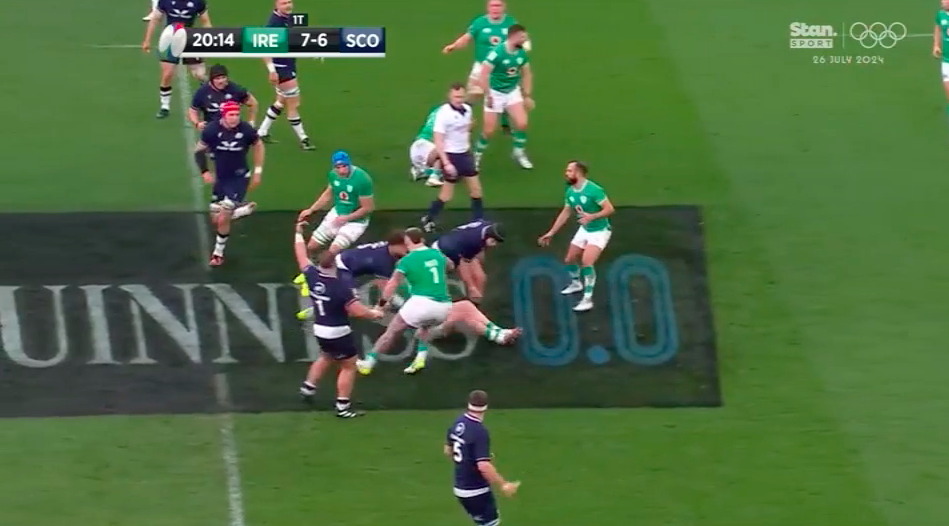
And that’s how Scotland made life so difficult for us. A great scheme that worked at an Irish weakpoint (slow on offensive transition, only one power forward build player in pack, lack of true creativity in outside backs) combined with a great attitude and a bit of luck at times.
In truth, Scotland could easily have nabbed this game right at the end. They took what England did and tilted it so it made sense for their base game plan. Sure, there was luck involved along the way – as there always is – and Ireland’s fatigue would have had as much to do with the four previous rounds as it did Scotland’s intent for a high ball in play time here, but it is a note of concern for me.
If teams accept that we don’t really play direct – or choose not to – that opens up the possibility for what Scotland did here, to use our short passing against us until we literally run out of space. The Springboks will have taken note of that, for sure. The Summer and the high veldt awaits
| Rating | |
|---|---|
| Andrew Porter | ★★★★ |
| Dan Sheehan | ★★★ |
| Tadhg Furlong | ★★★ |
| Joe McCarthy | ★★★ |
| Tadhg Beirne | ★★★ |
| Peter O'Mahony | ★★★ |
| Josh Van Der Flier | ★★★ |
| Caelan Doris | ★★★ |
| Jamison Gibson Park | ★★★★ |
| Jack Crowley | ★★★ |
| James Lowe | ★★★ |
| Bundee Aki | ★★★ |
| Robbie Henshaw | ★★★★ |
| Calvin Nash | ★★★ |
| Jordan Larmour | ★★ |
| Ronan Kelleher | ★★★★ |
| Cian Healy | ★★★ |
| Finlay Bealham | ★★★ |
| Ryan Baird | ★★★ |
| Jack Conan | ★★★ |
| Conor Murray | ★★★ |
| Harry Byrne | ★★ |
| Garry Ringrose | ★★★ |
***
All in all, this was a positive tournament for Ireland.
Winning is always good and we can never get bored of it. Navigating to a trophy with a brand new option at #10 and incumbents like Hansen being replaced by Nash with no dramas, while also upscaling Baird and McCarthy to more prominent roles is genuine progress for a team that is beginning to age in key positions.
When I started to think of my TRK Player of the Championship I had to ask myself the following; who, if they were missing, would be the biggest loss to this team based on what they produced in all five games.
You could say Tadhg Beirne, and it’d be true but it doesn’t quite feel right. Dan Sheehan, too, would be a good fit for that description and, had the last two games not happened, you could have added Doris there too.
Crowley would be a good narrative pick but no – he’s not quite at that elite level… yet. In this, I think it’s simply a matter of time. Jamison Gibson Park is elite but he didn’t feel right either. Bundee Aki has been nominated for the player of the tournament but would Ireland have been lost without him? No. We’d get by.
That’s why my Player of the Championship is…
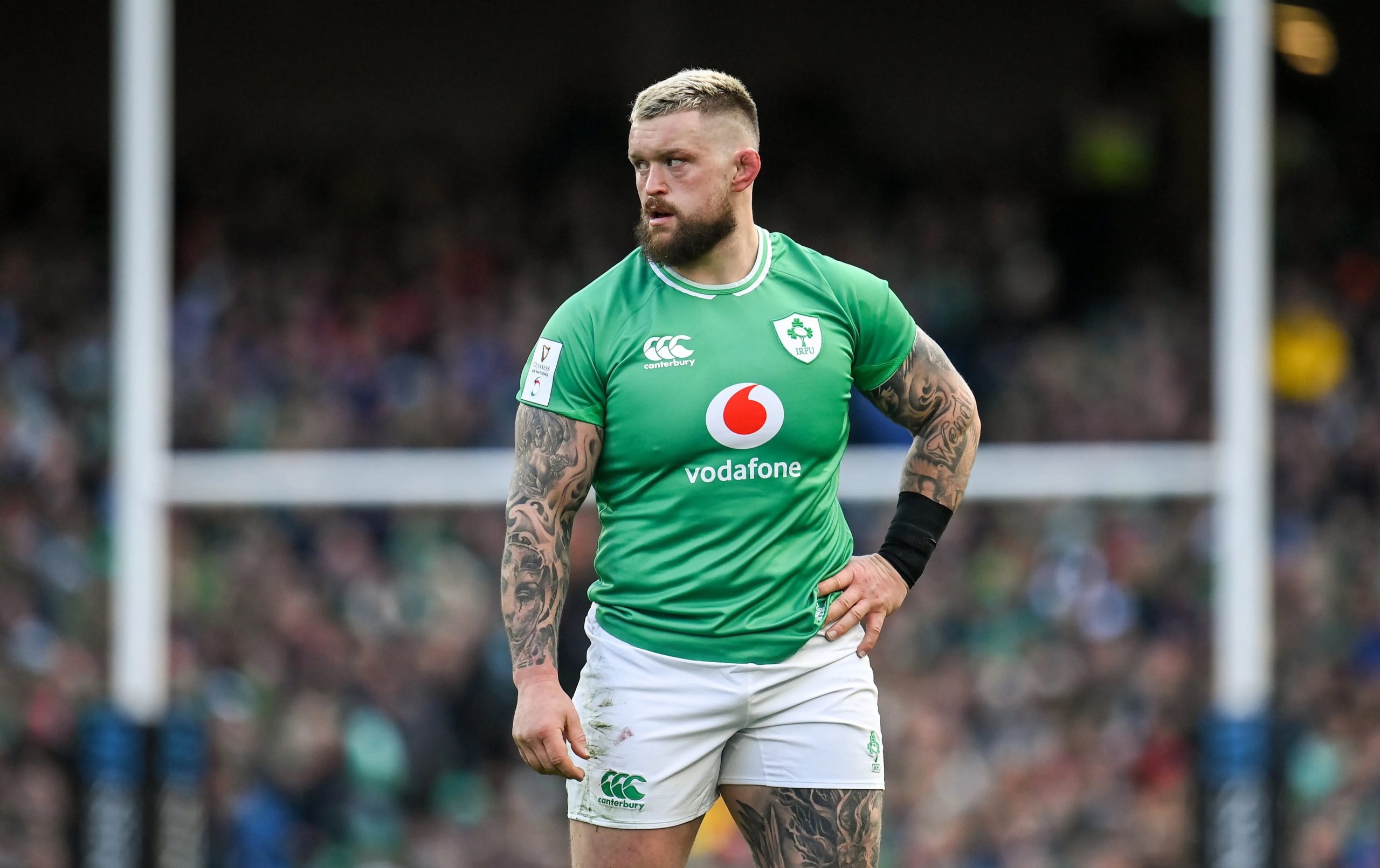
Andrew Porter
He is irreplaceable. Yes, he concedes a lot of penalties – the most per game of any player in the tournament – but it doesn’t matter. Yes, he runs into trouble against super-heavyweight tighthead props in the scrum, but that only matters some of the time. Every other time, Andrew Porter is synonumous with this winning Ireland team.
Quite simply, without Andrew Porter I think we are an infinitely worse team. He is irreplaceable. I thought back to the France game and the rough day he had in the scrum. Do we win that game at all without Porter, scrum penalties and all? I don’t think so. Genuinely. He is every bit the generational talent that Brian O’Driscoll, Johnny Sexton, Rob Kearney, Paul O’Connell, John Hayes and Ronan O’Gara were before him, and he’s doing it right now. For me, he’s more important than every other member of that starting pack because they, in most cases, have someone that can possibly duplicate what they do on field. Very few props playing the game right now bring what Porter does to the level he does it, even with the issues he has in the scrum against certain props.
When he plays, Ireland win way more often than not to the point that I can’t think of another player right now who, if they were unavailable, would critically damage us.
Andrew Porter – he’s a modern day great of the game.
