


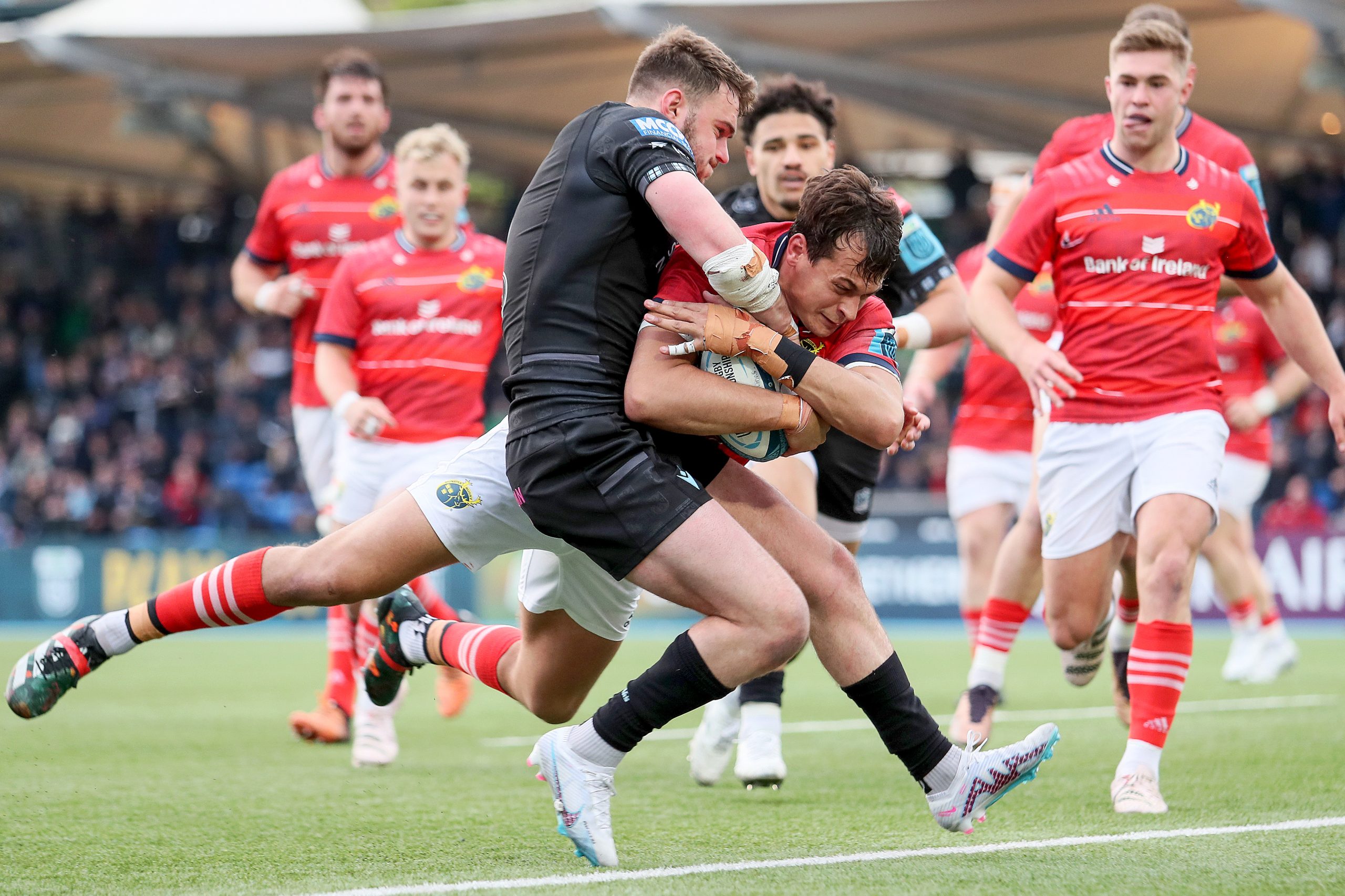
It’s hard to talk about Irish-qualified players with eligibility elsewhere in the test rugby world without falling into weird rhetorical territory. The minute, the second you talk about capping someone who could play for Ireland because they’re eligible for someone else, a lot of the immediate reaction is emotional.
“We can’t start capture capping guys!”
“It’s not in Andy Farrell’s remit to do that! It’s not in his remiiiiiitttttttttttttt!”
“Remiiiiiittttttttt!”
“There are dozens of players ahead of him and you want him capped? By Ireland??? You moron. Idiot. Buffoon.”
I saw all of that and more this week when it was revealed that the “signed by Munster with help from the IRFU on a three-year contract” Antoine Frisch had been called up to the French Six Nations squad ahead of their game against England before later being released from camp as of Wednesday the 13th of March.
Munster fans took to social media earlier in the week to voice their displeasure because, well, they’ve seen this story before with Ben Healy and, most recently, Jean Kleyn.
In Jean Kleyn’s case, Munster fans were told for years that he was “a good club player but not good enough for test rugby” before he redeclared for the Springboks after his Irish eligibility lapsed due to non-selection by Andy Farrell. First, we were told he was there to get the Irish lineout calls. Then, when it was realised that he wouldn’t know the Irish lineout calls anyway, we were told Kleyn wouldn’t play in the Rugby Championship. When he did that, we were then told he wouldn’t make the World Cup. When he did that, we were told he wouldn’t play a big role. When he played in the World Cup final on the winning side, we were told…. you’ve got to pick between him and RG Snyman for next season.
Who were we told this by? The Discourse. The Discourse is very important because it reflects the emotional equilibrium of any bubble where one thing is spoken about intensely. In this case, that bubble is Irish Rugby. When you are engaging with The Discourse, various warring parties get to make stereotypical assumptions about why the others are saying things that upset them before characterising their points in such a way that they can be easily dismissed so no one ever has to change their minds.
Munster fans are complaining about Frisch? Oh, they must want him to start ahead of Garry Ringrose. Are they delusional? Yes, they’re delusional. That’s it. Phew! Now I don’t have to look at the wider points they’re making.
Welcome to the Internet.
When Antoine Frisch who, as of the time of writing, is still technically Irish Qualified, made a move that would make him non-Irish qualified and then almost sure to leave Munster sooner rather than later, it shined a spotlight on the use of playing resources in Irish Rugby.
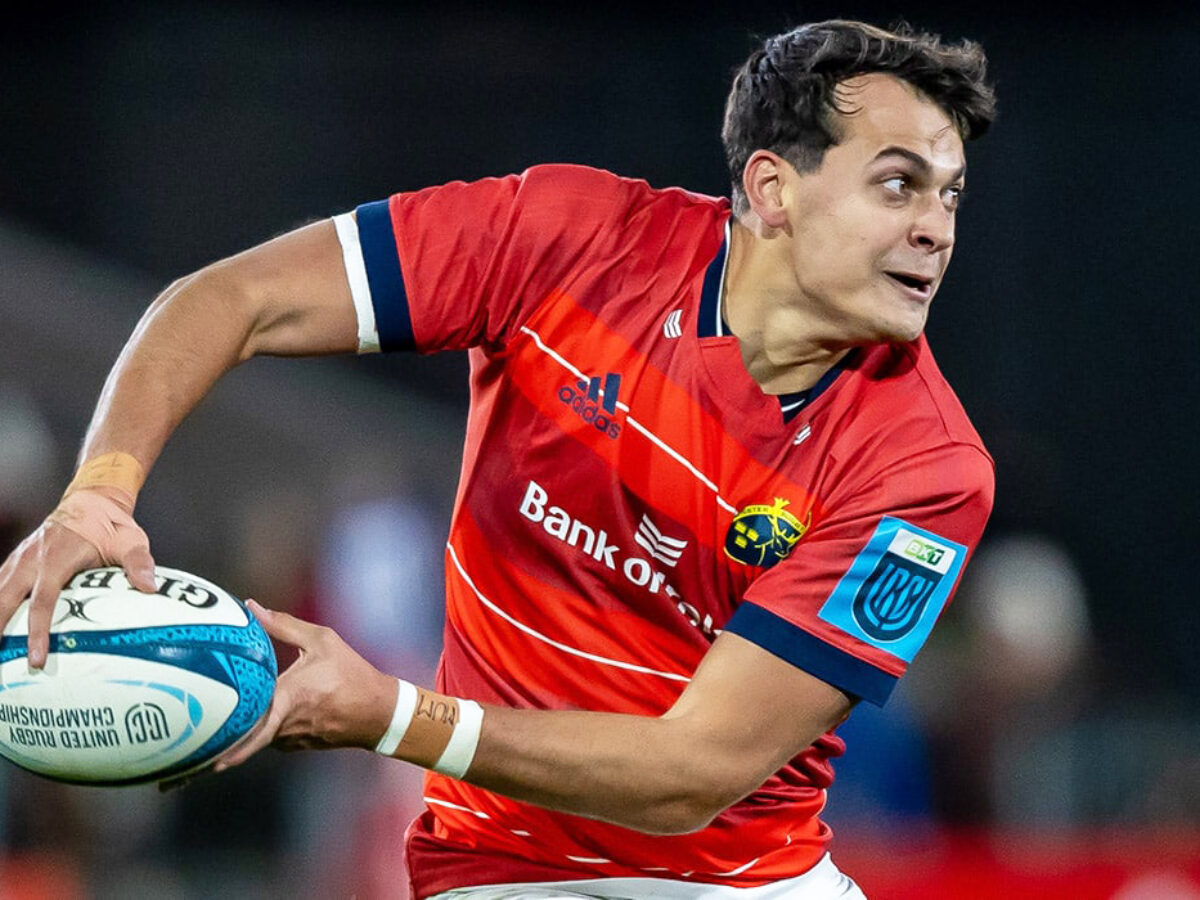
My point is this; all players are resources in this closed-loop eligibility system we have on this island. You can’t play for Ireland unless you’re in Ireland – assuming you’re eligible. That’s the unwritten rule that everyone understands here. As a result, players who are capable of possibly playing test rugby at the highest level for Ireland are valuable resources in a system where you have around 200 professional players.
At the moment, we have guys we know are test quality, guys we know are not test quality, players who are close enough to test quality and then the unknown – guys who we don’t know whether they’re good enough for Ireland or not.
These players can be left out of squads for several reasons;
- They aren’t playing well enough currently to warrant escalation.
- They don’t have the relative athletic capacity to play test rugby based on their position. This is not vague and is a measurable quality. Despite playing well, these players will usually not get capped.
- They are playing well and do have the athletic capacity to play test rugby but they are currently in a packed depth chart and including them would dilute the reps for the guys we already know are test quality and that are close enough to test quality while also disrupting the cohesion Ireland rely on to win games.
Antoine Frisch is one of those “unknown” players, like Mike Haley, who seems capable of playing for Ireland at test level but we’re not sure because we haven’t seen them do it.
Let me get this out of the way first – I don’t think Antoine Frisch has been playing well enough this season to warrant an immediate call-up to the Irish national team as a starting player ahead of any of the incumbents. But that’s not what I want to happen. Instead, I want Ireland to use the unlimited number of places they have in their training camps ahead of the Six Nations and the summer tour to South Africa to look at guys. To get them into the test system, to show them that they have a path to playing for Ireland at the highest level, to give them a chance to run the reps in training and then cut them if needs be – they’ve got the intro they need to make a case again.
Maybe they’ll be like Calvin Nash, who missed out on the first cut before the World Cup but who used that camp inclusion as a springboard and now he’ll have played in all five Six Nations games this spring. Maybe they won’t. But at least they’ll know that playing well leads to a tangible path to a green jersey.
Talk to enough players when there are no live mics or journalists around and they’ll tell you that Andy Farrell’s Ireland can be a confusing place to be if you’re on the fringes of the squad. Goal posts move, regularly, and communication can often come across as quite vague if you’re not an immediate priority. There’s also the very real idea out there that Farrell is so loyal that it’s often as hard to get out of the squad as it is to get into it. Guys are told that they have to improve their form, they then hit the markers they were given but the call never comes, even when the incumbents they were ostensibly competing with had been coasting to the same callups time and again. Sometimes the only way to get a chance is by having two or more guys ahead of you get so injured that even Andy Farrell can’t include them, as he did with multiple players ahead of the World Cup.
None of this matters when you’re winning, of course, but it runs up a bill to be paid when the wins dry up, as they always do.
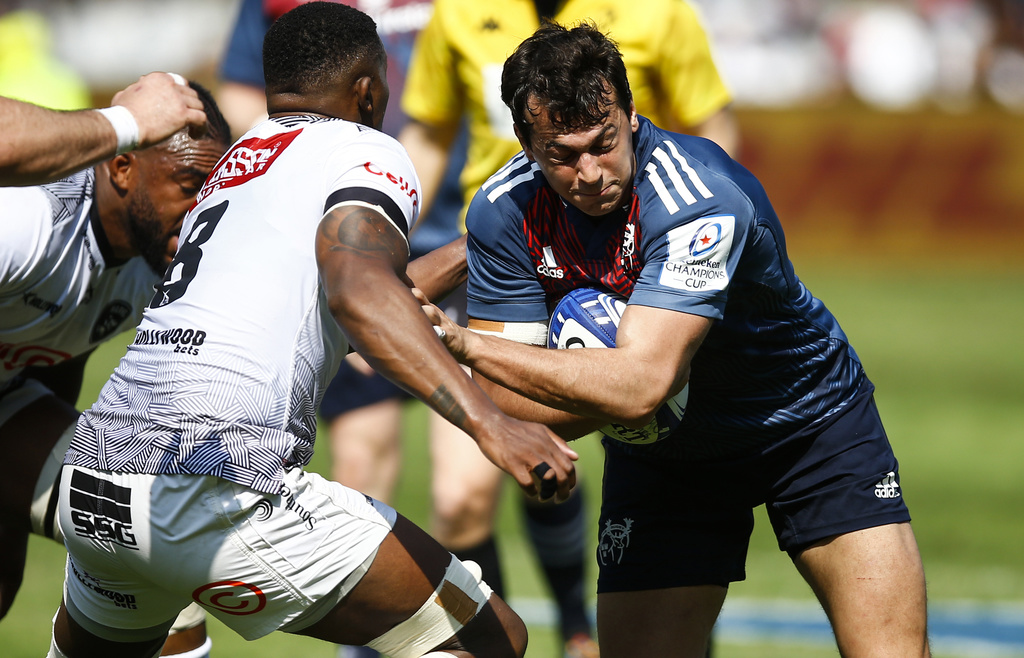
Andy Farrell’s Ireland seemed to do most of their “experimentation” with role builds and selection in 2021/22. Since then, it seems that Ireland were boiling everything down to win the 2023 World Cup. I can excuse the exclusion of certain players and role sets. Ireland knew what worked, they knew the roles that worked and once they stumbled on Jack Crowley and Mack Hansen, it was all systems go for the World Cup.
But that exists outside of the wider ecosystem that the provinces exist in. In that world, the provinces have to recruit and retain talent to prepare them for the test environment. That is literally one of the stated aims of the provinces under the IRFU umbrella. Each province will balance that need to develop test players with the need to be competitive and successful as a standalone entity. You do that by building a squad capable of achieving that success. That will be done with players from your academy, other Irish players out of other provinces’ squads, the odd NIQ player and IQ players – guys born elsewhere who have an Irish qualification through parental or grandparental links.
Finding IQ players who are good enough even to play Champions Cup rugby at a high level is vanishingly rare. It’s a short list.
Mack Hansen (Australia), Mike Haley (England), Will Addison (England), Rob Herring (South Africa), Finlay Bealham (Australia), Kieran Treadwell (England), Joe Joyce (England) and Antoine Frisch (France/England). That’s it. That’s the list, with the country they were mainly eligible for included.
The provinces’ ability to contract these players at a palatable price depends on their continued eligibility for Ireland AND their interest in doing so. Players who only have one eligible nation in the Irish system have one option if they want to play test rugby and that’s to stay in Ireland.
Players who have more than one option – like Ben Healy – can take time to assess their options because they know they have other avenues. This then plays into contracting.
How much would it have cost Munster to make Ben Healy give up the test rugby that Gregor Townsend was waving in front of him? More than we were willing to pay, so we lost the player and Ireland lost a possible option at #10. That’s one example. Here’s another. For the few months when Munster had to talk to Tadhg Beirne about a contract when talks broke down between Nucifora and his agent, the price for two years of Tadhg Beirne went up because the absence of a central contract offer at the time – he would later get one and sign it – told Tadhg Beirne that test rugby could not be guaranteed so Munster would have had to pay him to NOT go to France, where he would get paid a fortune and not play for Ireland.
That connection to test rugby is the key to a lot of the province’s contracting. If you have the possibility of test rugby, it keeps the price down but if the achievability of test rugby is unrealistic, it has the effect of inflating the price.
Joe Schmidt capped 63 players between 2013 and 2019. That’s an average of 10 new caps per season.
Andy Farrell has capped 34 players between 2020 and 2024 to date. That’s an average of 8 new caps per season. Quite a drop in relative terms. Schmidt mostly capped new players on summer tours and in autumn internationals, something Farrell has mostly avoided in the last two years to build momentum. As a result, he’s only capped 11 players in the last two years for a total of 93 caps between them.
If you were a high-potential Irish qualified player being offered test rugby by one of the provinces right now – would you believe that offer of test rugby was realistic? No, probably not.
And that relates directly to Antoine Frisch this week.
When it comes to Antoine Frisch, here’s what we know.
- He is still Irish-qualified at the moment and will continue to be so on a technical basis until he is capped by France (or England).
- There is a question that his acceptance of a call-up to this Six Nations camp and subsequent return before the end of the week is a precursor to including him on France’s summer tour of Argentina.
- If the IRFU believe that is the case, it will be almost impossible for Munster to hang onto him for another season on his current contract which I believe to be a PONI deal part funded by the IRFU.
- Antoine Frisch’s contract expires in July 2025 but I do not believe the IRFU will pay him to play for France, so I then believe he will be offered a release to one of the three or four French clubs who are currently interested in him.
- I do not believe they would have to buy out that contract, as it doesn’t make sense for them to do so with one year left on the deal.
- Frisch wanted to play for Ireland even as recently as a few weeks ago but France have had an eye on him from the moment he joined Munster – they tried to get him into the French Barbarians in his first few weeks here.
- In just calling him straight up, Galthié has shown Frisch that he doesn’t need to go on an Emerging France tour, play for France A, or try to outperform the undroppable perfect version of the incumbents that exist in the coach’s mind. Galthié has told him with this call-up that it can be that easy to play test rugby.
- It is unknown at this time what Frisch’s aims are but it is believed that he is now looking at France primarily given he accepted the call-up in the first place.
- It is incredibly unlikely that Ireland will cap him now as a result, which means I believe an early departure is almost inevitable.
I don’t believe we have the depth in this country to turn our nose up at spreading the net a bit wider when it comes to including guys in our test systems. If a guy gets one or two caps and no more, so what? If he’s in a few camps, so what? You’d swear we were above capping guys to make sure we have them in our system. Maybe they aren’t good enough today but, in a year or so, who knows what the game plan might need. I think it’s smart business to make sure guys like Antoine Frisch, Mike Haley and others see a path to a green jersey here because it deepens our senior playing pool. That doesn’t mean you have to start them over whoever your faves are, it just means you have to reward them for the good performances they’ve already shown repeatedly with a few call-ups to the test camps.
Munster will do fine with Antoine Frisch. It is an inconvenience and will require patching up if he leaves before 2024/25, but it is far from a grievous blow with the talent we have coming up and that we already have in the squad. If it came to it, I really do think we could make Sean O’Brien and Alex Nankivell work at a high level for a season if needs be.
Ultimately though, if we want to use the IQ system we have to show players that there is a realistic pathway that doesn’t require mass injuries to progress up to the highest level.
I’ll leave you with this.
Imagine a universe where Mack Hansen continued to tear it up for Connacht the season he joined and where Ireland didn’t have a few injuries on the wing in Spring 2022. Imagine that he kept missing out on camps for Ireland that year and next and, in the summer of 2023, he got called up to the Australia squad by Eddie Jones.
Imagine how Connacht fans would have felt. Imagine how sure they were that Farrell had made a mistake. We know that’s true, but in that universe, those same Connacht fans were being told that he was behind loads of other players and didn’t deserve it. Imagine how they would feel when he was now NIQ and Toulouse came calling.
What would they be told?
“We can’t start capture capping guys!”
“It’s not in Andy Farrell’s remit to do that! It’s not in his remiiiiiitttttttttttttt!”
“Remiiiiiittttttttt!”
“There are dozens of players ahead of him and you want him capped? By Ireland??? You moron. Idiot. Buffoon.”
