


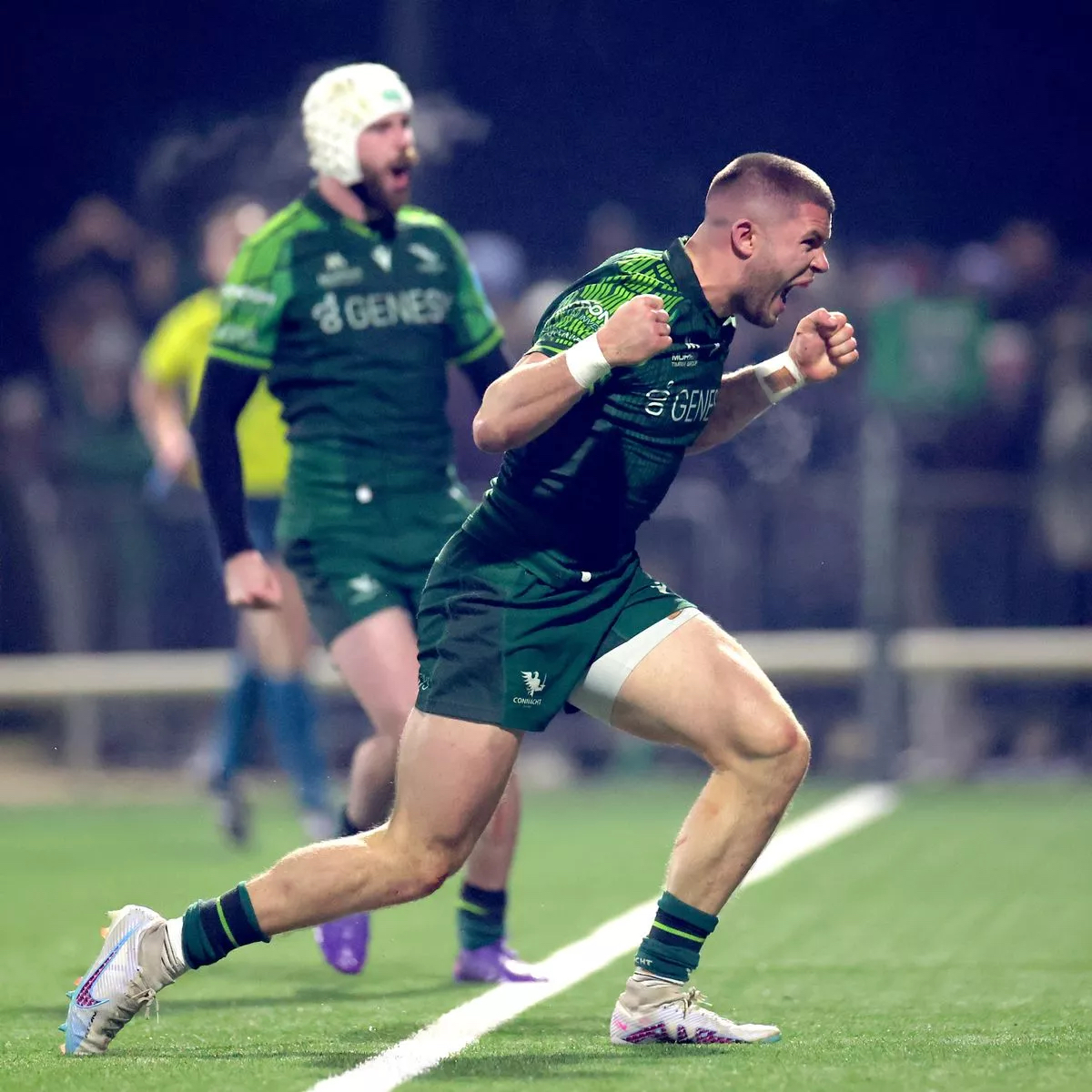
For years now, Munster have been crying out for size and power in the front row – loosehead prop or hooker or, ideally, both – so when Munster’s first signing for next season is a winger, there was naturally a bit of angst amongst the fanbase.
There shouldn’t be – not for a player like Diarmuid Kilgallen.
First, a bit of background on the player.
Kilgallen is from Eadestown in Kildare and went to school at Cistercian College, Roscrea and played some Leinster Senior Cup for the school. He missed out on Leinster underage but Connacht had a look at him for their u19 squad. It wasn’t long before he made his way to the Connacht sub-academy and then the academy proper, while making the same u20 Ireland squad as Jack Crowley – that he missed out on due to injury – along the way.
One thing that stood out about Kilgallen from a very early age in Connacht was his athleticism. At 6’4″ and 95kg, Kilgallen has all the physical traits of a power winger but he’s not just about size. When he spent a few weeks with the Irish Sevens, he impressed Greg O’Shea so much that he had this to say about him on Sports Joe a few years back after Kilgallen scored a try against Ulster on the opening day of the season.
“He came into the Sevens squad for a few weeks and his scores are off the charts – his jumping, his speed. He’s one of the best athletes, if not THE best athlete I’ve ever seen in the last while.
“He’s definitely up-and-coming, and I can see him doing this more often, every week, even, if he gets the game-time.”
Those qualities all immediately stand out about Kilgallen. He’s big, he’s strong, he’s stupidly quick and he’s got a vertical that wouldn’t look out of place on a basketball court, all while being the kind of physically imposing finisher I think our system needs.
If you give Kilgallen the ball on the edges with space to work in – be it directly with a pass from hand or crossfield through a kick – he can finish from pretty much anywhere. That’s the headline take.
Assigning Roles
Munster’s on-ball system requires certain roles being added to it over time – either from within or signed from without – to advance it to one that regularly competes for trophies domestically and in Europe. Three of the big roles we currently lack in the squad are Power Hooker, Loosehead Power Forward and Power Winger. Kilgallen is our attempt to fill the Power Winger role, albeit with a different type of Inside Winger.
Kilgallen isn’t a traditional power winger in the mould of Nemani Nadolo, George North, Julian Savea, Duhan Van Der Merwe, James Lowe or Marika Koroibete but he could well be described as a Heavy Strike Runner in the same mould as a Mark Nawaqanitawase or a Damian Penaud*.
* This isn’t to say he’ll be as good as Damian Penaud – one of the best wingers in the world and an all-time great – but they do have very similar physical and positional traits.
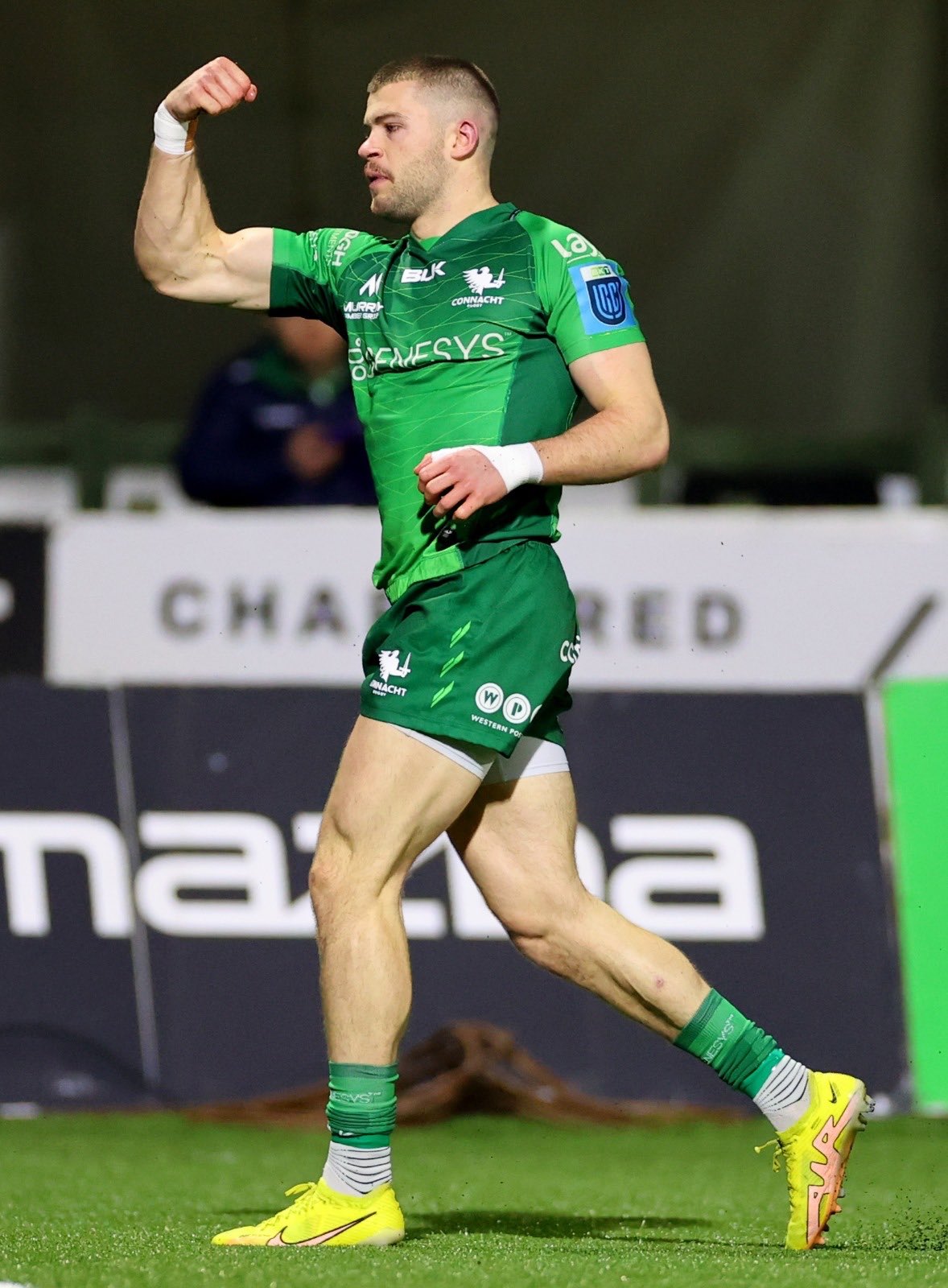
I’ve covered the different type of Inside Wingers before in detail and my traditional role types in that bracket were;
- Power Wingers are big, primary ball carriers capable of running hard, straight, collision-winning lines in the wide channels (or the inside tight channels) that compress defenders, win deep edge positions or finish off cluttered try-scoring opportunities..
- Layered Power Handlers are bigger, more durable wingers that are capable of moving inside the ruck to act as handling options off #9 that allow other primary creators to move to wider handling or running positions while also being strong enough to be a live-carrying threat in tight contact.
- Heavy Strike Runners are taller, quicker Inside Wingers that run a lot of the same lines as a Pace Finisher Outside Winger while also using a lot of their involvements as looped options off their wing that can hit the line anywhere inside the first ruck or deep in the second/third layer of the attack. They have to be bigger, stronger and more durable to deal with the midfielders or small forwards they will often be running against.
An Inside Winger will usually be 6’2″ or taller with no upper limit on height or weight. You’ll have guys like Duhan Van Der Merwe (Power Winger), Nemani Nadolo (Power Winger), James Lowe (Power Winger/Layered Power Handler), Madosh Tambwe (Heavy Strike Runner), Robert Baloucoune (Heavy Strike Runner), and Damian Penaud (Heavy Strike Runner/Layered Power Handler) who all fit this role grouping in one form or the other.
Using an Inside Winger in your back three gives you more on-ball options as it gives your primary playmakers more ball-carrying options on the blindside, as inside runners, looped threats or even as auxiliary handlers that allow a pacey, agile #10 to slide into more space.
Kilgallen is purely a Heavy Strike Runner. That doesn’t mean he’s not capable of winning tighter collisions but, for me, he’s much better using his pace and frame on transition where his pace over the ground at 95KG is seriously impressive.
A Heavy Strike Runner gives you a natural outlet in edge spaces that punishes teams who compress on a 3-3-X on-ball shape. Kilgallen’s extraordinary pace – watch how he keeps up his top speed with the line adjustment in the clip below – means that he’s the perfect outlet for a kick to the edge or as a guy who can scorch teams who show him the outside.
He’s also really good at securing edge breakdowns and uses his size and pace well there to rack up guard actions and dominant cleans – an important trait in this Munster framework.
Kilgallen is also a very good looping midfielder who doesn’t just stay locked to a wing waiting for the ball. His cruising speed is so fast that he can easily switch wings inside one phase recycle and link in for a back three overload.
At Connacht, he’s shown how busy he can be with these deep loop lines. He’s got a feel for the game that often means his best work is done in that 3/4 space off the second openside back in a progression.
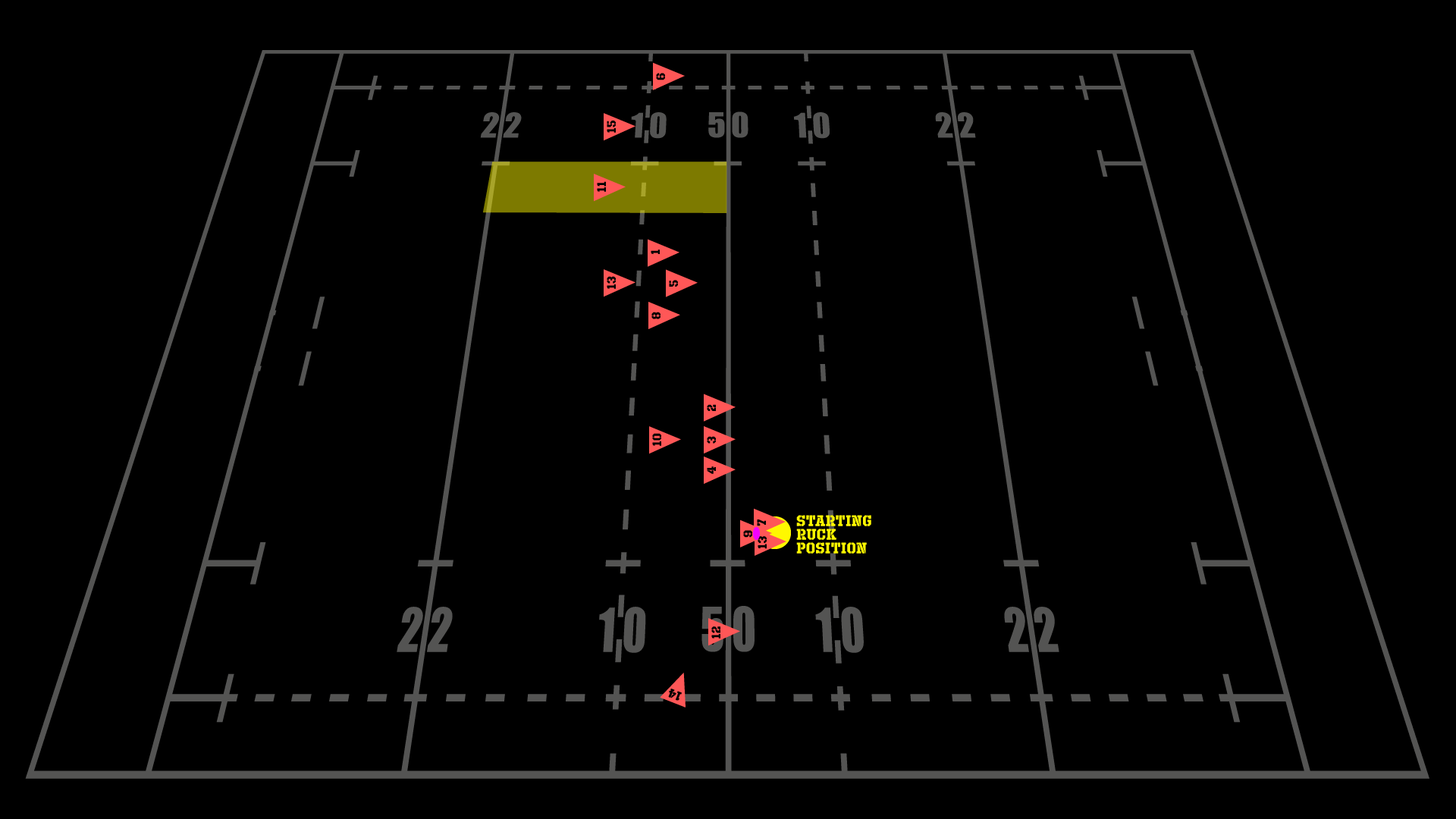
Kilgallen has the pace to arrive late as a support runner coming around the screen from depth at the kind of pace that can’t really be tracked effectively. This is a really good example of the principle. Watch him assess the play from deep – deciding whether to loop across the pitch or not – before waiting for the ball to progress back across the field and setting off on that line the minute Farrell takes possession.
From a Cardiff perspective, Farrell is alone one minute and the next he has Kilgallen outside him for an easy run-in.
Offensively, he adds a layer to our game that we don’t really have in the squad at the moment and he provides a role type we haven’t had in the squad for a good few years.
The downsides? He’s not a massive volume kicker of the ball – not that it will matter in his role at Munster – but his defence is a bit of a question mark, for me. Tactically and positionally, he uses his pace to get himself out of tight spaces – which is fine – but sometimes that leaves him grasping at air on defensive progressions across the field at pace. That’s a clear area for improvement but the biggest thing he’ll need is staying fit. He’s got a try every two games for Connacht across five seasons – including the academy – and he’s found his time curtailed through injury in a lot of them. He’s never got a proper run to capitalise on his talent. Even this season, where he started like a freight train scoring five tries in four games, he’s been literally and metaphorically hamstrung by a serious hamstring injury since mid-December.
That will be something that has to improve, and it often comes down to luck. If he can get 10+ appearances for Munster next season I think he can carve a niche for himself in that Heavy Strike Runner roleset and see significant game time in bigger games.
All in all, a good signing that has potential to look like a great signing pretty early next season, all going well.
