



Teams target certain games in the URC.
As soon as you realise this, you won’t be surprised why teams rotate and change from one week to the next with seemingly no rhyme or reason. At the start of every season, coaching groups will look at their schedule for both the URC and Europe and try to map out how they will achieve their goals depending on the level of their squad.
For Munster this season the first goal is getting the points we need to achieve the potential of this squad, which is winning trophies. That means a top-two finish in the URC so we can, ideally, navigate our way to a home quarter and semi-final while also finishing as a top seed in Europe to get a home run in Europe, if possible. Playing away from home in knockout rugby is incredibly difficult so we want that advantage to make winning a trophy easier, as well as the financial benefits it brings to the club.
The second goal is related to the first goal and it’s “we must make sure we have our best team fresh and available to peak at the business end of the season.” This has to be balanced with winning the games you need to along the way, of course, and your best team or elements of it help you do that, but it’s generally accepted that you can’t play your best players every single week of the season, especially when they also have test rugby to contend with. Injuries can happen to the most well-rested player, of course, but if you use your top guys too much they can and will break right when you need them most so you have to spread their usage around.
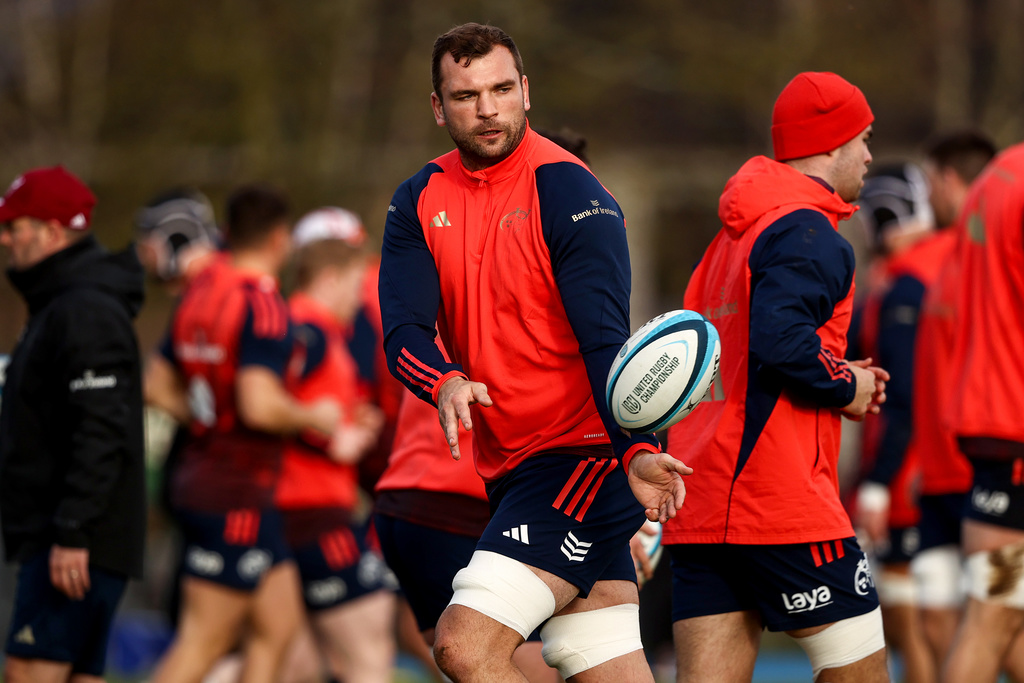
This also fits in with your third goal which is squad development. You can’t play your best team all season long but, if you have a good squad, you can still play a good team almost every week while giving playing opportunities to 1B options, down-chart squad players and young prospects. All of your 40-man senior squad must see some minutes during the season, within reason, so they aren’t just training and playing AIL. There will be exceptions to this, of course, such as when you know a lower-chart player is leaving at the end of the season so you use their projected minutes for academy guys but, for the most part, you’ll be looking to use your squad fairly judiciously so training stays meaningful. You have to balance this with rewarding good performance in training and matches, but it’s a related goal to your overall aims.
Why mention this?
Since the teams were named yesterday, a few people have been asking me why Glasgow seems to have rotated a lot of their top guys out or to the bench. Isn’t this a big game for them?
Yes and no.
In the URC, the most sensible way to approach your schedule is win at home and compete away. Munster know that, on average, 64 points have been enough to finish in the top two of the URC in the last two seasons. Right now, after six games, we have 18 points. That leaves 46 points for us to chase to get into the zone that we know corresponds to a top-two finish. Glasgow also knows this but they’re chasing 39 points after some strong home wins in the last few weeks.
Munster have six home games left, including this one.
Glasgow, Leinster, Zebre, Cardiff, Connacht and Ulster. If we win all those games and pick up a bonus point against Glasgow, Zebre and Cardiff while projecting four-point wins against Leinster, Connacht and Ulster, that gives us 27 points. We will target all of these games with as strong a team as we can field at the time. That leaves us 19 points to attack away to Connacht, Scarlets, Ospreys, Bulls, Lions and Edinburgh.
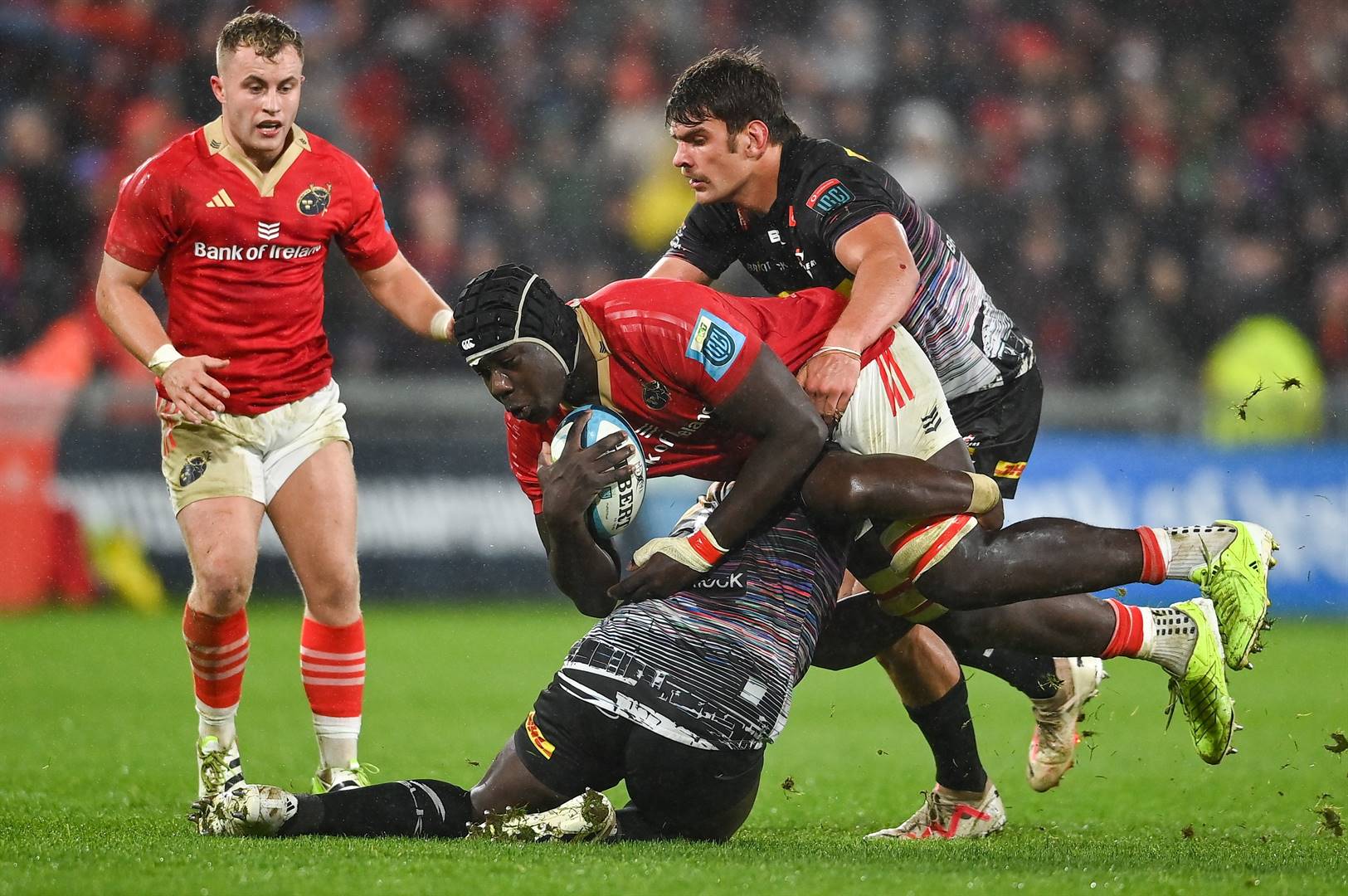
Of those games, we will go heavy on Connacht away and Edinburgh away. If we pick up eight points there – because we target those games we assume the points – that would give four games to pick up 11 points. Two of those games will be against test-window Welsh sides, so you could pick up five points there, even away from home and then look to pick up whatever you can in South Africa.
Obviously, the aim is to win every game and you’ll pick up (and drop) a few points you haven’t planned for along the way but in rugby, regular-season games are decided by quality mismatches more often than not.
A good example of this is a few years ago – 2019/20 – when Munster were playing Saracens and Racing 92 in back-to-back home games in the European Cup, with a PRO14 game in Cork against Edinburgh resting in between those two matchdays in the same season as a World Cup, which mean minutes for internationals had to be minded.
Munster had to target both home games with very strong selections leaving the week against Edinburgh at home as the rotation week. Edinburgh, who knew the schedule in advance, spotted this week as a game they could properly go after with a full-strength selection themselves as they were playing weaker, lower-level teams in the Challenge Cup that season. They won that game in Musgrave Park and finished joint top of the conference that year before the pandemic stepped in.
Scheduling, squad management and targeting of specific games for the points you need is the game in the regular season.
Glasgow have been naming a very strong selection for the last few weeks because they’ve had four home games against difficult opponents in Leinster, Stormers, Benetton and Ulster. Win at home, compete away. They have won all four of those games – three with a bonus point – so this game, away from home, is the perfect time to cycle down some of their top players with a big home game against Northampton coming next week in the European Cup.
That isn’t to say they’ve thrown their hat at the game either, as Scarlets did away to Leinster a few weeks ago because they have proper quality dotted through their selection starting and finishing, but it isn’t as strong as they could have gone, even including injuries.
Munster have to take advantage.
Munster: 15. Shane Daly, 14. Calvin Nash, 13. Antoine Frisch, 12. Alex Nankivell, 11. Seán O’Brien, 10. Jack Crowley, 9. Craig Casey; 1. Jeremy Loughman, 2. Diarmuid Barron (c), 3. Stephen Archer, 4. Edwin Edogbo, 5. Tadhg Beirne, 6. Tom Ahern, 7. John Hodnett, 8. Gavin Coombes
Replacements: 16. Scott Buckley, 17. Dave Kilcoyne, 18. Oli Jager, 19. Fineen Wycherley, 20. Brian Gleeson, 21. Conor Murray, 22. Rory Scannell, 23. Alex Kendellen
Glasgow: 15. Josh McKay, 14. Kyle Rowe, 13. Sione Tuipulotu, 12. Stafford McDowall (c), 11. Ollie Smith, 10. Duncan Weir, 9. Sean Kennedy; 1. Nathan McBeth, 2. Johnny Matthews, 3. Lucio Sordoni, 4. Sintu Manjezi, 5. Scott Cummings, 6. Sione Vailanu, 7. Rory Darge, 8. Henco Venter
Replacements: 16. Angus Fraser, 17. Oli Kebble, 18. Zander Fagerson, 19. Greg Peterson, 20. Max Williamson, 21. Thomas Gordon, 22. Ben Afshar, 23. Tom Jordan
There is a weird quirk in Glasgow’s game state this season. I found this out when I went looking for answers as to whether they were an on-ball team or a counter-transition team.
Against every non-Irish team, Glasgow have kicked the ball in a purely counter-transition range. They averaged around one kick every 4.9 passes against Benetton, Ospreys and Stormers.
Against the Irish provinces they’ve played so far, however, they’ve averaged one kick for every 16.4 passes. So does Glasgow play on-ball rugby? Yes – against Irish provinces exclusively.
Part of this is down to their behaviour in-game against Irish teams. Glasgow do not kick for three points off penalties so when they enter long periods of on-ball rugby against Irish sides between the 10m lines, they are almost exclusively looking for advancement penalties.
Watch this sequence against Ulster last week and see how they bounce between a 3-3 shape – a staple of most on-ball sides – with a separated backline probing for gaps.
They’re looking to trap defenders on almost every phase to get a penalty they can use to advance deep into the Ulster 22 and they will do the same here. When they get that penalty they kick it deep and roll off their lineout with a variety of mauls, maul feints and peels into close-range attacking sets inside the 5m line.
All of this work is done at a high pace and high intensity. Players like Sione Vailanu, Henco Venter and Johnny Matthews are lethal in this zone and their out-ball options to McDowall and Tuipuloto are always dangerous at close range. Efficiency-wise, they are as good as Leinster in these shortened spaces.
The key is to avoid giving them the platform to play. Ulster defended that sequence well – right up until the penalty.
When it was 15 vs 15, all of Glasgow’s scores game from a sequence of penalty > kick to corner > maul/close range phases > try.
So the key to winning is keeping the penalty count low and going into long on-ball sequences yourself. Glasgow concede the most amount of penalties in the league so if we can starve them of possession they are, just based on this season, likely to give us penalty access of our own to work with.
For me, we have to kick infrequently, and when we do, it needs to be short and contestable so we can get better access to their ball carriers on those short post-transition sequences. Staying away from their breakdown in all but the most obvious poach opportunities is sensible, as is a hit-and-move tactic in defence – they want to trap us in the ruck and we can’t let them do that easily.
If we can limit their possession by maxing out our on-ball sequences, they will give us the penalty access that can win us this game with a bonus point if our lineout holds up.
