


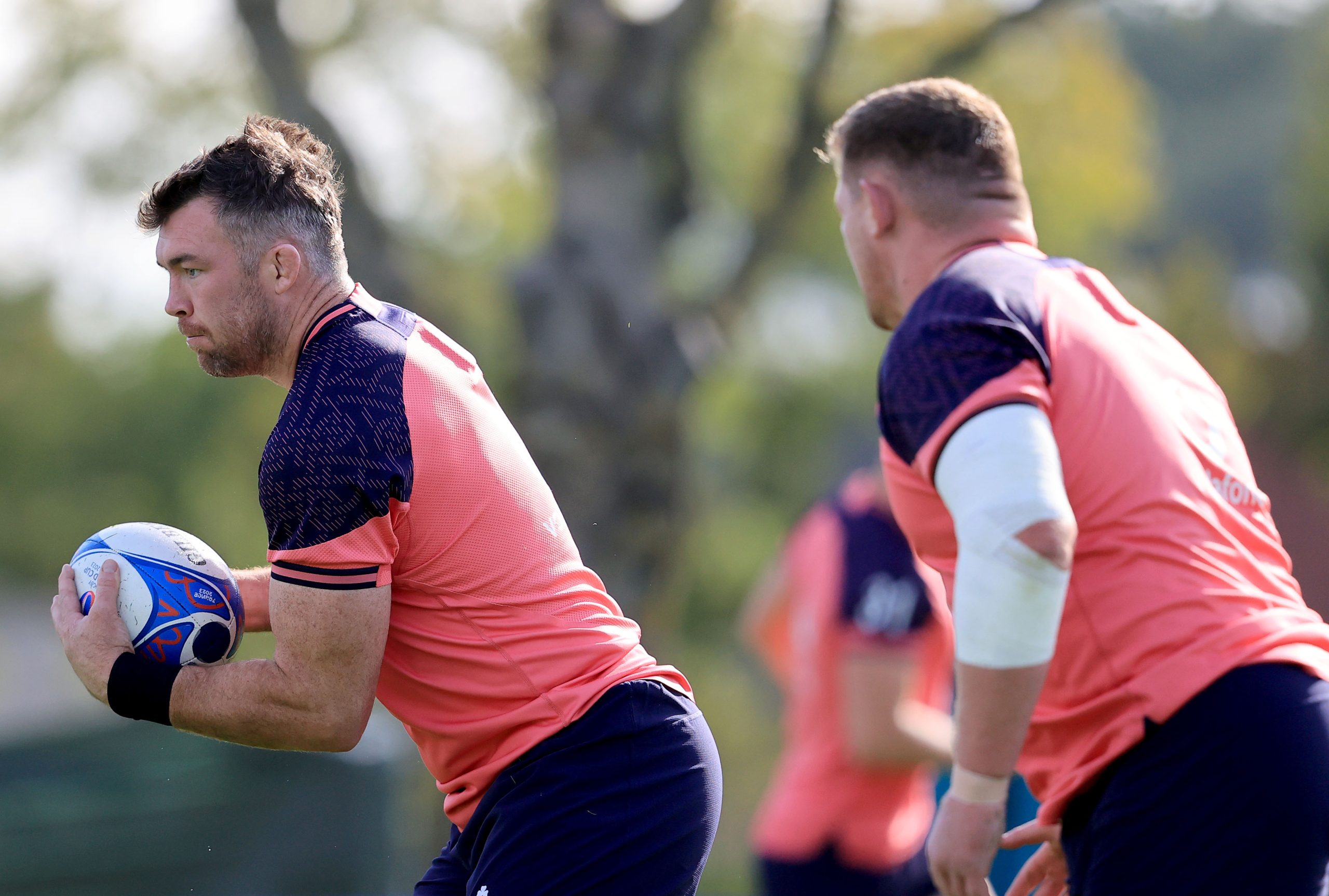
Come the day and come the hour.
This is the biggest game that Ireland have played since the 2019 World Cup quarter-final against the All Blacks in Japan. Andy Farrell can talk it down all he wants, this is a must-win game for Ireland, if not for the permutations of qualification then absolutely for the spiritual strength of this team.
With South Africa’s 4-0 match-point win over Scotland in the books for two weeks, this game is essentially the Pool B decider. Whoever loses will still qualify for the knockouts, barring a big upset along the way or a Scottish 5-0 match-point win over Ireland, but for me this is simple; a team who is capable of winning the World Cup along the path we have to walk through France/All Blacks in the quarter-finals has to win this game.
Losing this game would show the world that, when the stakes get high and the pressure turns up on the biggest stage, we’re a soft touch away from the Aviva Stadium. Ireland are the #1 ranked team in the world for good reason and that reason is we’re an excellent rugby team. But can we fight? I’m not talking about chinning Frans Malherbe here, I’m talking about when this Springbok pack starts to take liberties with us physically in this game – leaving duds on us at the ruck, catching Sexton just late enough to hurt – can we take liberties right back?
They will walk past the line and we’ll have to follow them step for step.
“[Wales] are not softies, they’re not like Ireland” – Rassie Erasmus, 2019.
The Springboks are big, they’re powerful and they have shown in the last few months that they are the primary threat coming out of the Southern Hemisphere this cycle. They have the same certainty of selection that we do with more depth and, outside of half-back and midfield, they have the most scope for rotating in horses-for-course options. Ultimately, and this is true so believe it, the Springbok coaches, players and rugby bubble believe that when it comes down to it, Ireland can’t live with them physically or mentally when they decide to turn up the heat.
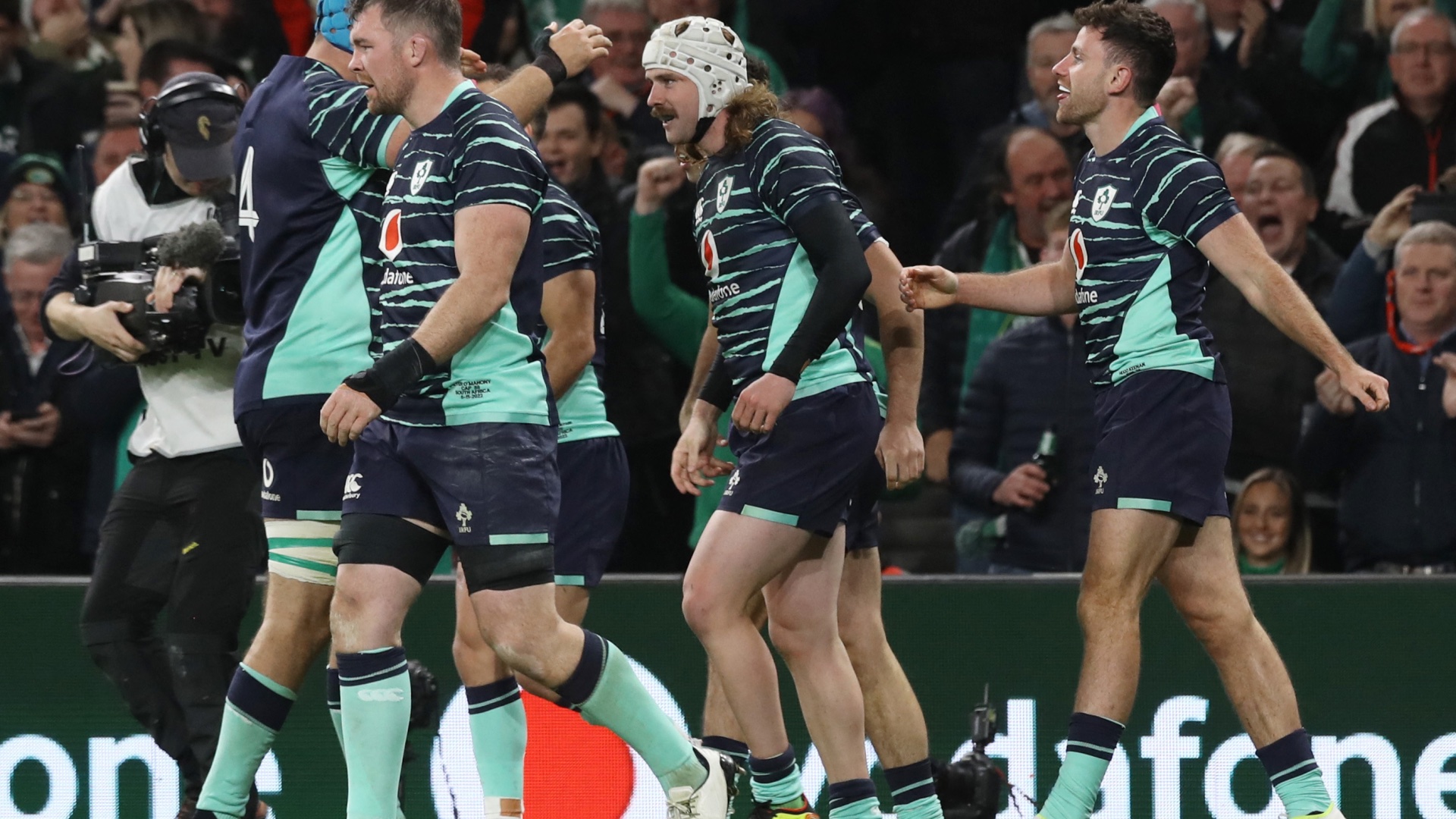
When they turn up the burners, we have to grab their hand and turn that heat up all the way.
It reminds me of one of my favourite quotes from Tom Barry during the Irish War of Independence.
“We were now hard, cold and ruthless as our enemy, the British were met with their own weapons they had gone down in the mire to destroy us and our nation and down after them we had to go”
Where the Springboks look to overwhelm us with their super strengths, we have to be hard, cold and ruthless. We have to be willing to go to places they won’t. People talk about ruthlessness all the time in this game but they don’t understand what it means in reality. Forget about the dictionary – being ruthless in this game is breaking what must be broken without a second’s pause, even if it costs you everything.
If we go down into the mire with that mentality, we can break this Springbok team and let the world know that we’re coming for that Webb Ellis trophy. And that we’ll break anyone or anything that tries to take it from us.
Ireland: 15. Hugo Keenan; 14. Mack Hansen, 13. Garry Ringrose, 12. Bundee Aki, 11. James Lowe; 10. Johnny Sexton (c), 9. Jamison Gibson Park; 1. Andrew Porter, 2. Ronan Kelleher, 3. Tadhg Furlong, 4. Tadhg Beirne, 5. James Ryan, 6. Peter O’Mahony, 7. Josh Van Der Flier, 8. Caelan Doris
Replacements: 16. Dan Sheehan, 17. Dave Kilcoyne, 18. Finlay Bealham, 19. Iain Henderson, 20. Ryan Baird, 21. Conor Murray, 22. Jack Crowley, 23. Robbie Henshaw
South Africa: 15. Damian Willemse; 14. Kurt-Lee Arendse, 13. Jessie Kriel, 12. Damian De Allende, 11. Cheslin Kolbe; 10. Manie Libbock, 9. Faf de Klerk; 1. Stephen Kitshoff, 2. Bongi Mbonambi, 3. Frans Malherbe, 4. Eben Etzebeth, 5. Franco Mostert, 6. Pieter-Steph du Toit, 7. Siya Kolisi (c), 8. Jasper Wiese
Replacements: 16. Deon Fourie, 17. Ox Nche, 18. Trevor Nyakane, 19. Jean Kleyn, 20. RG Snyman, 21. Marco van Staden, 22. Kwagga Smith, 23. Cobus Reinach
Come the power and the glory.
South Africa’s starting pack and replacements are designed to do one thing and that’s crushing Ireland like a melon under a hydraulic press. If you go back and watch the South Africa vs New Zealand game from Twickenham, just before the World Cup, you’ll notice a few key differences from their Rugby Championship game from a few months prior that will be massively relevant to Ireland this weekend.
Before we get to those though, we’ve got to speak about the opening 20 minutes of the contest in Twickenham which dictated the remainder of the game. New Zealand made some early mistakes – handling and indiscipline – that allowed the Boks to play vast swathes of time in their 22 pummelling them with short-range mauls and scrums. South Africa underscored the pressure they exerted in that moment but it took a toll on New Zealand in other ways – it cost them players to the sin bin but also put a clear picture in the minds of the officials that they couldn’t live with the Springboks physically.
It (almost) goes without saying that Ireland cannot concede the same kind of territorial and tactical pressure early in this game, which is easier said than done. As bad as New Zealand played in that game in Twickenham, we should also remember that they also vastly underscored their 22 entries. They had 11 in that game – just two behind South Africa – and only scored 0.6 points per entry. In the Rugby Championship a few months earlier, they scored 3.6 points per entry on average on just 8 visits to the 22 with South Africa scoring an average of 2.4 points on 7 entries.
The difference? New Zealand played counter-transition rugby in the Rugby Championship and South Africa prevented them from doing so in Twickenham.
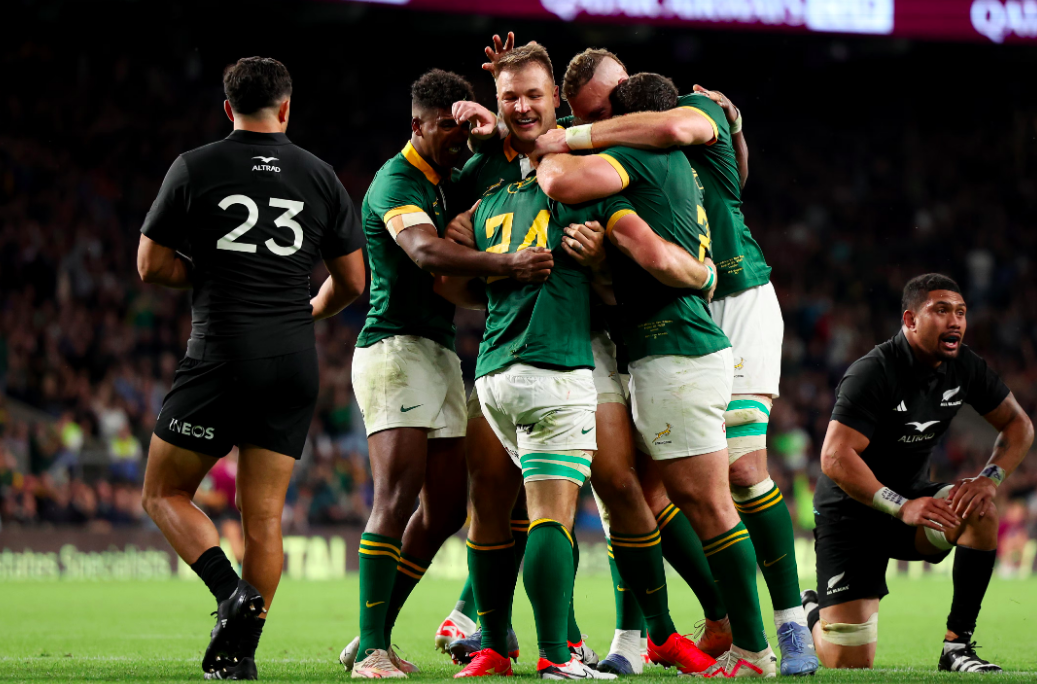
In Auckland, the All Blacks kicked the ball every 6.9 passes with an associated Pass-per-Carry ratio of 1.6. This is a good illustration of counter-transition keeping a super heavyweight Bok side at arm’s length. Everyone knows how much Nienaber’s overlapping cover edge blitz defence loves beating up teams who play on-ball rugby but in Auckland, the All Blacks denied them that platform.
In Twickenham, the All Blacks had a much more conservative Pass-per-Carry ratio of 1.2 but that was almost a direct consequence of their Pass-per-kick ratio which ballooned up to a kick every 9.2 passes.
Essentially, by kicking less often per pass, the All Blacks allowed themselves to get drawn into a low Pass Per Carry game against the one team in the world that will slap the chops off you for keeping it tight.
The Springboks’ excellent start – where they could dominate the All Blacks without having to play expansively ensured that New Zealand could rarely kick with the initiative.
A high Pass-per-kick ratio mixed with a high Pass-per-carry ratio is the key to beating the Springboks, in my opinion, because it limits the effectiveness of their blitz defence and prevents them from gaining easy 22 entries.
If Ireland are to win here I think we’ll have a PPK ratio of a kick every 5 passes with a PPC ratio of 1.6+.
***
When the All Blacks played counter-transition against the Springboks, they limited the Boks’ ability to create 22 entries, even though 50% of the Springboks’ possession in that game took place in the All Blacks Q2 zone between the 22 and the halfway line.
The Springboks have been making a transition to an on-ball style in the last few months but it’s still at a formative state. They still love a crash ball off #9 with limited pass action by their forwards but, as ever, the threat will be what they can produce to break down a defence that’s every bit as good as theirs.
That creative pressure will fall on Libbock and Willemse here unless Willie Le Roux makes a late charge onto the bench if there’s an unfortunate mishap in the warmup. Ireland should be confident in our ability to defend the Springboks in our Q2. Mostert will be their primary screen passer to Libbock and, while Libbock has improved quite a bit – especially with his kick passing – he does have a tendency to just ship the ball on at times.
South Africa’s switch to an on-ball side hinges on their ability to stitch multiple phases of play together and that’s most important in Q3, from halfway to the oppositions 22. South Africa are still developing their game in this area of the pitch. They are well capable of winning collisions off #9, as you’d expect, but when they move the ball to their layers both Libbock and Willemse can struggle to play around the 3-2-X structure the Springboks use in this area of the field.
Regardless of who they use in that two-pod, I think we can really stress the link player off the first pod of three and see what they have from a handling perspective as a changeup option.
Watch for Hansen intercepting a pass from Manie Libbock right outside that two-pod structure. As a baseline, I think if we kick at a high enough volume – while obviously shutting down the intense danger on first phase of transition that Willemse, Libbock, Arendse and Kolbe bring – we can generate some positives on defence against the Boks on-ball structure, especially at the breakdown after they look to go wide.
When it comes to attacking the Springbok defence, you could spend a lot of time working out how to beat the blitz with offensive layers but I think hitting that space Nienaber’s defence gives you on the outside by default is fool’s gold anywhere other than on the first to third phase of transition.
When it comes to dealing with that overlapping cover, you need to attack where the Springboks want you to, just not in the way they want you to.
The Springbok defence, when it’s running at its best is a mixture of a high-edge blitz combined with an up and diagonal ruck push to pummel the teams who go wide but then cut back to reset. They will then swarm those rucks with heavy jackal attempts and counter-rucking to make sure whatever happens next is on their terms.
One way that both Ireland and the All Blacks managed to snag the Springbok blitz defence was by kicking over their trigger point – the ruck.
If you watch South Africa for long enough, you’ll see a lot of the same things, especially off the set piece. They push hard to the collision point, they fold really well across the face of the ruck to fill up the inside space for the blitz to work and they push really hard off the edges, even from centre-field position.
That produces space in a predictable area that both Ireland and the All Blacks attacked.
The principles of the play here are exactly the same; both sides extended the strike to ensure they hit Kolisi/Smith and the #10 in the first phase, and then both sides pinned those two players – the fastest players you’d see patrolling around the ruck in that spot – into the ruck and then kicked into the space directly behind the ruck.
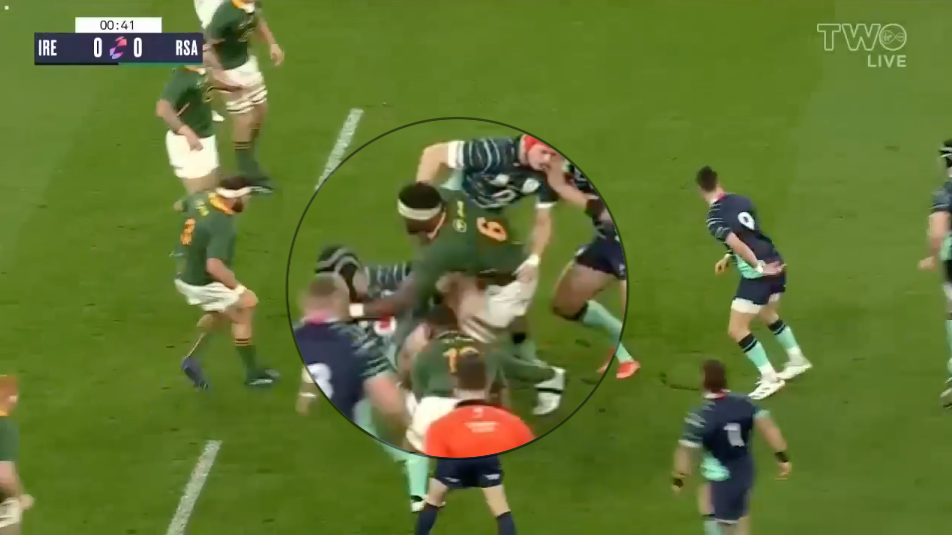
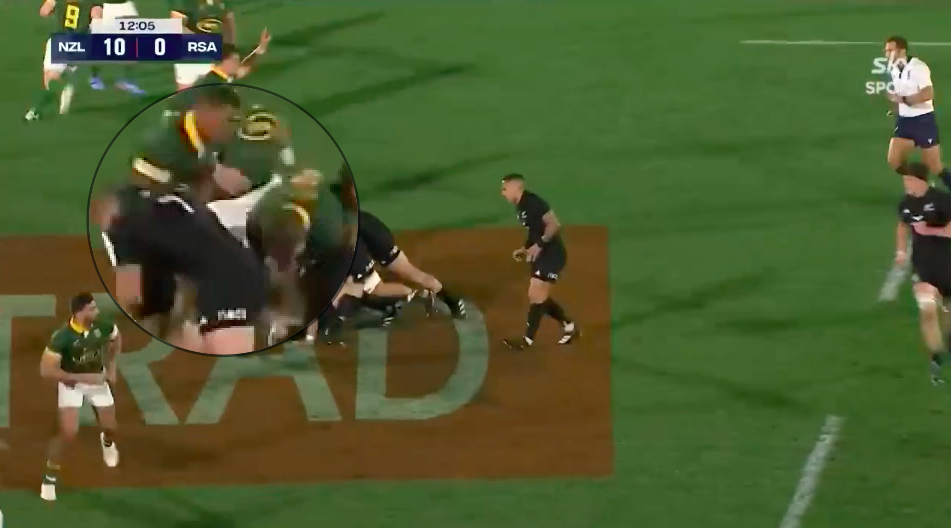
That exposed the core of South Africa’s blitz defence where the two most mobile defenders on the second phase can be taken out by action on the first phase. Both Ireland and New Zealand used this to create a high ball isolation in the 22 by matching up our quickest backs with the heaviest Springbok defenders who are in place to smash any runners who come back inside because of the edge blitz.
South Africa still uses the same defensive system off the lineout. Here’s their structure off a full Scottish lineout but the structure would still hold on a 5 man. Kolisi is the first man to the collision point.
Now, Scotland don’t see the space here – and it’s a little too far out to directly target – but I was interested in this aspect of the Springbok defence. The positioning of Faf de Klerk as an edge blitzer.
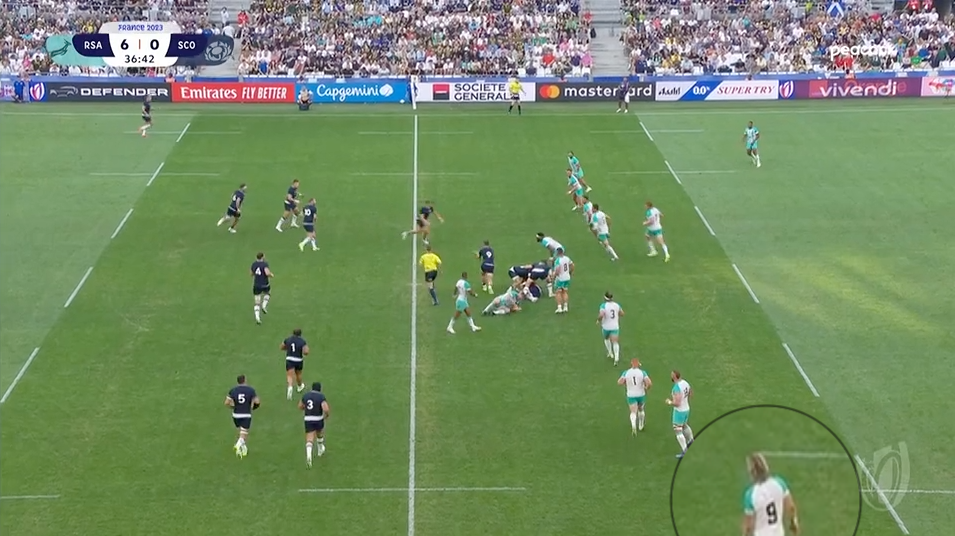
The Springboks’ decision to – as of now – use a 7-1 split means that they will only bring on Cobus Reinach once the result is assured either way as he is covering four backline positions. That means that Faf de Klerk is likely to do the full 80 minutes in a physically exhausting position.
What if, late in the game, we hit South Africa with this set-up on a five-man lineout, pin whoever the defensive small forward is with Libbock and then isolate de Klerk and Kolbe with Dan Sheehan and Mack Hansen for a cross-field kick directly after the hit up with a late change of direction by either Sexton or Crowley?
The 7-1 split ensures that, whatever else happens, we will have a height and power mismatch in this particular position so why not use it against them?
Either way, I’m buzzing to see how this game will turn out.
