


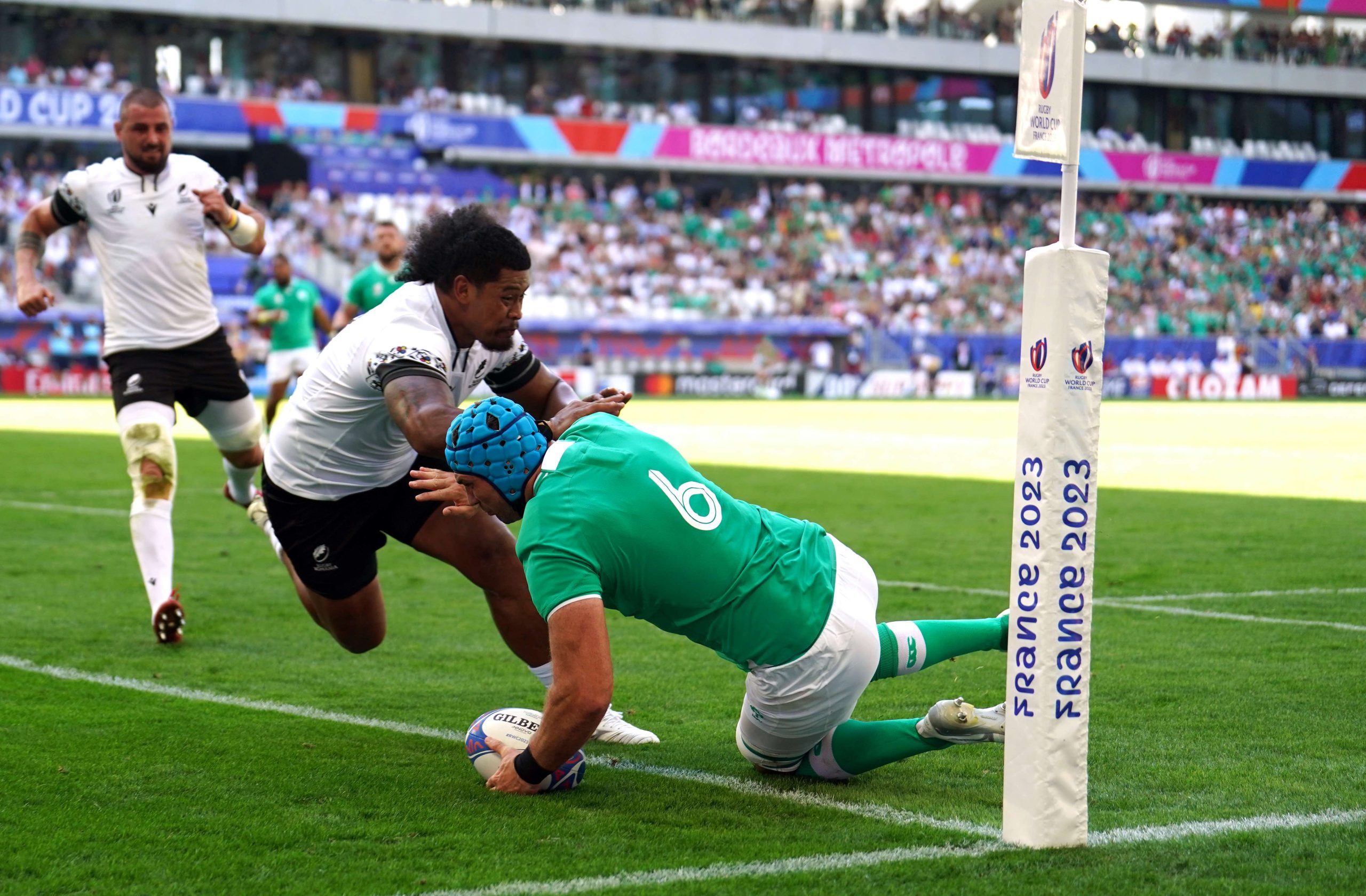
This game is a landmine.
To play a fresh, super-heavyweight Tongan side in their first game of the tournament is one thing, to play that same team in the weather conditions forecast for this game is entirely another. On a dry day, I’d expect Ireland to eventually pull away from this Tongan side just because it would be easier to stress them physically. On a wet day – as we expect to see in Nantes this weekend – we will have to find a different way because everything that Samoa brought us in Bayonne, Tonga can bring us in Nantes in the same weather conditions.
Andy Farrell’s selection of the core Ireland team – albeit with some variety on the bench – respects that physicality and respects the arena where we will engage with it. On a dry day in the Aviva Stadium, Tonga would be as physical but it would be easier to stress them, even with a rotated selection. On a wet night in Nantes with every neutral in the stadium screaming for an upset, it won’t be quite so straightforward.
As it stands, Andy Farrell’s Ireland don’t really do rotation when there are any kind of stakes involved. This is because, in part, because we don’t really have the strength in depth that many assume we do. We have an excellent, settled starting XV with everyone fit and a number of players who can provide good options or change-ups off the bench in the system we currently play. There are a lot of good players who aren’t in this World Cup squad who would be core players in a different system but who, as it stands, don’t quite suit what this version of Ireland plays.
This is crucially important. You are only useful depth to Ireland if you can cover an exact role in the main, winning system. If you can’t, especially in core system fit areas like the back five, you are of limited use to Ireland even if you’re an elite player.
Why does Andy Farrell mainly only use three locks (Henderson, Ryan and Beirne), four backrows (O’Mahony, Conan, Doris and Van Der Flier) and three midfielders (Ringrose, Aki and Henshaw) if at all possible? Because the system relies on what those core players bring. If you are not a role duplicate for these players, it’s unlikely that you are going to see any significant appearances in this Irish system.
As a result, we don’t have a long list of players that can step in for a core player and keep the system running like for like – and that’s before you talk about the overall reliance on Sexton. I think we’re so system-dependent that we can only afford to lose one core prop, two back five players, one midfielder and one non-Hugo Keenan back three player before you start to see fluctuations in performance.
We spoke this past week about what Ireland might do for this Tonga game and there were two main options as I saw them – rotate out all of the top players you can afford to preserve them for the Spingboks and still beat Tonga or go full-strength to build momentum for Springboks.
With the bad weather predicted for Saturday, there was no way to risk rotating out any combination of Porter, Kelleher, Furlong, Ryan, O’Mahony, Doris, Sexton, Aki, Lowe or Keenan, especially with Sheehan and Conan already in different stages of recovery and still win this game. And besides – Ireland need momentum and cohesion more than they need freshness.
And this is a difficult game.
It’s going to be raining very heavily so we can expect a greasy ball, narrow playing conditions, a lot of kicking and an incredibly difficult scrummaging environment against an experienced, heavyweight starting unit.
If there’s going to be a lot of kicking in the conditions, then we need Sexton, Lowe, Murray, Hansen and Keenan. If there’s going to be a big scrum focus, we need to start Porter because the other looseheads have had issues with their scrummaging – Porter has too, more than his fair share, but he’s a core player in our breakdown game – and Kelleher. Porter scrummages best with Kelleher, so we need to start him and we’ll need Furlong for his size and scrummaging weight as much as anything else.
When you start to look at the game like this, you’ve half a full-strength team selected already.
The lineout was a washout against Samoa in similar conditions so Beirne and O’Mahony have to start, as does Ryan. And Tonga will hang onto the ball we kick to them because they have the weight to play narrow so that means Van Der Flier starts for defensive coverage, Doris for his restart ability, defensive breakdown presence and we need him as a middle pod handler and because Tonga will play on-ball rugby in patches, we need to double down on our defensive breakdown anchors; Porter, O’Mahony, Doris, Kelleher and Beirne.
In that environment, there’s no point in starting a rotated selection because the job is so specific.
That’s how this Ireland team has rolled and will roll in this tournament, so we need to get used to it. Four points – that’s what we need – and no injuries.
Ireland: 15. Hugo Keenan; 14. Mack Hansen, 13. Garry Ringrose, 12. Bundee Aki, 11. James Lowe; 10. Johnny Sexton (c), 9. Conor Murray; 1. Andrew Porter, 2. Ronan Kelleher, 3. Tadhg Furlong, 4. Tadhg Beirne, 5. James Ryan, 6. Peter O’Mahony, 7. Josh Van Der Flier, 8. Caelan Doris
Replacements: 16. Rob Herring, 17. Dave Kilcoyne, 18. Finlay Bealham, 19. Iain Henderson, 20. Ryan Baird, 21. Craig Casey, 22. Ross Byrne, 23. Robbie Henshaw
Tonga: 15. Salesi Piutau; 14. Afusipa Taumoepeau, 13. Malakai Fekitoa, 12. Pita Ahki, 11. Solomone Kata; 10. William Havili, 9. Augustine Pulu; 1. Siegfried Fisi’ihoi, 2. Paula Ngauamo, 3. Ben Tameifuna (c); 4. Sam Lousi, 5. Halaleva Fifita; 6. Tanginoa Halaifonua, 7. Sione Talitui, 8. Vaea Fifita
Replacements: 16. Sam Moli, 17. Tau Koloamatangi, 18. Sosefo Apikotoa, 19. Semisi Paea, 20. Solomone Funaki, 21. Sione Vailanu, 22. Sonatane Takul, 23. Fine Inisi
This game will flow in the following circle; Ireland will kick long to start and hope to snag a few errors, breakdown turnovers or penalties of Tonga on the kick return. If they can’t, we’ll try to box kick to shake up the Tongan defence and I think we like our chances of doing so. That, in turn, will create more scrum opportunities for Tonga, who I think will have a lot of go-forward in the scrum in the same way that Samoa did and they could win a few penalties as a result. Once they kick down the line, we’ll have an advantage over them in the air, which should negate some of the power in their scrum.
If it goes like that – with the added threat of Tonga’s backline and back row on the first phase of kick transition and their own ability to be heavy over the ball at the breakdown – this has all the hallmarks of a tough day at the office. Ireland are the #1 ranked team in the world, and rightly so, but elements of Tonga’s game are a bad matchup for us and, if the weather conditions play out as expected, we’ll need every bit of the Category A quality we’ve selected to prevent this game from getting sticky.
Ben Tameifuna’s matchup with Andrew Porter
Porter is one of the best players in the world but, at scrumtime, he’s consistently shown that he has issues dealing with super heavy-weight tightheads. He’s actually dealt quite well with the “technical” tightheads that everyone assumed would take him to the cleaners – in part because he just overpowers these guys – but lads like Uini Atonio, Tomos Francis and even Ofa Tu’ungafasi have given Porter an incredibly rough time of it. These aren’t necessarily the most accomplished technical scrummagers but they are massive men who can completely envelop Porter, bully him inwards and drive straight through the Irish scrum.

Ben Tameifuna has that exact same profile as those players. He’s got tonnes of experience, he’s playing well north of 140kg and he’s a dominant scrummager. If this game has eight or more scrums, that weight could start to tell.
On the plus side, we’ve put Porter with Kelleher, so the spacing problem that affects Sheehan and Porter won’t be present but that’s only half the battle. All of Tonga’s starting front row is colossal with the kind of breaking threat off the back that will take attention away from the flankers – O’Mahony in particular – who adds that little bit extra to their prop.
The lineout is the key
We are giving up a tonne of size to Tonga but one way we can keep them at arm’s length is by limiting their ability to run back at us in transition. Their forwards play a really low Pass Per Carry game – they will mainly crash off #9 and #10 – with their backline creating shape and options outside that. They don’t play a massive integrated system like Ireland’s 3-2-X it’s far more like a flat 3-3 with waves of heavy forwards pounding the middle space of the field, retaining the ball with heavy ruck work – they give away a good few off feet penalties in this system, but they’ll live with that to dissuade the poach – and then spreading the ball to the backline where every single player is capable of smashing a collision, getting a short pass or offload away and then finishing from distance.
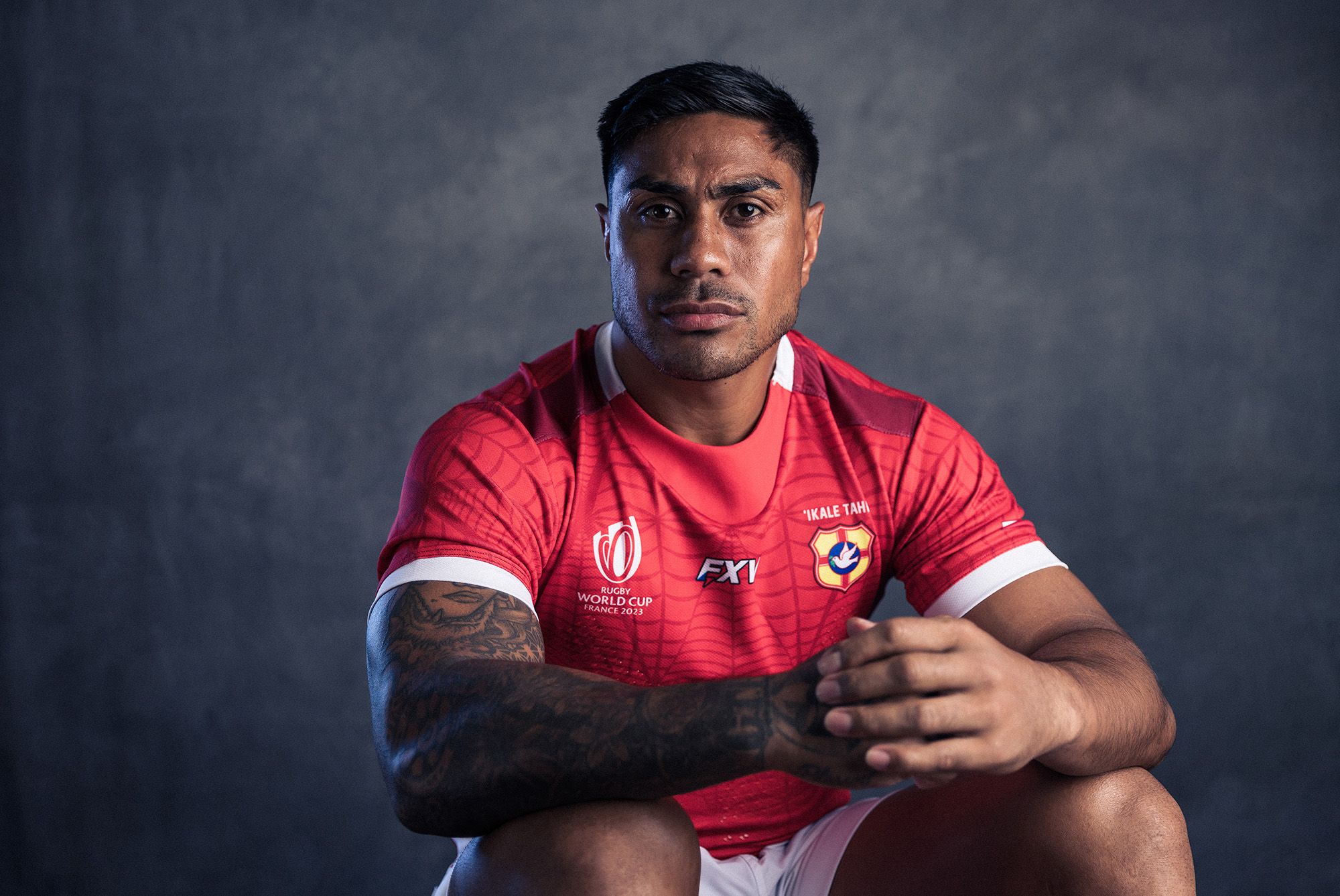
When we kick to them, their direct transition work will be incredibly tough to stop, in part because they’re so physical, athletic and comfortable offloading. We’ll need Ringrose and Van Der Flier at their best to cover that ground on transition defence, especially on a wet surface.
Another option is to pull back on the counter-transition starter plays – infield kicks, essentially, that we would normally use to tire them out on lengthy ball in play sequences – and get the ball off the field where possible. If we can get Tonga standing at the line, we can get at their structures.
Almost all of Tonga’s lineout menu is simple walk up, jump in place action. They’ll primarily use Fifita, Lousi and their half-lock Halaifonua to jump in simple patterns, with a focus on getting the ball out to attack our #10 channel through the explosive Vaea Fifita, Malakai Fekitoa, Pita Ahki and Salesi Piutau. In Havili, they have a player who can find these runners and they’ll be gunning for Sexton early and often.

You can see this is a pretty simple structure. They’re working on quick reactions and strong lifts with the hooker rarely being asked to find anywhere more difficult than the middle.
Walk in, flinch, lift in the front or the middle – that’s the scheme in almost all of their games I’ve watched. There’s a lot of sense to this too – why make your super heavyweight props do extra running on complex cut out schemes when you only maul from close range? They hit, pop and crash.

The opportunity here is for O’Mahony, Beirne and Ryan to really go after those spaces. Get O’Mahony prowling the middle to the front with Porter as a ramp lifter and let Ryan hinge based on the read. Beirne can cover the tail of the lineout forward with Ryan acting as a lift pivot if needs be.

Their starting hooker, Paula Ngauamo, is an experienced cat and a heavy scrummager but we can attack him at the lineout and put real pressure on his throw with aggressive double pod counter-jumping.
If we limit Tonga to fits and starts of possession, we can negate their scrum, keep their kick transition out of the game for as long as possible and really hit their morale – we want these guys worrying at that ball bouncing over the white line. If we can get purchase on 15/20% of their throws, we’ll have a way to get into the game on transition in a way that limits our scrum exposure and puts their heaviest forwards in places that are hardest to run from.
Do that and we might do some damage on our own lineout too, right up the middle between Ahki and Havili.
Win this and the true knock-out series can commence.
