


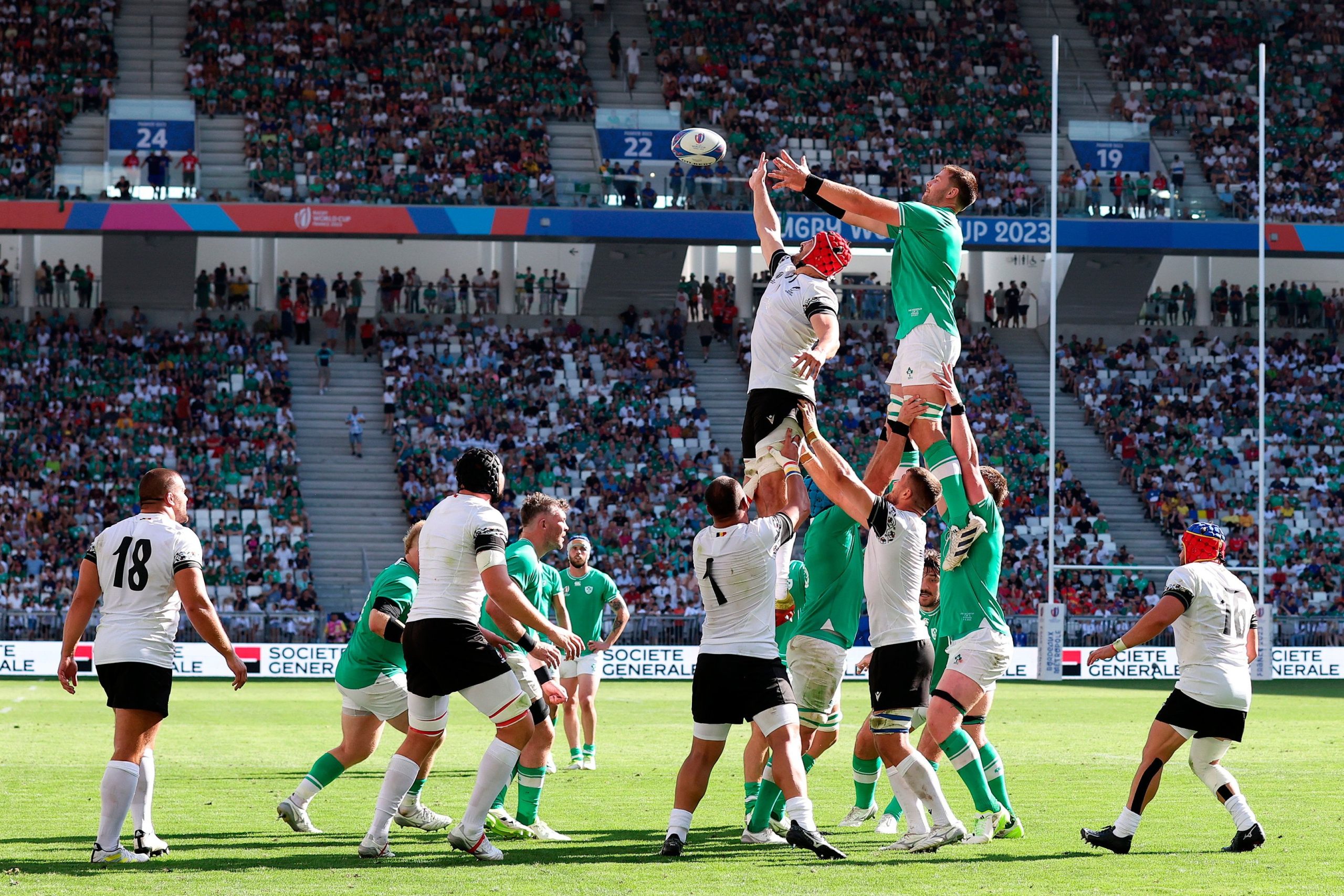
The lineout is the core of Ireland’s game when Ireland plays at their best.
It’s like the “no scrum, no win” fallacy we’ve seen in the last few years. Sure, it’s easier to have a big scrum – or a super efficient lineout – but it doesn’t necessarily mean a loss automatically. But, as we’ve said on Provincial State of Mind pretty regularly, those things don’t matter… until they do.
In 2023, until the warmup game against England, Ireland’s success rate at the lineout was 87.8%, comfortably above the test average of 83.5%.
Since then, Ireland’s lineout has plummeted in effectiveness. In the last three games, Ireland hit 84% completion against England, 76% against Samoa and then 67% against Romania.
Ireland won all three of those games, as you know, so without context, you could say that the deterioration of the lineout didn’t cost a result but we know it can’t continue, especially with the Springboks and Scotland on the horizon.
So what’s going wrong?
Change.
***
Ireland’s biggest issue isn’t necessarily a low lineout completion rate because, relatively speaking, we get a lot of lineouts. The average number of lineouts per game over the last few seasons is 25, divided between both teams. Against Romania, there were 22 lineouts in total. Ireland had 12 of those which, is pretty much bang on the money as it pertains to what you’d expect and we lost four of them for a return of 67% but that still left eight lineouts that Ireland were able to launch off successfully.
Against Samoa, there were 38 lineouts – the weather played a huge factor in that – and Ireland had 21 of those. The 76% return on those lineouts meant that while we lost five lineouts, we still had 16 to work with. Against England there were 31 lineouts, we had 19 of those and lost three, leaving 16 lineouts to play off.
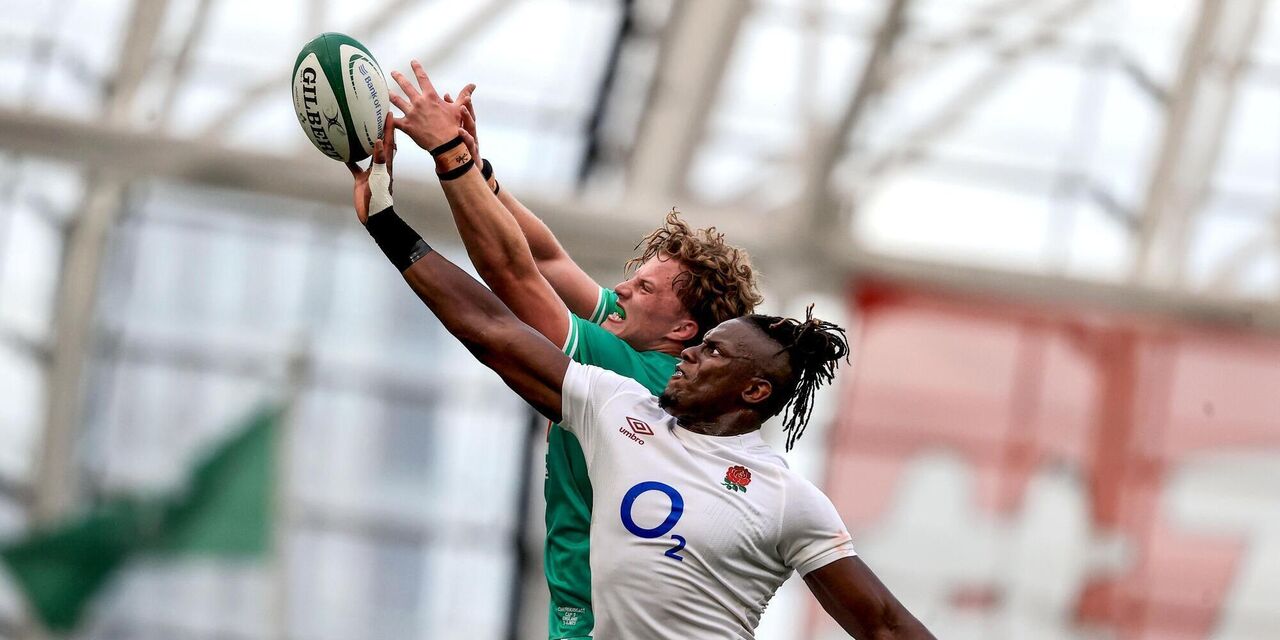
There’s lots of really exciting maths going on here as you can see.
Essentially, a low lineout completion rate isn’t a problem in a game where you have a lot of lineouts. For me, the worst throwing performance of the bunch was against Samoa in the first half but it didn’t matter because the conditions meant we’d have a tonne of extra lineouts to work with.
A low completion percentage is only a problem when you have a below-average number of lineouts. Our 67% return against Romania was the worst system return of the three games I’ve spoken about but it didn’t really matter at all because Romania were so much weaker than Ireland in every facet. Ireland could have run that lineout at 50% completion and it wouldn’t have mattered.
The main issue for Ireland is the opposition denying us the lineout platform in the first place.
To get a read on the thinking behind this, we have to look at the side on which this Ireland team is based – Leinster. When La Rochelle pulled back the 17-0 lead that Leinster had taken in the European Cup final last season, they did so by limiting the lineout possession they volunteered to Leinster. In the first 10 minutes, La Rochelle kicked to touch twice and, on both occasions, those surrendered lineouts led to a concession.
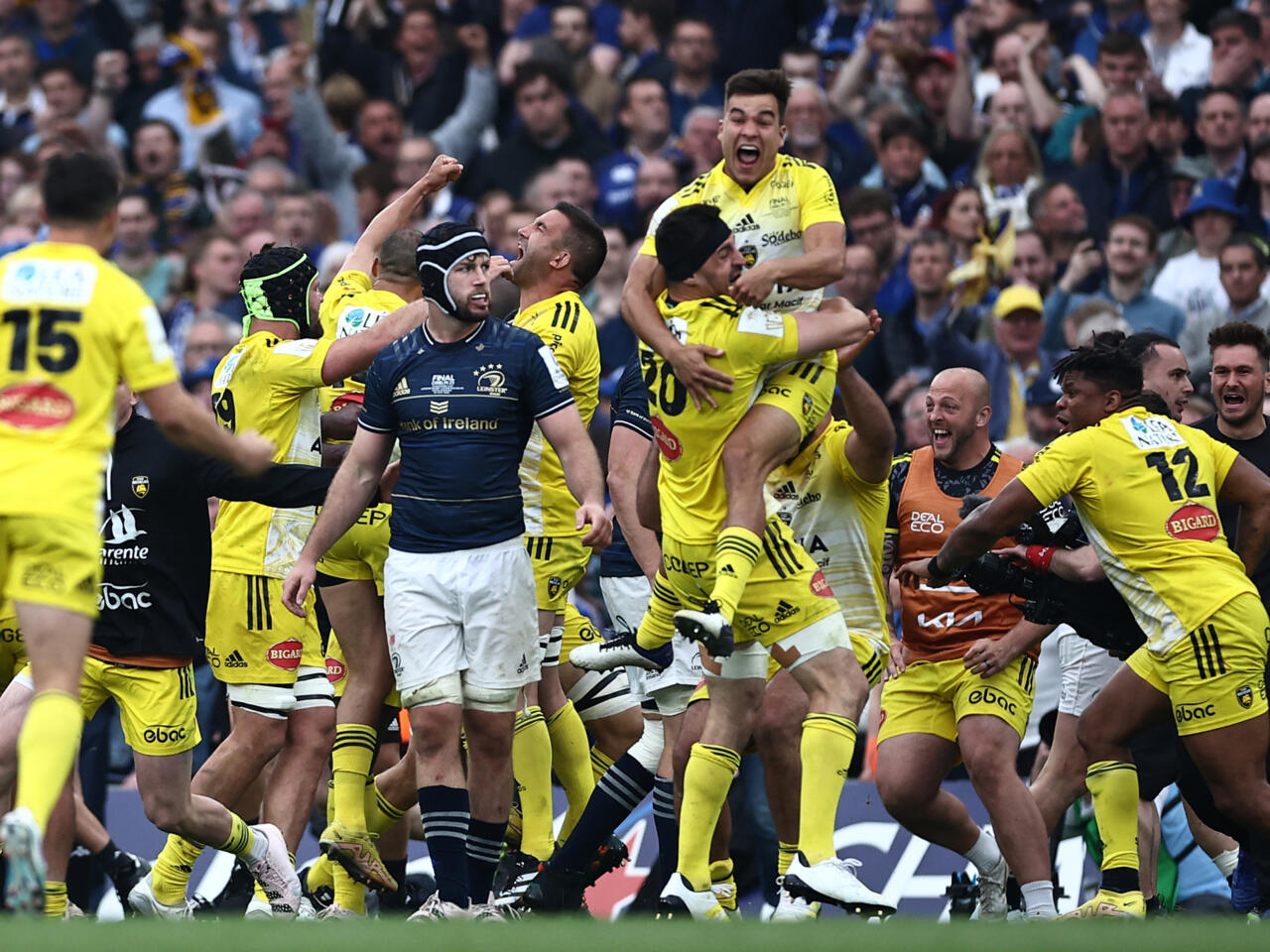
In the remaining 60 minutes, La Rochelle only surrendered a lineout to Leinster once. In total, Leinster only had 9 lineouts to play off through a combination of La Rochelle’s tactical discipline and penalty discipline. Without a regular lineout platform to launch from – both strike plays and advancing the ball downfield on counter-transition starters – Leinster’s game shrank, especially without the vision of Sexton to pull them out of the hole they stumbled into.
A few weeks earlier, Munster beat Leinster in the Aviva in part by limiting their lineout platform; Munster kept Leinster to seven lineouts total. Munster kicked the ball once for every 9.4 passes in that game and that played a part in making Leinster work to earn that platform. They kicked the ball to Munster, Munster held onto possession for long periods of time and surrendered the ball back to Leinster in a consistently contestable manner. No free lineouts, in essence.
How many lineouts do you think Leinster had against Toulouse in the Heineken Cup semi-final? Do you think it was more or less than the 12-lineout average?
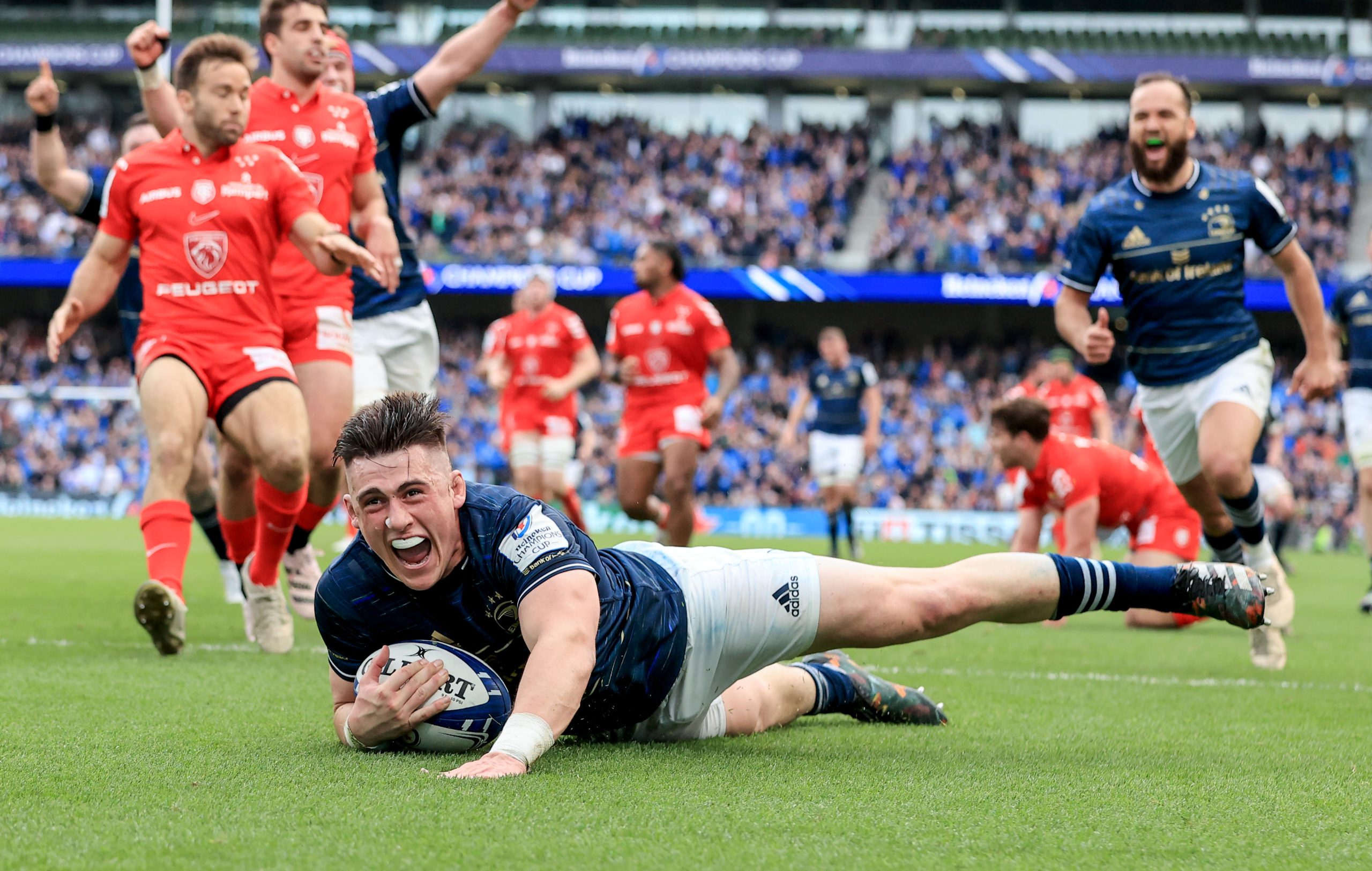
It was 16. And Leinster won 41-22.
For me, these two metrics are intrinsically linked.
Ireland, like Leinster, relies on a regular diet of lineout platform as a by-product of the high-volume kicking game that we play. We’re the team with the most amount of mauls in the world this year for a reason; part of that reason is that we get a lot of lineouts almost by default.
The biggest thing that Paul O’Connell brought to the lineout when he joined the coaching group in early 2021 – after a disastrous 2020 for Farrell’s Ireland – was simplicity and that simplicity is still present in Ireland’s lineout structures in 2023. Ireland are above the international average for throwing to the front of the lineout, slightly above average for throwing to the middle and below average for throwing to the tail or going quickly.
South Africa have the most relatively expansive lineout at test level in 2023 with the majority of their throws hitting the middle. France, England, Wales, New Zealand and Australia all primarily hit the front of the lineout.
The benefits for this are obvious in that throwing to the front is where you’re least likely to meet a counter-jump from the opposition so it’s a safe place to build a maul from. Ireland maul more than any other team – both full mauls and maul feints – so it makes sense that we throw to the safest places in the lineout more often than the international average.
Against Romania, we went away from that formula and almost exclusively threw to the middle or the tail.
Is it any surprise then that our completion rate dropped? We’re throwing to an area that we traditionally don’t at a much higher volume in a place where it’s much easier for the opposition to time their counter-jump onto the hooker’s throw. All of the lineouts we lost were to the middle or to the tail.
We’re using a slide cut out to disguise the lift in the middle but the risk with that kind of movement is that one of our lifters has to run to the lift, and the opposition can lift in place.
The two lineouts that Romania directly stole were disrupted in the middle of the lineout by a lock lifted by a middle unit made of another lock and a tall heavy combo flanker.
If Ireland keep the same structure against South Africa, that space will be guarded by Franco Moster, Eben Etzebeth and Pieter Steph Du Toit. Do we want to move our base target to the middle specifically to target the Springboks? If we are, our slide cut-outs will need to be much sharper because we don’t have super explosive bailout options that we can go to regularly if we’re under pressure.
If Ireland are going through a change to predominantly target that middle space, we have to also account for the fact that space is far more contestable. On the flip side, it opens up more attacking space on the edges and gives a stronger maul platform – if you can land it – especially if you can win the ball over the opposition.
It’s a calculated risk, but it’s one I think we need to take to go deep in this tournament against super heavyweight teams who I think know how to beat us.
