


World Cup warmups are only memorable for disappointment and heartbreak.
I would go further and say that they’re only really meaningful if you lose and, worse of all, most people only remember them for the people who get injured and miss the World Cup off the back of them. Am I speaking purely of my own experience here?
Maybe.
Let me list the bad memories; Scotland and Italy in 2007, Scotland and England in 2011 (where David Wallace essentially had his career ended), Wales and England in 2015 where Tommy O’Donnell dislocated his hip and then a record 57-15 loss to England in Twickenham in 2019 that sent pre-Japan vibes into the toilet, never to be recovered.
Don’t ask me about the wins. I’ve already mostly forgotten the win two weeks ago against… Italy (?) but maybe that says more about my pessimistic nature than it does the nature of warmup games.
After that England game in 2019 I wrote;
Ireland looked tired, listless, off the boil… look, think of a preseason negative adjective and chances are it’ll apply to this performance. Was it an ominous portent of what’s to come in Japan? Or was it a meaningless blowout in a meaningless warm-up game?
Maybe it’s both.
As it turned out, it was an ominous portent. England were probably at the peak of two World Cup cycles then when you look at the players they had coming into that World Cup – prime Itoje, Vunipola brothers, Farrell, George, Kruis, Tuilagi just to name a few – and that played out in them making the final that year after a cycle-best performance against the All Blacks in the semi-finals
Ireland left the quarter-final stage after a comprehensive defeat to those same All Blacks with a shock defeat to Japan in the pool stages to make sure no one could think it was a fluke. Here’s a sweaty, dejected picture from the Japan game to sell that point a little harder.

In hindsight, I think we can see that Ireland were a tired team at that point, if not physically then mentally, and at the end of the road with an all-time successful coach who probably stayed on a year too long. Easy to say now, of course.
This time around, everything would seem to be different. In 2023, it is Ireland who seems to be entering the tournament with all the momentum while Steve Borthwick’s England are the ones beset by woe, confusion and the expectation of defeat, if not internally than certainly externally. The last 12 months for England have seemingly locked them in a woe spiral but what better place to change the narrative than the Aviva Stadium against a full-whack Ireland side?
The last two times England have played this version of Ireland they’ve been close, for a time, until an early red card holed them below the water line. Outside of anything else, Steve Borthwick has to think that if they can keep 15 men on the field for the full 80 they should be closer than the last two losses to Ireland in the Six Nations might suggest.
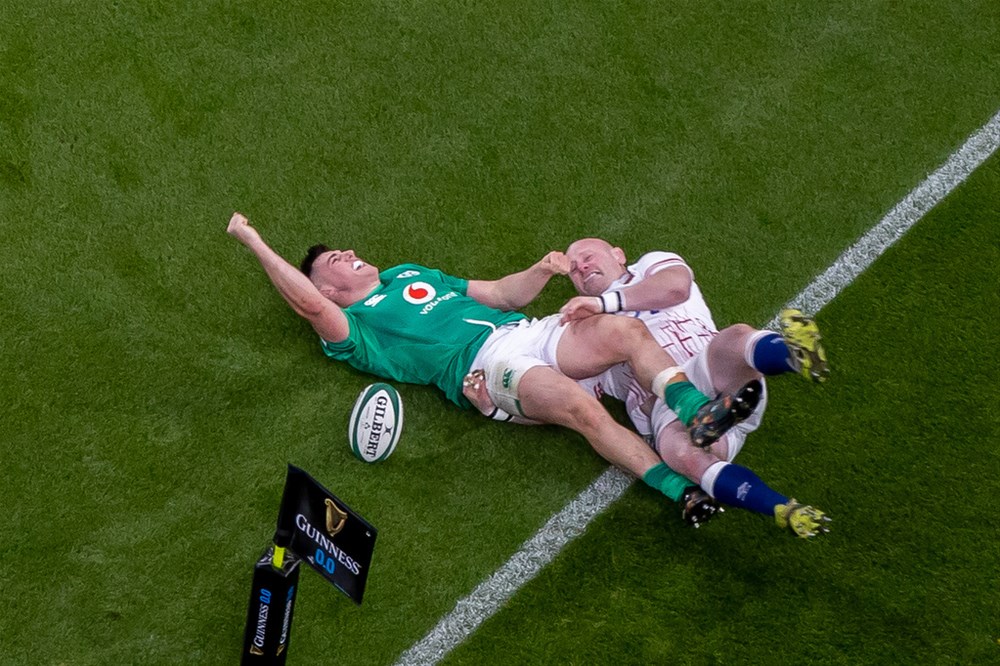
Ireland should have all the reasons going to be confident coming into this game. #1 in the World. Grand Slam Champions. Playing at home. A floundering opponent. A legendary, widely beloved player earning his 100th cap. It’s all set up for a carnival send-off to France.
I don’t think Farrell’s Ireland will be looking at it like that though. I think they know how dangerous England can be in theory and how, again in theory, bad a match-up parts of England’s game are for the Heavy Counter Transition game Ireland plays by default. And that’s before we get to the No Johnny worry stone which I know is a concern for Farrell and his coaching staff.
It’s all set up to be a meaningful loss for someone.
Ireland: 1. Andrew Porter, 2. Dan Sheehan, 3. Tadhg Furlong, 4. Tadhg Beirne, 5. James Ryan (c), 6. Peter O’Mahony, 7. Josh Van Der Flier, 8. Cian Prendergast, 9. Jamison Gibson Park, 10. Ross Byrne, 11. James Lowe, 12. Bundee Aki, 13. Garry Ringrose, 14. Mack Hansen, 15. Hugo Keenan
Replacements: 16. Rob Herring, 17. Jeremy Loughman, 18. Finlay Bealham, 19. Joe McCarthy, 20. Caelan Doris, 21. Conor Murray, 22. Jack Crowley, 23. Keith Earls
England: 1. Ellis Genge, 2. Jamie George, 3. Will Stuart, 4. Maro Itoje, 5. Dave Ribbans, 6. Courtney Lawes (c), 7. Ben Earl, 8. Billy Vunipola, 9. Ben Youngs, 10. George Ford, 11. Elliot Daly, 12. Manu Tuilagi, 13. Joe Marchant, 14. Anthony Watson, 15. Freddie Stewart
Replacements: 16. Theo Dan, 17. Joe Marler, 18. Kyle Sinckler, 19. Ollie Chessum, 20. Jack Willis, 21. Danny Care, 22. Marcus Smith, 23. Ollie Lawrence
There are more similarities between Ireland’s and England’s playstyles at the moment than there are differences.
Both are high-volume kicking teams, for a start, even though it might not seem like that on the face of it.
England have averaged 31.6 kicks per game in 2023. France are next on 29.1 average kicks per game (AKPG). Ireland are next on 28.5 AKPG. Wales have shot up the kick average rankings to stand at 28.1AKPG in 2023 so far.
All of these teams would be roughly grouped into off-ball styles or quasi-off-ball styles like Counter-Transition. To illustrate the other side of the conceptual coin, Scotland have 25AKPG, New Zealand are at 24AKPG and South Africa (!) are down at 23AKPG.
As a further reference, Munster were at 21AKPG in the 2022/23 URC, while Leinster were at 25AKPG which is incredibly high when you consider how many dud games are involved during the regular season in those metrics. That would be broadly in line with what we see from Ireland at test level when you account for the variance in competition.
Why do I focus on kicking? Because your average kicks per game show how willing you are on average to surrender the ball to the opposition. That willingness to surrender possession informs your style of play. Do you want to hang onto the ball? Do you want to pressure the opposition when they have the ball? Do you want to pressure the opposition when they kick the ball back to you? Do you want to pressure the opposition in the act of kicking the ball back to them? These are the four main “moments” of the game during phase play.
Ireland, despite being a team that kicks as much as they do – third highest in the world in 2023 – carries the ball more than anyone and that is almost entirely due to the kicking that we do. Ireland are the best team in the world at the following sequence;
- Kicking the ball infield to a spot that the opposition finds difficult to transition into attack directly in the first phase of possession
- The defensive pressure we apply on the first four phases of that transition encourages a kick back from the opposition.
- We are very good at transitioning into highly effective post-transition phase play when we choose to run the balls the opposition kicks back to us.
In 2023, Ireland have scored five tries on counter-attacking plays, one less than France who have six. France score more of these tries directly on the first or second phase, whereas Ireland score more of those on three/four/five phases. It’s the primary difference between the two teams.
That sequence of play for Ireland is buttressed by an incredibly effective lineout and maul. No team has mauled more than Ireland in 2023 – 58 times. We’ve scored a lot of tries directly from the maul – not as many as England, who are #1 in this metric – but we’re very good at powering up and to the tryline before scoring a phase or two later after a tonne of close-range drives. More than that, our maul acts as a compression tool to allow for highly automated and well-drilled strike plays off the maul or maul feint.
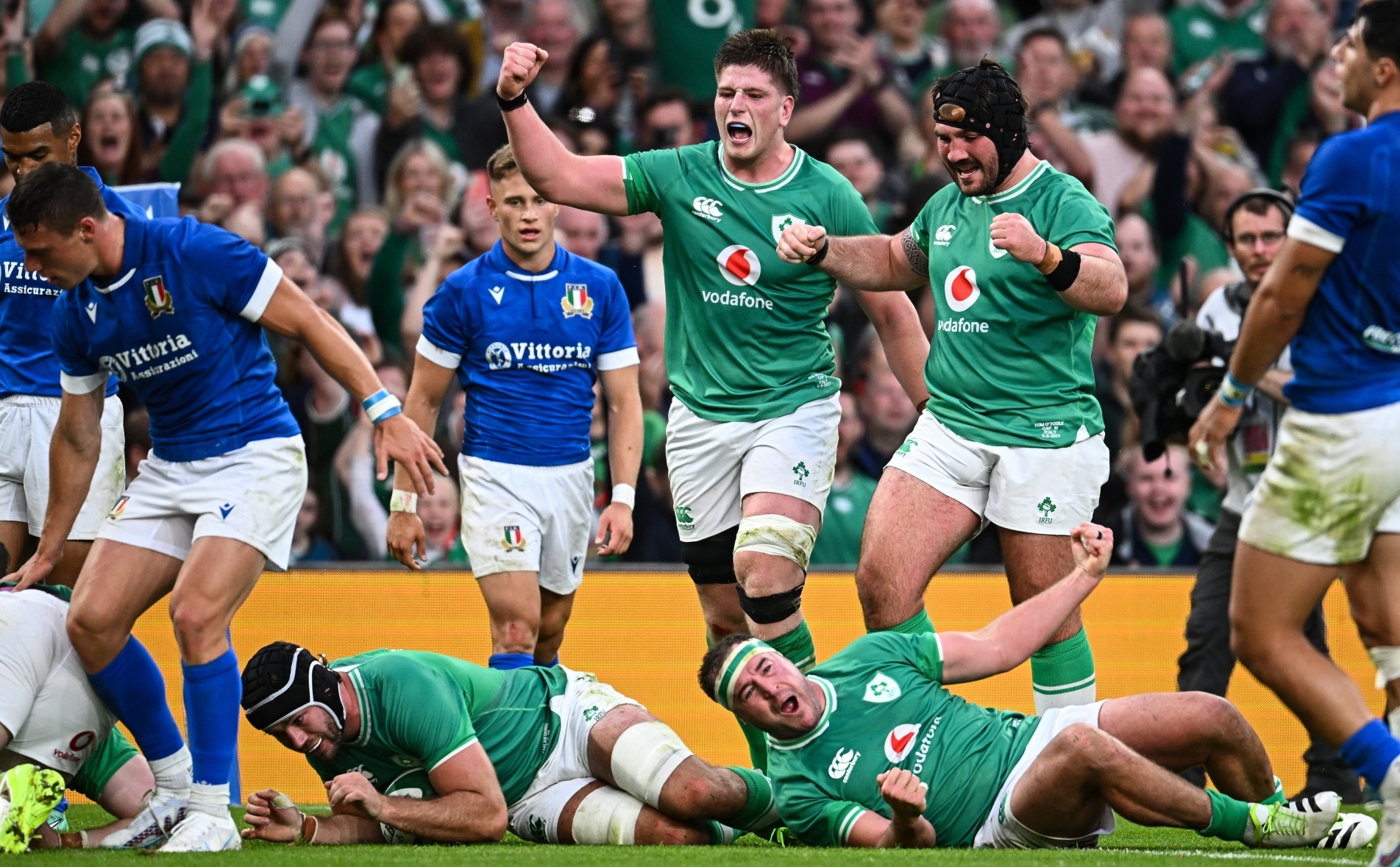
At a basic level, Ireland’s play style produces a lot of tries when the opponent kicks back to us after we’ve kicked to them, and it produces a lot of tries when the opponent kicks the ball off the field after we’ve kicked the ball to them.
Straight away, this presents a problem for England who kick the most of anyone. If they follow that trend against Ireland – and they will – it’s logical to assume that Ireland, a team that excels at scoring tries when we’ve kicked the ball first, should do well but it doesn’t always stack up like that when two high volume kicking teams play each other.
Sure, England will be incredibly vulnerable to conceding a try on the second or third phase of kick transition in this game but their game is based on defending those phases because they kick to produce more of them.
The biggest danger for England in this game is kicking the ball off the field. England conceded 11 tries in 2023 so far off the lineout, which is only three fewer than Italy. They contest the opponents’ lineout quite a bit and have decent numbers – they limit the opposition to less than 80% effective possession. That’s a really good percentage. Stealing or rendering ineffective 20% of the opposition’s lineouts is really good. As a reference point, Ireland steal or render ineffective 20.5% of the opposition’s lineout, which is the best in the world in 2023. Wales are at 14%, France are at 13% and South Africa are at 12%.
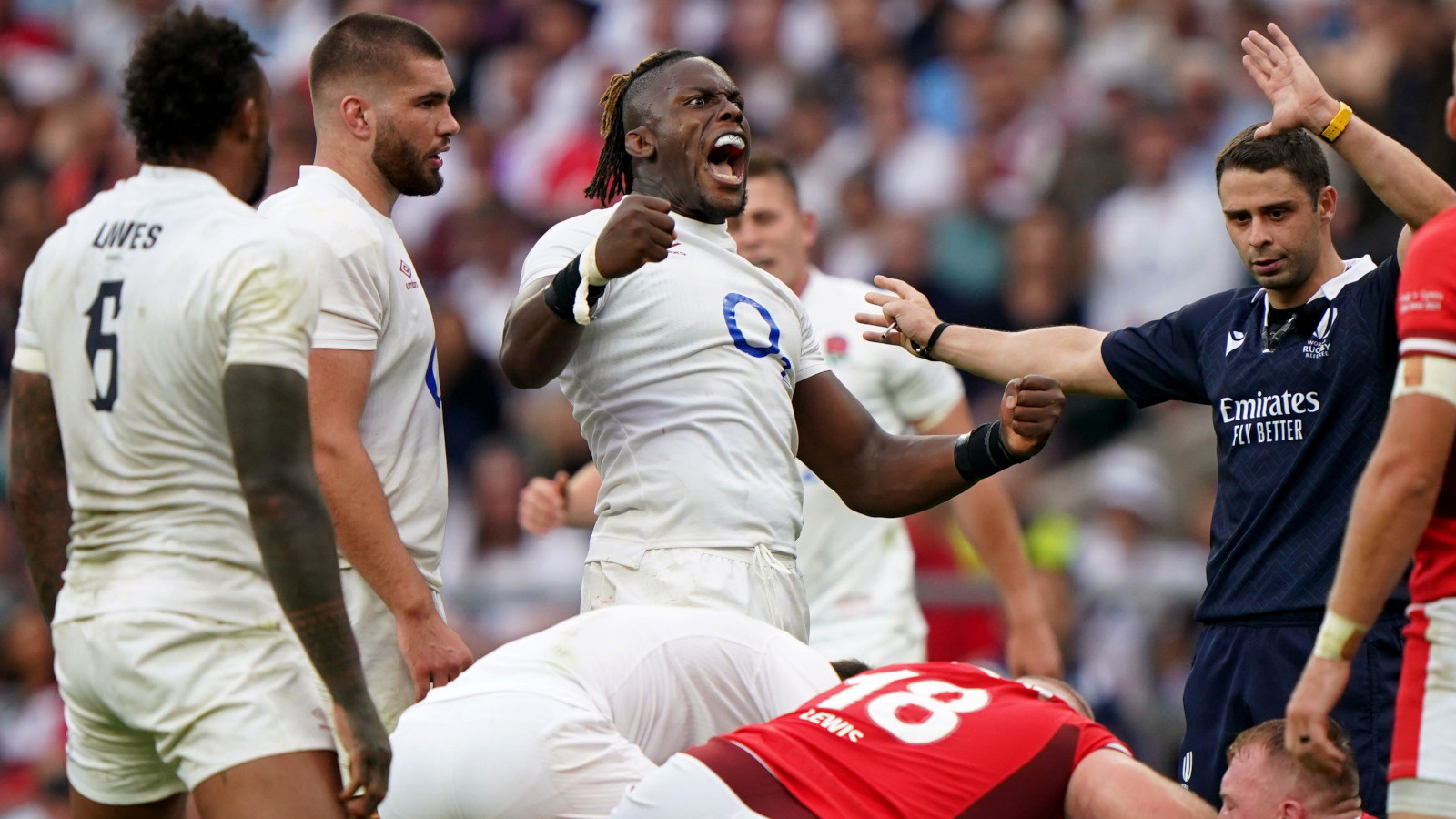
It’s England’s defence of the maul and their actions off the lineout break that cause them trouble. Essentially, they’re really good at disrupting the throw but not great when it comes to defending what comes after if they don’t steal or disrupt the opposition’s throw.
This is a killer metric when you’re playing Ireland. In theory, England’s defensive work at the lineout should sync really well with their overall kicking style but their inability to stop conceding tries (or killer penalties) off the lineout really hurts them. If they can’t stop that stat from poisoning them in this game, they’ll lose eventually. For me, to stop this Ireland team you have to deny them repeated lineout possession. It’s fine and dandy to disrupt 20% of the opposition’s throws but if you give Ireland 15 lineouts, that still leaves 12 lineouts where they’ll hurt you eventually.
The key for England is to keep Ireland below eight lineouts. That means a lot of infield kicking and much better tackle and ruck discipline than they’ve shown this year so far.
For large stretches of this game, I would expect things to be quite close. Both sides like to kick a lot but the quality of kicking from England through George Ford should be better than what we’ve seen from Farrell. Ross Byrne, in particular, will be under pressure to make sure he executes this part of the game well, as it was a weakness in his game against La Rochelle for Leinster, which England will be aware of. In Daly, Stewart and Ford, England have a core of elite kickers that can match up really well with Ireland’s roster of Hansen, Lowe and Keenan. Is Byrne up to a tactical battle of this difficulty at this level?
We’ll see – a lot hinges on his ability to turn momentum and ensure we don’t run into dead post-transition phases. Sexton is elite at that. Is his defacto stand-in? A lot rides on that question with the World Cup looming.
