


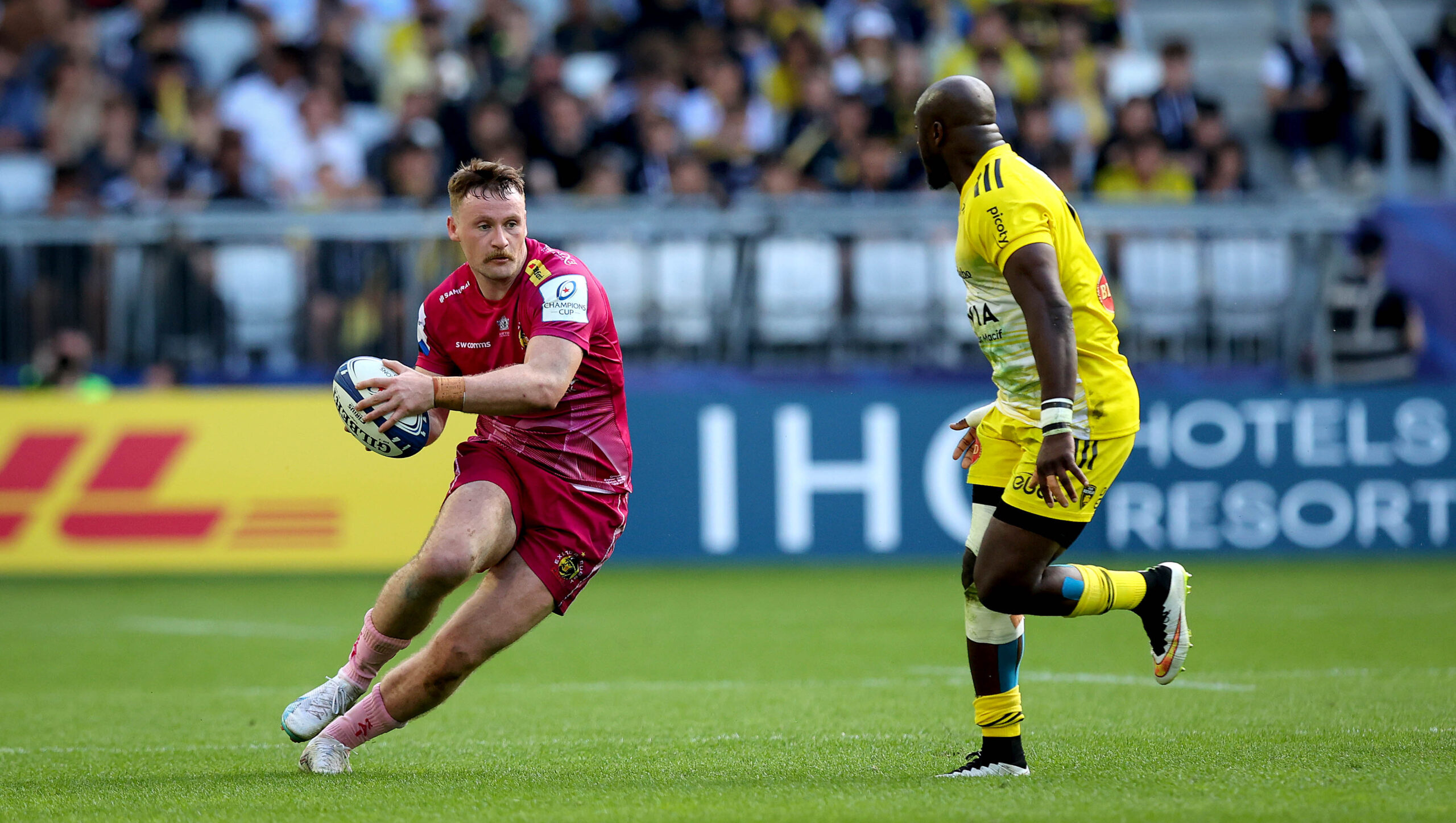
Seán O’Brien is the third Seán O’Brien to play professional rugby for an Irish province (in chronological order) so if he sounds familiar, that’s probably why. There’s a fourth Seán O’Brien who’ll play professional rugby for Connacht this season after signing from Leinster – taking the all-time number of Connacht players named Seán O’Brien to three – but this is the first time a player named Seán O’Brien will play for Munster in the professional era.
It feels like there should have been at least one before this given how common the name Seán O’Brien is in both (a) Ireland and (b) Irish Rugby but there you go.
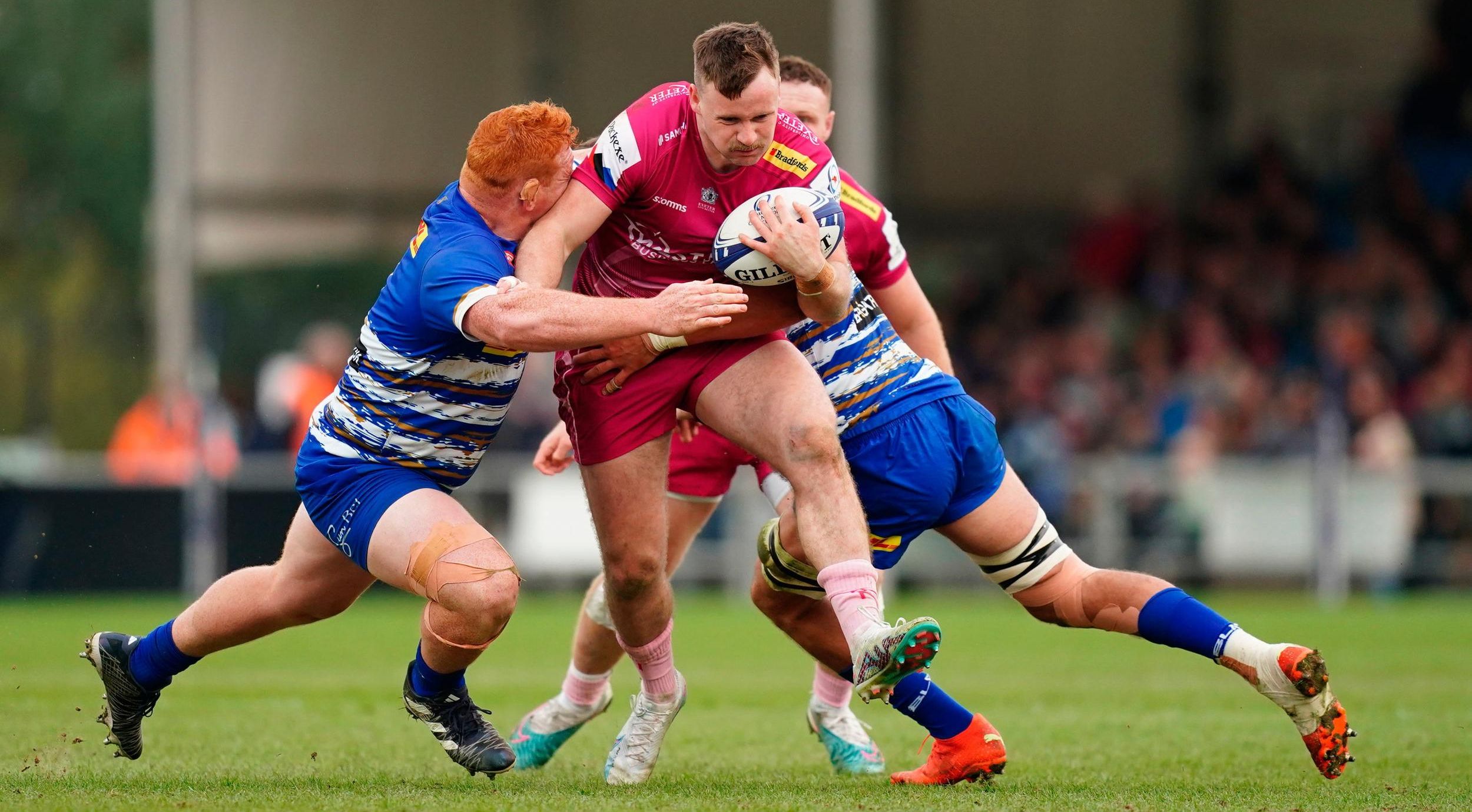
As signings go, he was pretty under the radar when he was announced in April. He was coming in from Exeter, where he had spent two seasons after switching out of the Connacht Academy, where he’d spent three seasons since becoming a year one recruit in 2018/19.
He broke through in the first pandemic season as a year-three academy player and did… pretty well. He didn’t tear up any trees but that year Connacht did moderately well in the league despite flopping in Europe. To be fair, though, everything about that season was heavily weird and truncated so the fairest reflection of Connacht’s season that year is their second-place finish in the PRO14’s Conference B and their mid-table Rainbow Cup finish, including a big win over Munster in Thomond Park.
O’Brien’s 2020/21 started with a lot of bench appearances but he was a solid starter by the end of the campaign at outside centre. He made 11 appearances overall that season before he joined Exeter in the summer. O’Brien was in a tough spot at Connacht come the end of that initial PRO14 season because not only were Connacht in the middle of a pandemic budget squeeze but he was also at the stage where he had to be offered a senior deal and, with five senior midfielders ahead of him – Bundee Aki, habitual club captain Tom Daly, Sam Arnold, Tom Farrell and Peter Robb – it was a tough spot for Connacht. I think in an ideal world, they’d have found a way to keep him, even as a guy who could possibly cover the wings, but they had specialists there and limited funds to work with. When Exeter made their move, it was the obvious jump for Sean O’Brien to make.
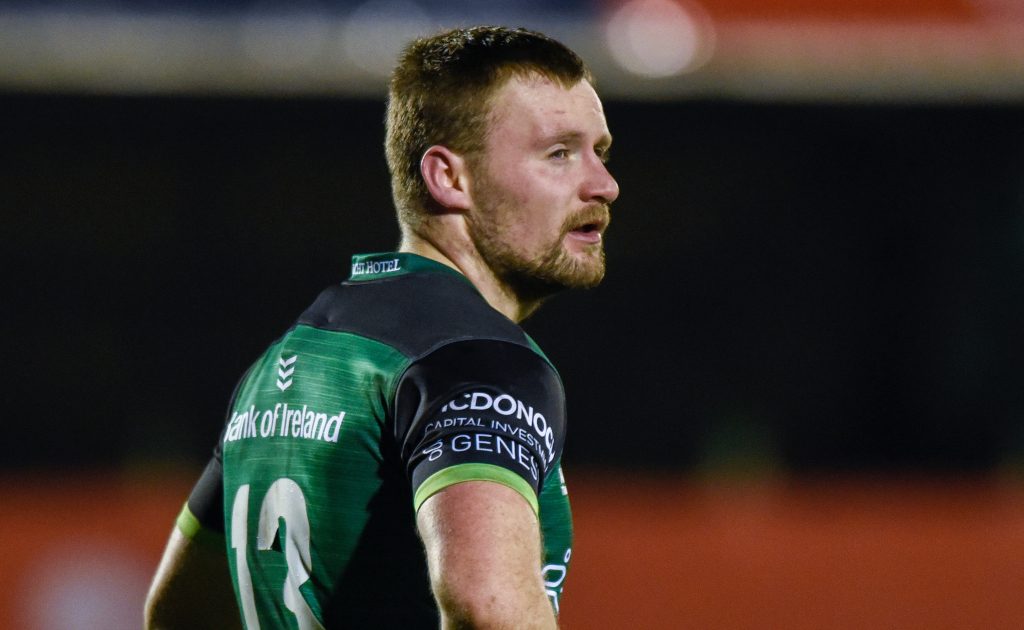
He did pretty well in his two seasons at Exeter. He probably didn’t play as much as he’d have liked but it seemed like contract timing worked against him midway through his second season. A bit like at Connacht two seasons prior, I think in an ideal world Exeter would probably have retained him but they were in the midst of a massive budget squeeze that saw sixteen players leaving and we’re not talking “dead wood” here either. They lost the Simmonds brothers, Jack Nowell, Jannes Kirsten, Harry Williams, Dave Ewers, Luke Cowan Dickie and… Sean O’Brien who had worked his way into a solid starting position in midfield towards the end of the season.
So why did Munster decide to sign him, especially in a season where we’d already signed Alex Nankivell to ostensibly replace the departing Malakai Fekitoa?
Well, the context of our midfield options is important. During 2022/23, on top of deciding to move on from Fekitoa in the summer, Munster parted ways with Chris Farrell and Dan Goggin mid-season, as well as opting not to retain Oli Morris, who signed mid-season as cover but who only played for Garryowen in the AIL.
Without any further signings, that would leave two specialist midfielders in the senior squad – Antoine Frisch and Rory Scannell – with one in the academy and only adaptable players like Jack Crowley, Shane Daly, Liam Coombes and Keith Earls as alternate options that we’d be moving from their best positions. Fekitoa would have to be replaced – and Nankivell is a great fit for that – but there was obvious scope for another signing in midfield, almost as a priority over more “obvious” positions in the front row.
So, with all that in mind, what is the story with Sean Garrett O’Brien?
I suppose the first thing you should look at is O’Brien’s designation on the Munster squad page where he’s listed as a “centre/wing”. In that regard, he’s a very similar role build to Malakai Fektioa and Alex Nankivell, which is exactly the type of player we’re looking for in the Munster #12 jersey in Prendergast’s system. We like our #12 to almost be a blend between a Power Winger, a Layered Power Handler and an Edge Forward as opposed to what you might typically associate with a classic “inside centre” that you might traditionally associate with that number.
Ultimately, I would classify Sean O’Brien as a Lockdown Centre/Wing Hybrid in the same mould as Alex Nankivell. With this signing, Munster are building system robustness and role depth in a key area of the team.
I could show you a bunch of GIFs of O’Brien highlights but I don’t see the point in loading up dozens of GIFs to illustrate that O’Brien is a decent player because… well, he is a good player. He’s a good short/mid-range passer who’s got good offensive and defensive instincts off the set piece.

I suppose the most typical thing about the #12 shirt these days – a lot like the trad numbers for forwards – is that the most number-clichéd thing they do happens at the scrum and lineout. O’Brien is really solid as either the first or second defender off the scrum or lineout, and he’s got a good variety of tools in his locker offensively. Off the lineout, you’ll see him running a crash line, popping a pass inside like above or operating as a handler to release a looping #10 or winger. He’s quite comfortable operating in constricted space so he rarely appears as a screened handler, something he won’t be asked to do at Munster.
You start to see his role strengths as a depth guy in the #12 jersey for us when you see him on phase play. Part of the reason why I think Munster signed O’Brien is because of how much of a brilliant system fit he is. Exeter play a very similar on-ball style of rugby to Munster – the biggest difference is their pack build – and O’Brien’s role in that system shows a high level of system suitability. For Exeter, the majority of the auxiliary handling was done by #13 Henry Slade, especially towards the end of the season. For Munster, it’ll be almost exactly the same with Antoine Frisch taking the bulk of those involvements.
Just like he did for Exeter, a lot of what O’Brien will be asked to do at Munster would be what you typically would ask a winger to do.


He holds the edge really well and he’s got the short-burst power and acceleration to take some stopping if you can get the ball to him. At 6’1″ and 100kg, O’Brien has a good blend of heft and speed to be a credible threat anywhere in the line but his best position, by far, is in that edge space. O’Brien runs nice support lines and has all the offloading and pop pass qualities you’d expect of someone who came up as an outside back through the Connacht Academy.
That’s all backed up by an accomplished offensive breakdown game which is one of his best qualities. He’s more of a Guard Action cleanout guy as opposed to racking up a pile of Dominant Cleans but he’s really good at snapping into place quickly and not overcooking his running lines.
An on-ball system demands a midfielder just like this, especially with your wingers looping constantly as they did for Exeter and as they now do at Munster.
When we compare him with Alex Nankivell from a role build perspective, we see a lot of similarities.
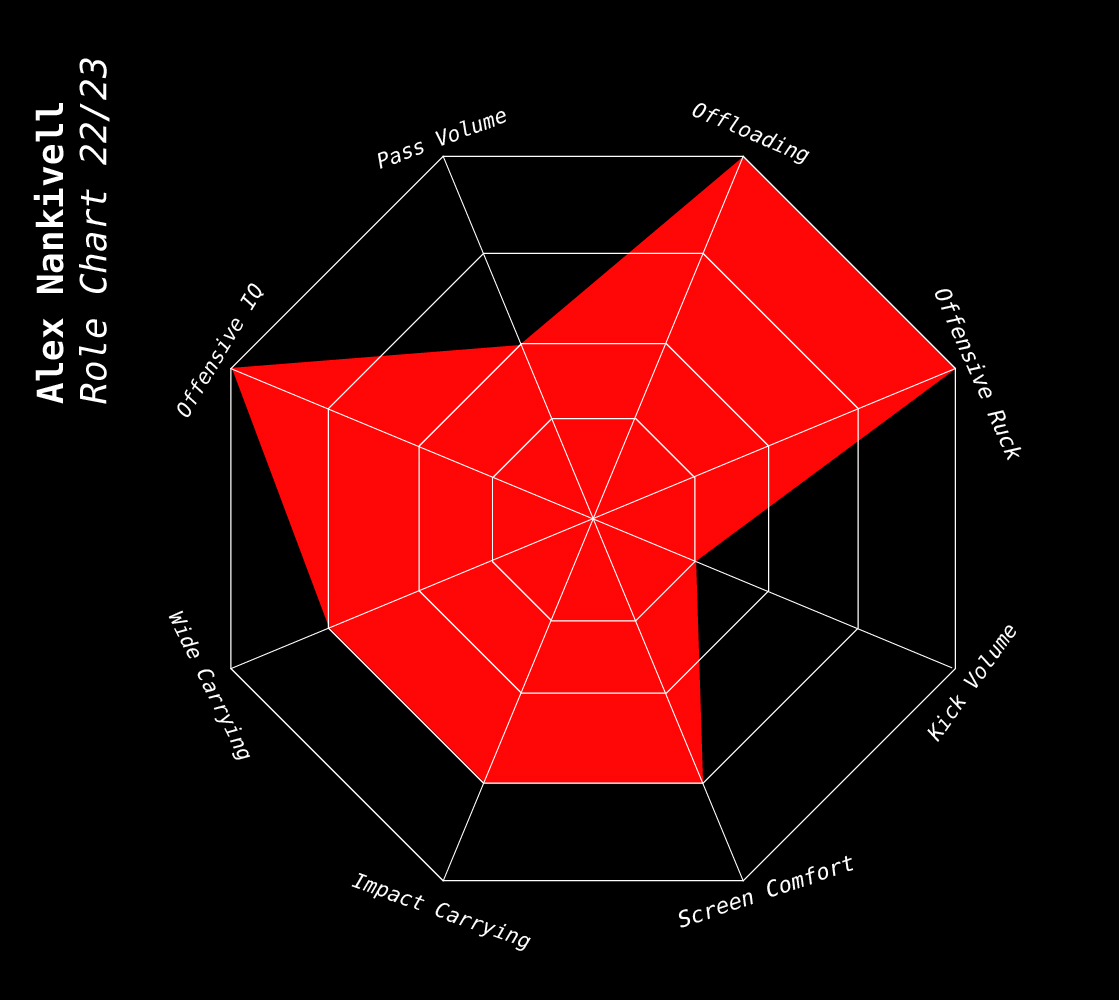
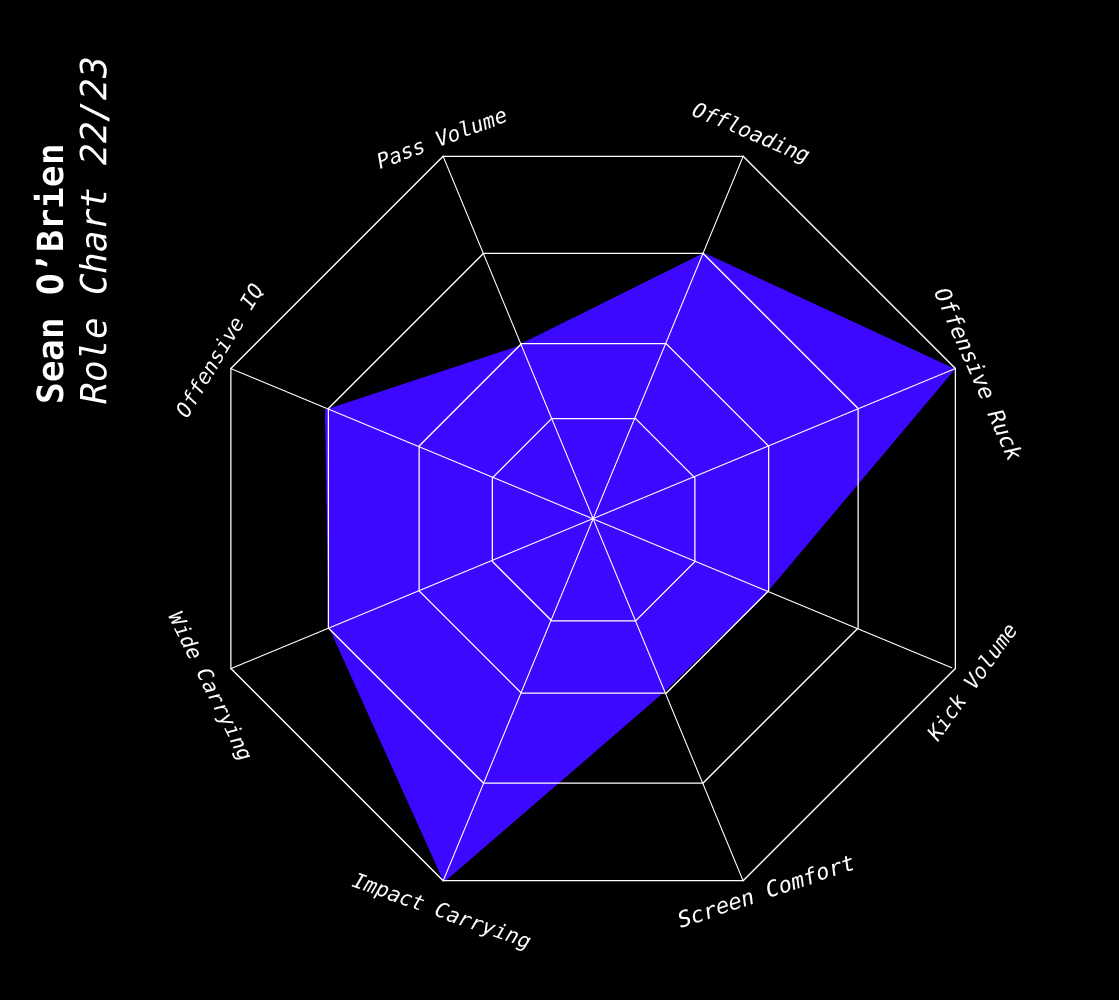
If we combine those Role Radars, we can see how similar they are.
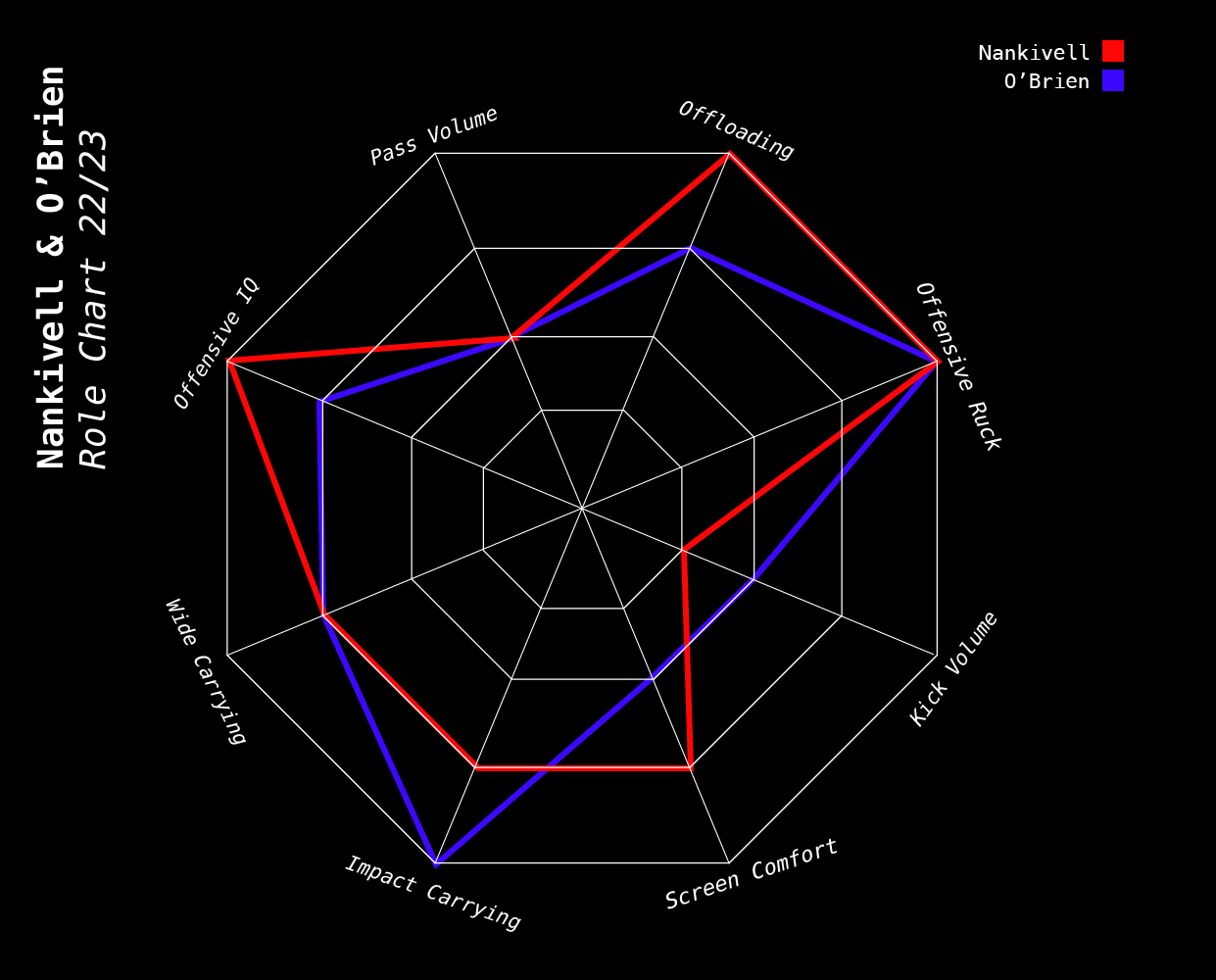
Let me be clear here in saying that Nankivell is the better player but O’Brien provides something that no other player in the Munster squad provided last season. Munster’s system relies on midfielders just like this and we went from a position where we had none to now having two very comfortable role fits in the squad which might free up Rory Scannell to move into that playmaking Frisch role a little more to build more comfort in that chart.
O’Brien is the definition of a good value IQ pickup that, if he can stay fit, will allow us to build on the style of play that finished last season so strongly.
