



With the schedule now in place for 2023/24, Munster’s coaching staff will be looking at the game weeks and plotting out their squad usage for the season.
There are a number of issues that Graham Rowntree and his staff will have to navigate, winning enough games to guarantee a home quarter-final and semi-final chief amongst them, but the jobs don’t end there. You’ve got to spread gametime throughout the squad to keep players happy and you’ve got to minute mind your top players so they’re match-sharp and battle-hardened but not burned out to the point they become an injury risk. Then you have young prospects that you need to expose to higher levels of rugby to see if and/or when they are capable of moving up the depth chart. This is usually done in a fairly graduated manner but with test callups, test cooldowns (where the IRFU mandate a certain amount of rest minutes for players on central contracts and on the test radar) and injuries there are always minutes available to put someone in if (a) the coaches think they’re emotionally and physically ready and (b) if they can be put into units with experienced heads to help them.
The entire process of game mapping is further complicated by ongoing contract discussions which, if they go sideways for current starters or players at the top of the depth chart, can mean rapidly moving players down the chart so that their potential replacements can be moved up the chart so they can be assessed ahead of the following season.

During Johann Van Graan’s tenure, a common complaint amongst the younger players was that Nothing Mattered for the vast majority of the season because the then head coach, for the most part, had his Category A team selection nailed down by Week 1 of the season barring injury. They felt there was no route for them to dislodge one of the core starters regardless of what they did on-field or in training. So, for most of the year, Nothing Mattered. There were the weeks you’d know you’d be playing in which you’d be gunning for but lads felt that there was nothing they could do in those games that would progress them up the depth chart.
It was simply hunker down and wait for an injury, albeit with the understanding that when that injury was healed you were quite likely to be tumbling back down the depth chart. Van Graan’s reasoning would have been very much “I know the ability level of my squad so I know who I want in my Category A selections”. That is a fair enough assertion, especially because Van Graan and Larkham were solidly in “win now” mode in the final two years of their tenure at the club so organic depth chart progression was something of a luxury that they couldn’t afford.

Van Graan had a big squad that he needed to keep happy with game time but he also knew that he needed to win league games to maximise the chances of getting the home draws he felt would lead him to a trophy he badly needed to legitimise his reign. So that meant block booking of minutes for younger players and fringe guys during test windows when the opposition would be incrementally weaker than us so risks, such as they were, could be taken on selection.
Graham Rowntree didn’t take a radically progressive route to map out his squad usage over last season but the prevailing idea was that it was fair. Players felt that, if they trained well they’d get a shot and if they played well they’d stay on, for the most part anyway. That isn’t to say that Rowntree didn’t know who his best side was on paper – every coach does and if they say they don’t, they’re usually lying – but the players felt that there were avenues to progress if they performed. That, essentially, it was possible to go from a Cat C game to a Cat B game to a Cat A bench/start if they hit their markers and played well.
What do I mean by Cat(egory) A games? Category A/B/C games are basically a way of indexing the relative importance of fixtures throughout the season.
Category A would be a contest where you have to put out your strongest available team or the core of your best team to be as certain as you can be of getting a result. These would be home interpro games, most European Cup games, certain tentpole games during the season at home to South African teams or Glasgow and every knockout game. A Category B game is one of relative importance where you consider involving inexperienced prospects or squad players alongside any core players you have available to play in that fixture. You’d be looking at away games against the Scarlets, Cardiff, Benetton and Edinburgh, home games against the Lions, or any games you have during or around a test window along with tours to South Africa. A Category C game is one where you can heavily rotate your squad and still be confident of getting a result – these are home and away games against Zebra, Dragons, the Ospreys,
These indexes aren’t set in stone, by any means. As an example, Munster could well have listed last season’s end-of-campaign tour to South Africa as two Category B games that you could use as higher-level development games while leaving your Category A starters at home – as Leinster did – but results earlier in the season turned that entire South African tour into a Category A affair where we absolutely had to get results to ensure we qualified for the Champions Cup.
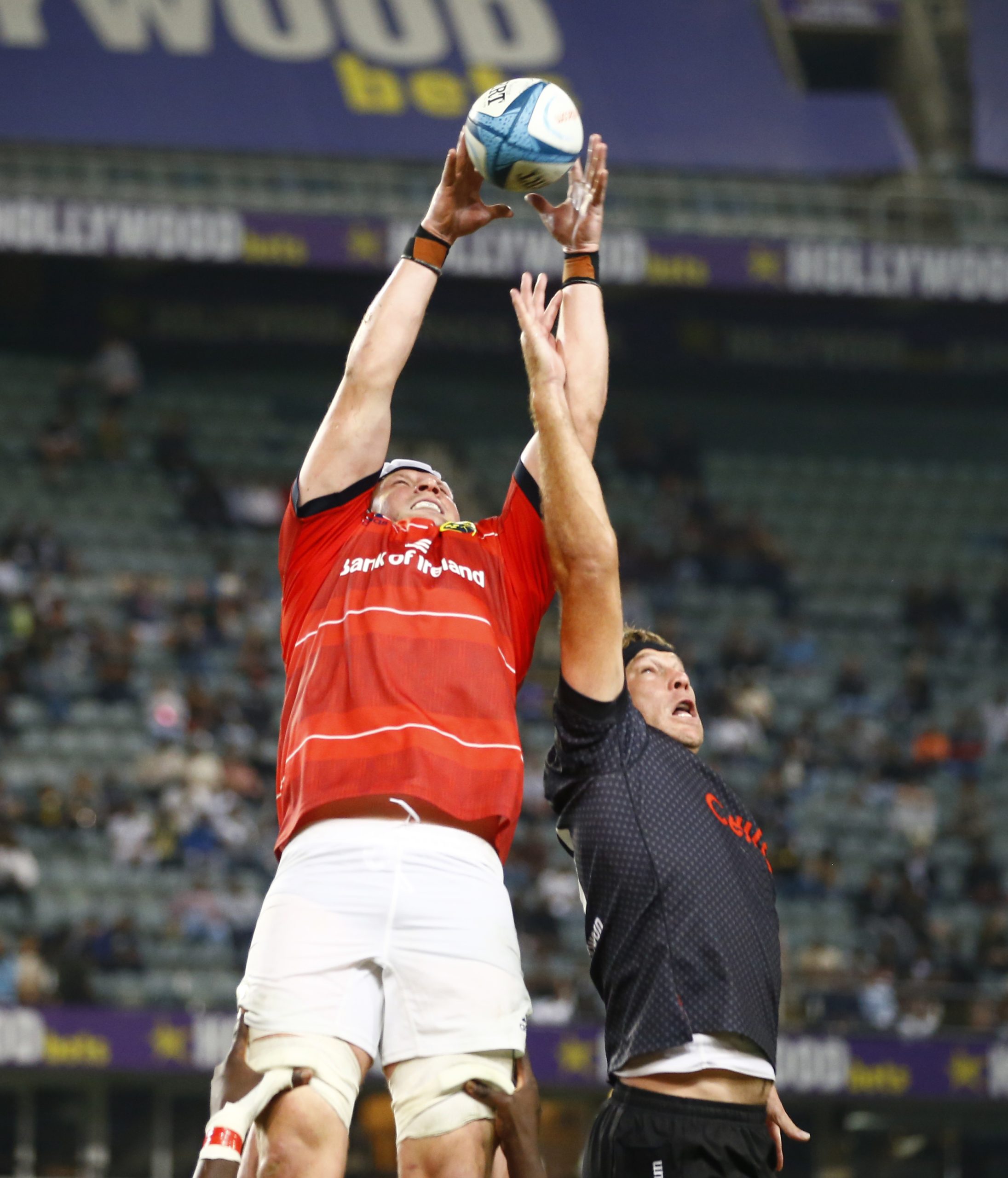
As a counter-example, Leinster – who had their business more or less complete with a few games to spare – were able to use those games as a development tour where they handed out debuts and minutes to prospects and down chart squad players in a no-risk environment. Sure, they got tanked 62-7 in one of those games but the entire point was that it didn’t matter; the minutes they were spreading around were of more value than a win or a loss.
Because of Munster’s poor start to the season, there was very little wiggle room for experimentation, outside of the second row where a raft of injuries meant anyone north of 6’3″ was going to get an opportunity. By November, Munster were in Must Win mode for the last two-thirds of the season with no margin for error and still had a tonne of work to do just to ensure Champions Cup rugby by Rounds 17 and 18.
This meant that there was no realistic scope to use academy talents and younger players regularly throughout the season, especially as our bad start made us something of a target as the season progressed.
This season gives us a little more room to manoeuvre, at least as it currently stands so I made my own guess at the game categories up to Christmas to see where we can maximise minutes for prospects, the wider squad and, most importantly, pick up the points we need to keep us on track.
Let’s go over what I would see as the core aims of the first block and apply them as a filter;
- AIM 1 – Earn the points we need to be top three in the URC by the end of the first block of games and top of our Champions Cup pool/overall seedings to guarantee a home run from the round of 16 to the semi-final.
- AIM 2 – Assess key prospects in the initial run of five or six games where our internationals are away in descending order of importance from the second row with an impending contract pinch on Kleyn and Snyman. In order, these are;
- Thomas Ahern – Second Row
- Edwin Edogbo – Second Row
- Scott Buckley – Hooker
- Tony Butler – Flyhalf
- Daniel Okeke – Backrow
- Patrick Campbell – Back Three
- AIM 3 – Use the initial window of games from the start of pre-season to Stormers at home in Round 5 to expose academy prospects to higher-level game time.
- Fionn Gibbons – Midfield
- Evan O’Connell – Second Row
- Mark Donnelly – Loosehead Prop
- Chris Moore – Hooker
- Daragh McSweeney – Tighthead Prop
- Keiran Ryan – Loosehead Prop
- Brian Gleeson – Backrow
- Ruadhan Quinn – Backrow
- Ben O’Connor – Back Three
- Shay McCarthy – Back Three
- George Hadden – Loosehead Prop
- Dylan Hicks – Flyhalf
- Ethan Coughlan/Jack Oliver – Scrumhalf
- AIM 3A – Use the initial window to assess the contract and system suitability of expiring down chart talents.
- Jack Daly
- Jack O’Sullivan
- Jeremy Loughman
- Scott Buckley
- Liam Coombes
- Simon Zebo – Priority Decision due to Wages
- Joey Carbery – Priority Decision due to Wages
So, with that in mind, let’s have a look at that first block of games.
Block One
- URC R1 – 21st October 2023 – Cell C Sharks (H)
- Category B Fixture
- Both Munster and the Sharks will be without their internationals for this one regardless of how South Africa and Ireland so it’ll be a blended side by default. Players outside of Ireland contention along with preseason standouts will appear here. If players like Ruadhan Quinn and Brian Gleeson, for example, have gone well over the preseason I’d consider using them in the matchday ’23 here depending on who we have available. +5 points.
- URC R2 – 29th October 2023 – Benetton (A)
- Category B Fixture
- Irish internationals will be on a mandated 4/5 week cooldown after the World Cup is done so unless Ireland fail to make the knockouts, it’s unlikely we’ll see any of our players at Munster level until the middle of November. Benetton might well have some of their internationals back for this one depending on how deep Italy go at the World Cup so this is a fixture where we’ll need to go as strong as we can. This game is almost a “final” of the three preseason games + Sharks where we roll as much cohesion as we can into a tough away fixture against a good side. Depending on Benetton’s selection we should be looking at a win in this fixture like last season, but I’m budgeting a regular win only. +4 points. (9 points)
- URC R3 – 4th November 2023 – Dragons (H)
- Category C Fixture
- The Dragons – like most of the Welsh regions this season – are very much in a rebuild phase so we should be using this fixture as both a developmental opportunity and a five-point home banker, especially with our toughest run of the block happening in the ensuing rounds. +5 points. (14 points)
- URC R4 – 10th November 2023 – Ulster (A)
- Category B Fixture
- If Ireland make the knockouts – as I expect – and progress to a semi-final, neither ourselves or Ulster will have our internationals available for this game. I’d look at Ulster away as being a winnable fixture for us at the moment but that can all change depending on injuries and other factors I can’t know about today. +4 points (18 points)
- URC R5 – 18th November 2023 – Stormers (H)
- Category B Fixture
- It’s quite likely that both the Stormers and ourselves will be without our internationals for this game if we assume around 4/5 weeks off from their last involvement in that tournament. If both Ireland and South Africa make the quarter-finals, on the 14th of October, this would be an incredibly quick return for any internationals involved in that game on either side so I expect blended sides with opportunities for young standouts to backbone what should be considered an achievable home bonus point. +5 points (23 points)
- URC R6 – 25th November 2023 – Leinster (A)
- Category B Fixture
- Given that this will likely be the first opportunity for the provinces to use their test players post-World Cup – unless Ireland make a semi-final and subsequently play a final or a third-place play-off in which case it’ll be the players in the wider squad back available. We should have access to Nankivell, Kleyn and Snyman at this point – assuming Kleyn goes to the World Cup – and I think this would be a good game to get them involved. Either way, I’d budget this game as a free shot with no demands on a result one way or the other. A win would be great but I don’t think we’ll want to expose ourselves too much here so we’ll treat this as a Category B final of sorts for the block to this point. +1 point (24 points)
- URC R7 – 1st December 2023 – Glasgow Warriors (H)
- Category A Fixture
- This is the perfect opportunity for our first Category A selection of the season ahead of the Champions Cup with our Irish test matchday regulars included for the first time this season against an opponent that we owe one to. This has to be a home win and we should be pushing a home bonus before we break for the European Cup. +5 points (29 points)
- EPCR R1 – 9th December 2023 – Bayonne (H)
- Category B Fixture
- This game provides a unique opportunity to reward and further incentivise some of our younger players who will, ideally, have performed well in the previous ten games (three preseason games + seven regular season URC fixtures) with a bench appearance or a start against the weakest French side in the tournament this season. If any of our test guys are carrying a few bumps and bruises, this is the week to take them off the boil or leave them for bench impact with a view to hitting the next two weeks running. The IRFU might well be managing our test players’ minutes post-World Cup with the Six Nations two months away at this point so I’d budget the minutes of Beirne, O’Mahony, Murray, Casey and Crowley to use in the Leinster game as opposed to here. +5 points
- EPCR R2 – 17th December 2023 – Exeter (A)
- Category A Fixture
- Exeter are not what they were – like the Welsh sides they are in something of a reset phase at the moment – so we should be looking to overwhelm them completely with our strongest Category A selection on the road to nail down a possible bonus point that would leave us in a commanding spot in the pool over the Christmas break. +5 points (10 points)
- URC R8 – 26th December 2023 – Leinster (H)
- Category A Fixture
- This is a game that we’ll look to peak for at home against our biggest provincial rivals. I’d treat our game in the Aviva back at the end of November as something of a shadow war for this one. This is a game that Leinster will 100% be targeting for their internationals to get a measure of revenge for last year’s semi-final defeat so I’d use the Bayonne minutes to ensure I can go at full strength for this one, injury and form allowing. This game is a must-win for me – a tent pole game in the block – so my selection would treat it as such. +4 points (33 points)
- URC R9 – 1st January 2024 – Connacht (A)
- Category A Fixture
- The halfway point of the regular season and we’ll need to hit it strong, especially with two weeks off afterwards. I’d go as strong as possible for this with a view to putting a marker down in Galway after our defeats there in recent years. That said, I’d leave scope for 4/5 bolters throughout the 23 to reward the players who played well in Rounds 1-7. +4 points (37 points)
- EPCR R3 – 13th January 2024 – Toulon (A)
- Category A/B Fixture
- Depending on Toulon’s first two results in the pool, this game could take on a number of different guises. If Toulon have lost the first two games or are in a spot where qualification looks unlikely, we might look at rotating for this trip depending on our own results but if Toulon are flying I can see us going as strong as possible to see out the pool. I’m budgeting a point for this game as long as we can get our 10 points in the first two games. +1 (11 points)
- EPCR R4 – 20th January 2024 – Northampton Saints (H)
- Category A Fixture
- Our last competitive fixture of the block needs to finish strong, especially as it’s one of only two home games in the Champions Cup pools this season. This would be as strong as possible selection with a view to seeing out a bonus point win to finish off our pools on 16 points which, based on last season, would be enough for a home Round 16 game and a home quarter-final. +5 points (16 points)
- BONUS – 2nd February 2024 – Crusaders (H)
- Category B Fixture
- We round out the block with a glamour fixture in Páirc Uí Chaoimh that we’re incredibly unlikely to have any starting internationals available for given that it falls right in the Six Nations test window. This game is for the wider squad and best-performing prospects to get a chance to shine if they’re available.
I think these are fairly conservative maps for the season and while they rely on luck with injury to key players – as always – I think it’s more than achievable. I think 16 points is more than good enough for a high-seeded finish in Europe and on last season’s URC, 37 points would be enough for a top-two position heading into the last half of the season.
