

You didn’t dream it. It was all real.
On the 27th of May 2023, Munster won the United Rugby Championship Grand Final II by beating the Stormers 19-14 in Cape Town and, in doing so, broke a 12-year streak without a major trophy. What started as a quirk, a foible, a blip in 2014, three years after that Magners’ League win in 2011, transformed into a full-blown anvil made entirely of cast iron woe slung around our necks by 2018.
By the time 2022 rolled around, we were so used to that crushing weight of missed expectations that it had changed our physiology the same way the deep sea abyss shapes the creatures within it; to survive without light, without heat and with several atmospheres worth of pressure on every inch of your body means evolving into something you don’t recognise.

We had become used to being European gatekeepers. We had become used to losing to Leinster in semi-finals played in Dublin. We had become used to the We had become used to talking about “next year” and “transition” and the torturous hopium of “if”. If that player stays fit. If that signing works out. If we can get some coaching continuity. If we can get a good draw. If. That was never meant to be this club, but that’s what we became; a cautionary tale that even the most glorious of empires can stumble.
I’ve been over and back as to why that is – and I try to judge every season on its own merits – but, for me, there are three reasons for that stumble since 2011.
Stumble Reason #1: No continuity.
Since 2011, Munster have had six different coaching tickets. McGahan, Penney, Foley, Erasmus, Van Graan Ticket #1, Van Graan Ticket #2. That’s a change in coaching voice every two seasons on average which is genuinely bonkers when you actually think about it. Penney was radically different from McGahan, Foley tried a back-to-basics approach with an all-Munster ticket after Penney left for Japan, Rassie stripped everything even further back to create what would become the Heavy Kick Pressure that won the Springboks a World Cup and Johann tried to keep that style going when he was brought in mid-season to replace Rassie and Jacques Neinaber. He was faced with the unenviable task of “expanding” Munster’s attack in the aftermath of Erasmus’ kick-pressure game, something that Jacques Neinaber knows all too well these days.
In the end, it didn’t work.

Van Graan’s choice of Larkham as Munster’s main attack coach in 2019 proved to be a continuation of the churn we’d experienced in the years prior. Munster’s lack of on-field attacking identity during the 2019-2022 period has often been laid at Van Graan’s door but, for me, Steve Larkham is as much to blame. In theory, Munster were looking to play off-loading attacking rugby but that approach would change week to week. One week we’d play high Pass Per Carry rugby, the next we’d be back to off-ball, low Pass Per Carry rugby because rain was forecast. When the ground hardened up in trophy-winning season were never able to make the high Pass Per Carry rugby stick because we didn’t live it every week. We changed to reflect the weather and the opposition. As a result, we had no identity other than being a good defensive side with a good set piece.
That isn’t enough to win trophies, but it does create tactically aware, adaptable players that the right coaching group, willing to take even more pressure on their shoulders, might unlock. More on that later.

Van Graan had the longest tenure of all the Munster coaches in that period – with two distinct tickets – but he was never able to get Munster’s attack functioning anywhere near where it needed to be to win trophies. It’s for that reason that I declared his tenure a failure in the fifth season under his leadership in last season’s Anatomy article. Leinster, the team that consistently vanquished Van Graan’s Munster during those five years, had four distinct tickets in the same time twelve-year spell; Schmidt, O’Connor, Cullen and Cullen + Lancaster. All of the real coaching churn for Leinster was completed by 2016. That settled coaching unit really clicked into gear over the next few seasons and started to produce perfect system-fit players. Why? Because the system stayed broadly the same for two full academy cycles. Caelan Doris can break through really early in an environment like this because what the coaches are looking for doesn’t change every two seasons.

Settled coaching units and systems produce tailored academy output that is perfectly built to work within your systems. If the same coaching voices are in place season after season after season, that produces a consistent set of criteria that the players coming up through your academy and below can meet. Why is this important? Ask yourself about the kind of #10 that Rob Penney would need to make his system work. Now ask yourself if the same type of #10 could make Rassie Erasmus’ kick-pressure game work. Now ask if that #10 could make Johann’s chimeric, black mirror game plan work.
The answer is… probably not, no. In reality, the #10 that makes all of those different games work is probably three different players.
Every new head coach brings with him a new set of game requirements and that affects the players that get retained in the senior squad, developed in the academy and identified at the level below the academy. Ultan Dillane, for example, wasn’t necessarily the perfect lock for Rob Penney’s Munster when he was in the then sub-academy because, from a game perspective, he was pretty raw. If Dillane had come up during Erasmus’ tenure, he’d have jumped straight into the team because he was the ideal ultra-physical lock/half-lock for Rassie’s kick-pressure rugby.
As a result…
Stumble Reason #2: Our academy didn’t start producing elite-level talents consistently until 2019/20.
You could argue that this could also be combined with bad luck – which Munster have had a fair dollop of in the last twelve years – but the coaching churn is not unrelated in my opinion. Either way, prior to 2019, a majority of the players that came through the Munster academy were AIL/English Championship/PROD2 level players and the ones that weren’t ended up buckled by career-altering injuries.

Is it any surprise that Munster finally won a trophy when a crop of higher-level academy products and young talents managed to come through across three seasons of rugby from the ages of 22-26?
Just check out the names involved at the end of the season.
Shane Daly, Calvin Nash, Jack Crowley, Ben Healy, Craig Casey, Gavin Coombes, Jeremy Loughman (signed as an academy player), Alex Kendellen, John Hodnett, the Wycherley Brothers, Diarmuid Barron, Roman Salanoa and the likes of Thomas Ahern and Edwin Edogbo who recovered from injury a little too late to make an impact at the end of the season but who played a role in the early going of the season.
Stumble Reason #3: Rotten luck.
People like to pretend that chance, luck, fortune or whatever you want to call it has nothing to do with a successful or an unsuccessful season. Maybe it’s that lack of control that spooks people into rejecting this very simple fact. I don’t know. Either way, if you pretend that luck has nothing to do with success, you’re delusional.
This can manifest itself in a number of different ways but it’s most often seen in the inhabitants of the rehab room.
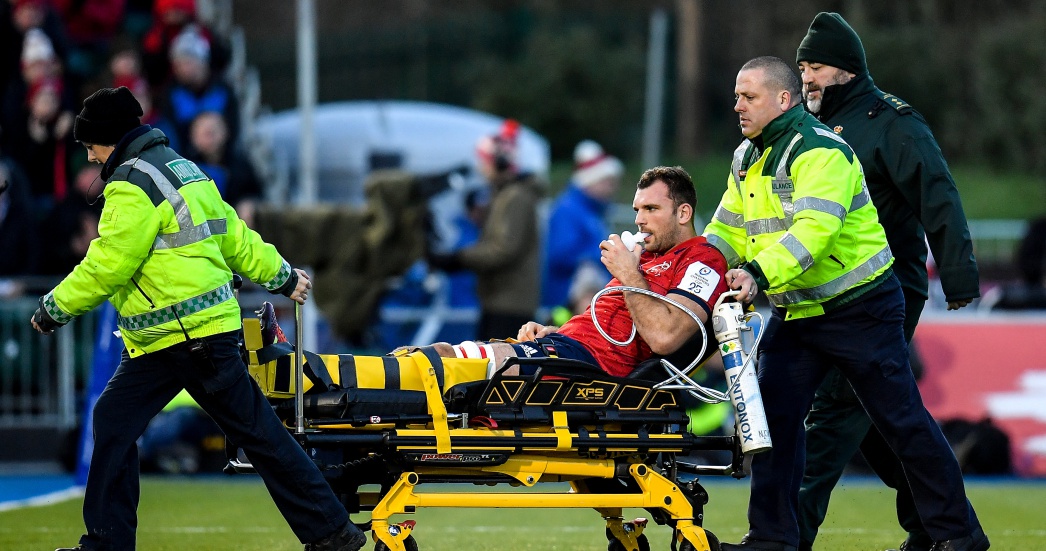
How many times over the last four or five seasons did Munster head into the business of the campaign with a killer series of injuries? Every single year – except this one, weirdly enough.
In just the last five years alone, we’ve gone into key knock-out games with the likes of Tyler Bleyendaal, Joey Carbery, RG Snyman, Jean Kleyn, Chris Farrell, Chris Cloete, Tadhg Beirne, Peter O’Mahony, Conor Murray, Keith Earls and on and on and on unavailable because of season-ending injuries either on their own or in combination.
If you can’t get your best team on the field – whatever that looks like – they you’ll fall short of the expectations that the best team generates on paper almost every single time.
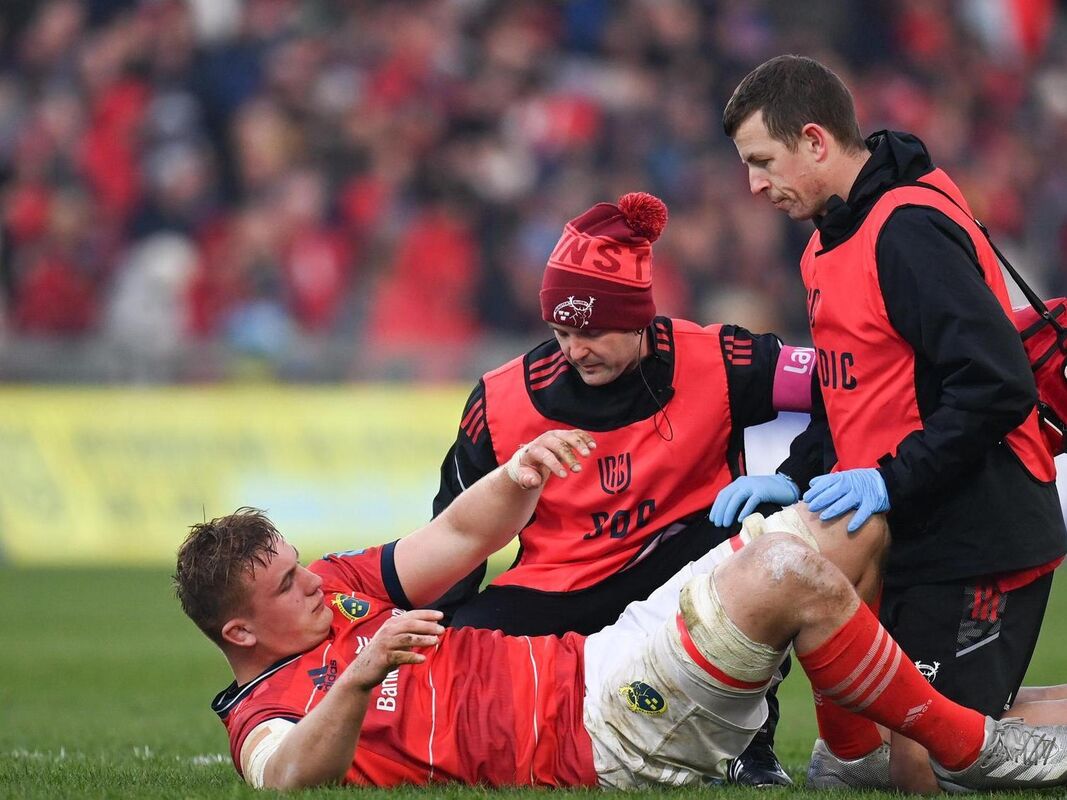
How do La Rochelle do in that European Cup final a few week’s ago if Will Skelton and Greg Aldritt picked up two-month injuries in April? How many Heineken Cups do Munster win in the 2000s if Ronan O’Gara missed every other run-in through injury? We know the answer to this instinctively, I think, but the bubble around the modern game has conditioned us to parrot Next Man Up the minute a key player gets injured.
There are some guys you just can’t lose and, for the last six or seven seasons, we really tested the limits of just how many guys you could lose.
Why do I mention all this?
Because this season had every reason you could possibly want to end in more or less the same spot as the last few seasons. In fact, go back to the first of April, watch how limply Munster flopped out of the Champions Cup away to the Sharks and tell me that you didn’t see the league campaign ultimately ending in the same way.
In the aftermath of that game, I wrote the following;
There are things you know and there are things you feel.
I know that Munster are less than a year into a full rebuild of the squad from both a personnel perspective (without an offseason of new recruits or releases) and a radical on-field “style” perspective. I know that, given those changes plus the rapid upscaling of younger players like Hodnett, Barron, Crowley, Salanoa, Casey, Edogbo, Ahern, Nash, Daly and others from habitual rotation guys into starting regulars when they are fit and available. I know that what Munster are trying to build here won’t properly be visible – or be properly judged – until 2024/25.
I know all that.
But does that mean I feel any better after a 50-35 pumping in Durban? No. I feel like this team is running on fumes at the moment. I feel that Snyman/Ahern/Wycherley/Edogbo’s injuries for the first half of the season and Beirne’s for the second half were brutal campaign killers that holed us below the water line at key points. I feel that, when push comes to shove, we’re still just a little bit too small to impact teams with serious packs. I feel that we are not a team with a serious pack, not even close, and until that changes nothing else will.
Well, that was wildly wrong, as it turned out, so what was I seeing here?
Firstly, that Sharks pack from that game was (and is) a horrific matchup for our style of play, especially with the collision dominance they had combined with the sauna-like conditions on the day. What I think I was actually seeing was the secret to Munster’s on-ball game and, I think, all on-ball “KBA” sides; it doesn’t work without serious week-to-week on-field cohesion.
We were learning that all season long.
What’s Killing Us is Us
If we go back and watch – as I have – the entire start of the season from pre-season friendlies right up to the South Africa Select XV game in Páirc Uí Chaoimh, Munster were clearly getting to grips with the new tactical, framework and physical demands of the gameplan they’d been training since the start of the preseason, which was shortened anyway. Blown passes, poor breakdown work, shoddy set piece – it’s all there but by far the biggest disruptor to those early season games was the Emerging Ireland tour that took nine players who were training for the previous few months in the pre-season off to play the Windhoek Draught Griquas, the Toyota Cheetahs and the Cadbury Creme Egg Crocodillos XV on a few weeks notice. One of those isn’t a real team.
The first game of the season had a bad result away to a strong Cardiff side, in that it was a losing bonus point loss, but Munster didn’t actually play too badly looking back at it. The real trouble would begin in the next few games when ten of the players most well-versed in what we had been trying to do since pre-season jetted off to South Africa while our test players who had been touring New Zealand a few months prior were brought in ice-cold to a brand new offensive system.

The performances they produced away to Dragons, at home to Zebre – as dour a game as I can remember covering in person – and away to Connacht were real bad.
Graham Rowntree said this after the loss to the Dragons in Rodney Parade but he could have been saying it about any of these games;
“I’m not happy.”
I told the lads I’m not happy with our discipline, inaccuracy, the way we were forcing things and our error count. I can’t have this. I was surprised about our inaccuracy, particularly going into their 22′, and our ability to keep the ball in that key area. That really shocked me, I’ll be honest with you. Whoever you play, you’re going to have a challenge — particularly when you play away from home, regardless of what’s happened in the Dragons camp this week. I expected better in terms of the stuff we can do better. It was just so poor.
We had eight turnovers in the first half and were ill-disciplined. We lost lineouts, knocked on and we never got a foothold in the game. We had to address that and be patient. Just before half-time, we sorted that out but in the second half, we fell away in all those areas of the game, especially going into their 22‘. We had British [& Irish] Lions on the field but whoever has got the shirt, we just expected more accuracy.
We were just sloppy.”
Now, all the while, you could see what we were trying to produce from an offensive perspective while, defensively, we were showing no real drop off from the JP Ferreira defence of the previous few seasons. We were trying to hang onto the ball for long periods, it just wasn’t producing the opportunities that we needed it to and self-inflicted wounds – at the lineout, in particular – were killing us stone dead.
Three games at the end of October would define our opening block. At home to the Bulls, away to Leinster and at home to Ulster right before the November break.
The home win against the Bulls with the bulk of the Emerging Ireland squad back in the saddle was a badly needed, highly credible win right when we needed something, anything, to lift us out of the URC basement.

Yes, that game against the Bulls was the first time we were able to select some proper size in the pack – producing our best breakdown performance of the season until the run-in – but something, as obvious as it might be, was happening too; we were getting better the longer we played with a settled team with the same style week to week. Training faster, for longer, with a game each week to cauterise the information you’re getting, followed by a detailed review and then more training starting the cycle again the next week – it was accelerating everything.
Passes were sticking. The lineout was still all over the place at times but our work in transition and post-transition was good and getting better. We were looking visibly fitter.
We lost the next game away to Leinster but you could see that we were turning into a team that could land shots against them at the very least.
These last two games have shown us, in different ways against both the Bulls and Leinster, that what we’re trying to do works and that, with the right approach, we can get where we need to go. I think what this game showed us is that the raw materials are there but we’ve still got a distance to travel from a quality perspective, obviously, but also when it comes to pulling the trigger fully during the physical exchanges at the breakdown. We were much better than in previous games but we’re still not fully “going there” as a collective. When that comes, we’ll make the big man in the blue suit do more than just bleed.
The loss the week after to Ulster was a sickener but, brutalised with injury and test callups as we were – an average age of 21 in our back five and replacements for that game – the performance itself was more frustrating than disappointing. Ulster were, relatively speaking, able to load up for that game and won it in the last possession when we were chasing a late winner.
Regardless, it left us 14th in the URC during the November test break and a mountain to climb.
But that would have to wait.
A Turning Point On A Thursday Night in Cork
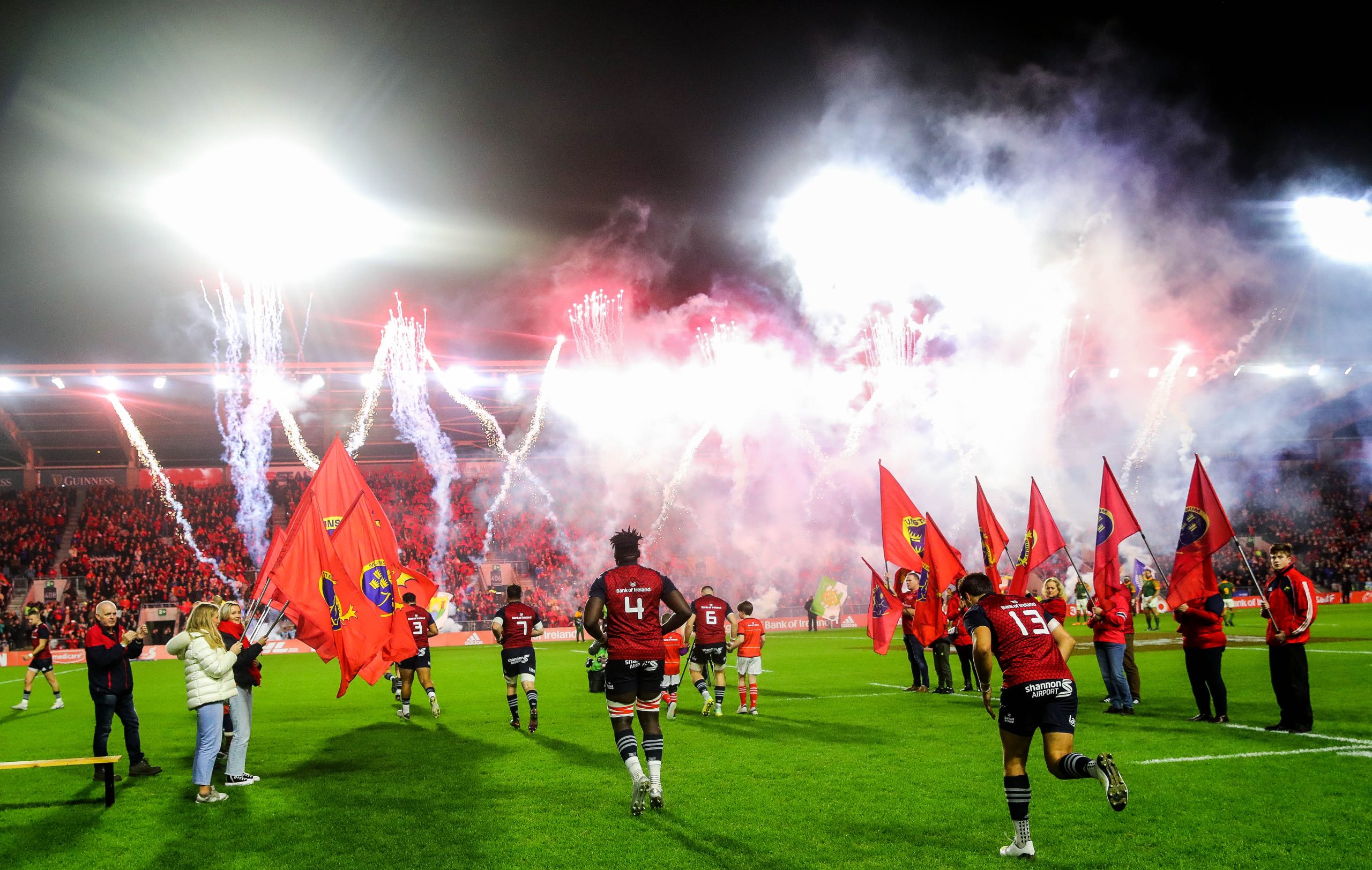
Munster’s win over South Africa Select XV in Páirc Uí Chaoimh was the pivot on which the trajectory of the season turned. The game itself was excellent, the occasion gargantuan and the belief the squad took from it as a group immeasurable. The build-up to this game was very little other than woe, industrial levels of woe, in fact, and that night in the Páirc was a cathartic release from, not just the poor start to the season, but the previous few years of disappointment. On a wet November night in front of 41,000 people, Munster found itself again.
Beating this South African side – as limited tactically as they were massive, both physically and in the scrum – was…
… not a turning point in itself – that will only be visible at the end of the season – but it shows that the system can work under pressure against a formidable forward challenge, that we can stand up to massive carry pressure, roll with the punches and land a few of our own.
It was the proof we needed that what we were doing not only worked but could work when the pressure came on. People saying that this was only a friendly had no idea of the context Munster were playing this game in.
Losing in front of that many people in a new stadium with the eyes of the rugby world watching would have been nothing short of a disaster for the club but instead of being crushed by the pressure, they thrived and hung in for a massive win that rewarded everyone for believing. Not just the fans, but the players and coaching staff too. It was the first of three turning points in the season.

Our run over the next block of games was exactly what it needed to be, instilled as we were with a newly won belief that what we were doing was working. In the next 10 games, we only lost three times – by less than a score each time to Toulouse twice and Leinster once.
What should have been a punishing schedule of week-to-week, back-to-back rugby was exactly what this squad needed. Sixteen days after beating that South African selection, we beat Connacht in Thomond Park in a manner that wasn’t properly reflected on the scoreboard. The anti-counter-transition techniques we used in this game would be the backbone of our playoff run later in the season. After that, we beat Edinburgh away in an incredibly convincing manner before narrowly losing to Toulouse in a fog-bound Thomond Park.
It goes some way to explaining how up and down this season has been so far that Munster have played infinitely worse against teams that would have to improve 200% just to be considered a patch on this Toulouse side and ended up losing by more points. Look at the team that lost to the Dragons in Week #2 of the URC or laboured to a non-BP win over a poor Zebre side in Musgrave Park.
Could you imagine that side pushing this Toulouse team to a low PPC, high kick pressure, maul and drive game in the European Cup? It’s an illustration of how far we’ve come since September that the hilariously, almost cartoonishly thick freezing fog helped Toulouse more than it did us.
Our run through December and January did what it needed to – put us back into top-eight contention in the URC and got us into the last 16 of the European Cup. Failing to take two winning bonus points against Northampton meant we would head to Durban to play, and ultimately get beaten by the Cell C Sharks.
Our pre-Six Nations block would end with a series of impressive bonus point wins, none more so than the 40-30 win on the road against a dangerous Benetton side. At that point, I was pretty comfortable with the idea of us making Europe for next season at the very least with a home quarter-final still on the menu.
We put away a chaos-stricken Ospreys side mid-Six Nations in a game that was closer to a marketing meeting than a game of rugby given how many business decisions they were making in a week where Welsh players were considering strike action.
That brings us back to the three-game run that would define the season and, unfortunately, bring tragedy back to the club with the untimely passing of Tom Tierney.
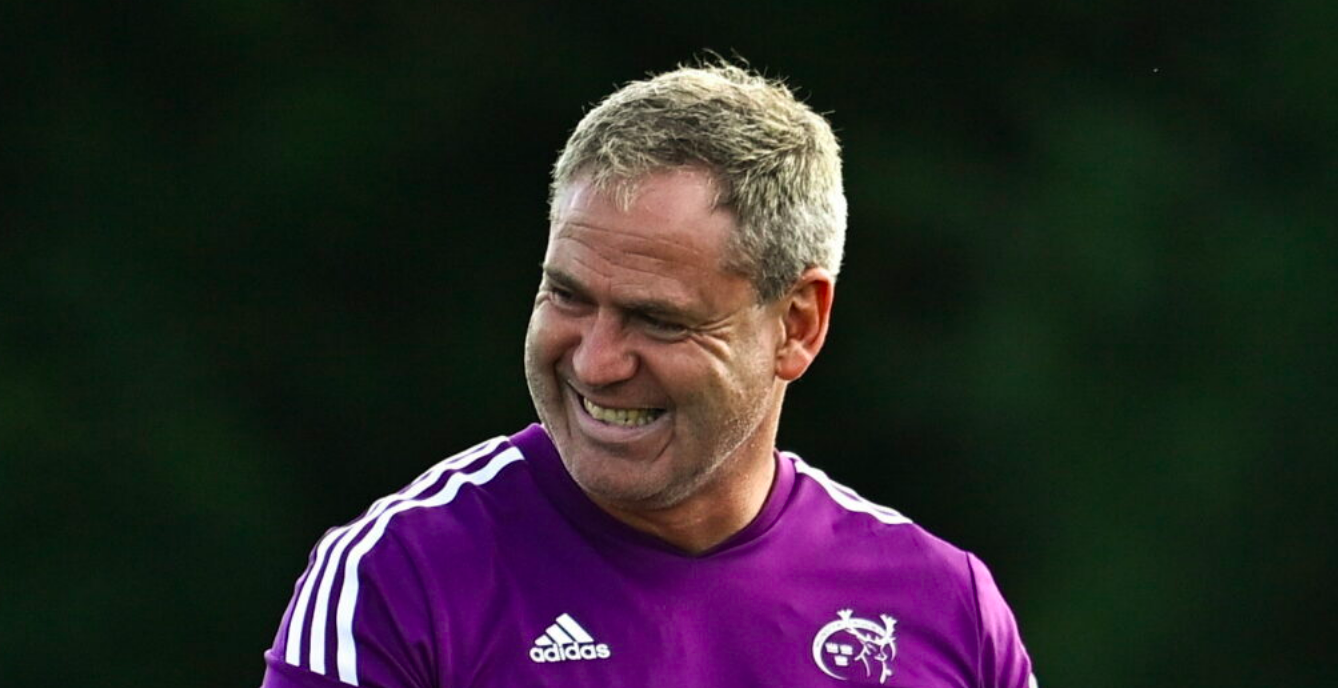
The effect that a loss like this can have on a playing group is hard to quantify. Some would have known him very well, some in passing, but the loss would be felt by all in some way or the other. He was a friendly face that would have been around the HPC every day and then, all of a sudden, he wasn’t. He would be missed by all who knew him.
It would be hard enough to deal with in an office environment, never mind a game like this where you are evaluated in public in front of a large crowd while 15 of the biggest men you’ll ever see are trying to smash you up. The toll would be considerable and unpredictable. Grief is often like a landmine – you never know when you’re going to stumble on it.
On-field, Munster were going through the most amount of time without a game since before the South African game. In the 34 days between the Benetton game and the Scarlets game in Musgrave Park, we had one game against an Ospreys side that would have to quadruple their efforts to even count as half interested.
When you combine that time away from match week cycles and the grief of a treasured friend passing away, you can somewhat understand the lopsided win over the Scarlets mid-Six Nations that showcased some of the best (and worst) of our play up to that point in the season.
Crucially, we had another three weeks off after this game and came in visibly looking ice-cold against Glasgow in what was, a bit like the South Africa game, a defining game in our season. We got absolutely walloped by Glasgow at home, to the point that I saw people streaming out of the stadium at halftime. That loss and the manner of it would play a big role in the end of the season.
Joey Carbery, who started the game at #10, only played eight more minutes for Munster for the rest of the season while guys like Jack O’Donoghue and Dave Kilcoyne had season-worst performances.
“I’m not going to sugar coat it, I didn’t sugar coat it to the lads at half-time or after. That wasn’t us, we have to do better than that.” – Graham Rowntree post-Glasgow
A week later we’d integrate Conor Murray, Jack Crowley and Peter O’Mahony post-Six Nations for our trip to Durban but we’d been unsettled by the time off the field, the flow we’d built up since November had dissipated and that brought us back to Durban and a massive Sharks side who battered us and ended our European season.
The two weeks after that game were the final turning point of the season. I’ve heard chatter about some of the frank discussions, heated arguments and straighteners that took place in that time between coming home from the Sharks game and heading off to tour South Africa again a week later.
The cleared air combined with the old school craic of touring brought everyone together and, with an intense end to the season we found our flow again in Cape Town, beat the Stormers in their home ground for the first time in over a year, drew with the Sharks a week later in a game we should have won before going on an all-timer of a playoff run. We were back playing week-to-week rugby in short blocks with no more than a week of downtime between games. With a settled, battle-hardened starting XV, we took every lesson from every game in the season to that point.
We used the Bulls and Toulouse games to beat the Stormers and Sharks in the regular season.
We used the away Saints and Ulster games, along with the Glasgow game from Thomond Park to rumble Glasgow in an away quarter-final.
We used our home win against Connacht and our narrow losses to Leinster to finally beat them in the Aviva Stadium.
And then, when it mattered most, we held our nerve to put away the Stormers in a final with a performance that should have seen us win by 15+ points on the day.
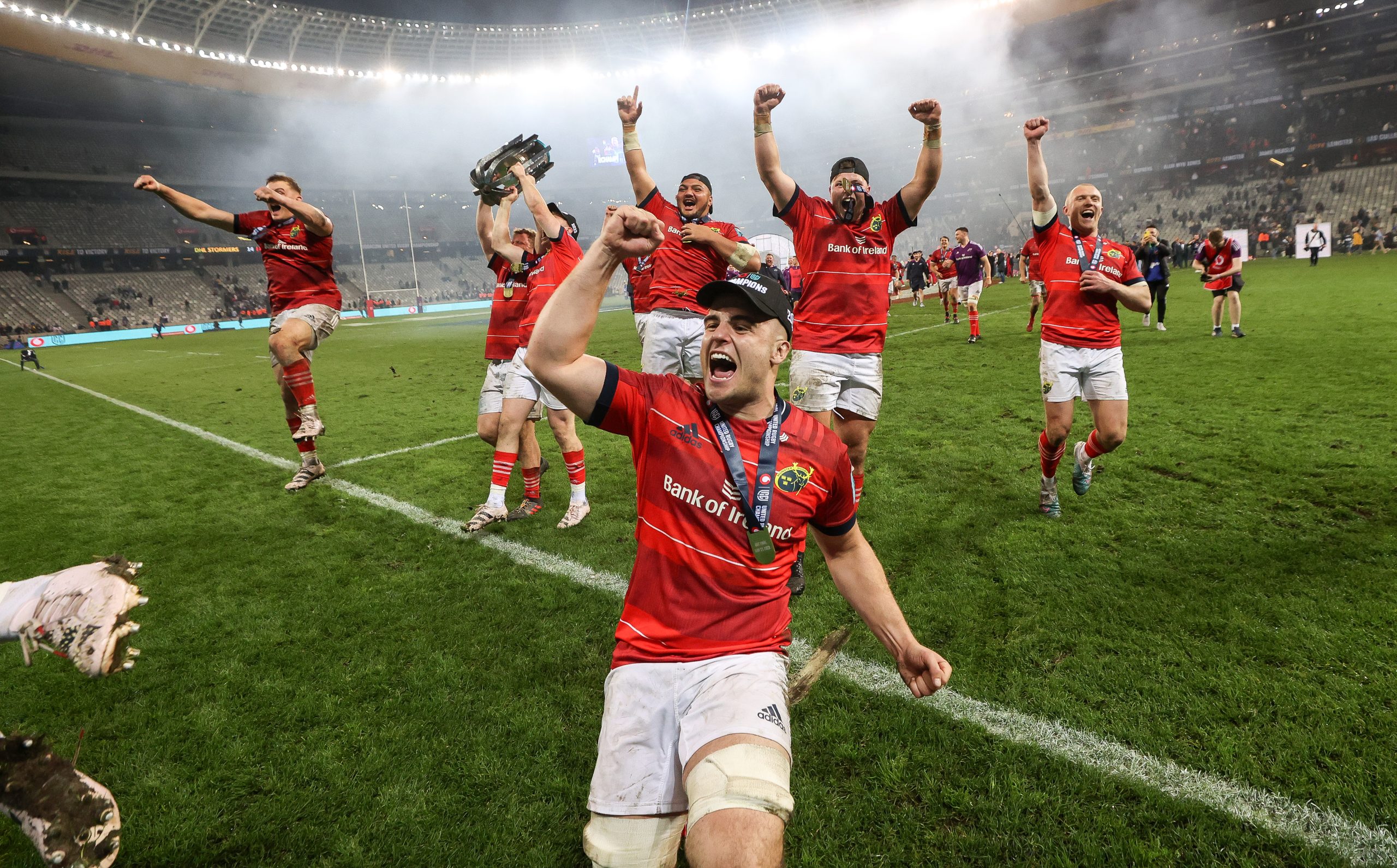 Champions, once again, 4382 days on from our Magners League win in 2011 and we did it in a style that was progressive, bleeding edge and completely detached from what had become the Munster way, both in the last few years and historically.
Bravery in the Coaching Box
Our fitness levels, something the coaching staff took a calculated risk on to change right before the season with no time for it to bed in, was the big winner when May came around. At the end of last season, Rowntree, Prendergast and Murray essentially decided that they were going to have a preseason that extended almost into December when it came to fitness. We were changing our style of play quite radically and, with that, came new demands on our fitness.
As I wrote earlier, our game over the previous seasons under Van Graan and Larkham had been very middle of the road. Our fitness levels were good but they were conditioned to play a certain level of game and no more. A move to on-ball rugby where we’d be keeping the ball-in-play time to levels close to what we played against Toulouse in the Aviva last season meant a massive change in approach.
In the opening rounds of the season, the pressure to change the training and revert back to a more balanced style would have been intense but they stuck at it. The players were going to bend to the new way and not the other way around. With that came a new level of ruthlessness too. In previous seasons, it was often considered harder to get off Munster’s Category A side than it was to get on it. This year big players were repeatedly dropped and cycled out of the team for poor performance, poor system fit or not getting with the program in training.
That was all new and it lit a fire under the squad in a way that hadn’t been done in years, certainly since Rassie’s chaotic 18 months in charge. Joey Carbery and Jack O’Donoghue were backed to lead us into a crucial home game against Glasgow. Both completely underperformed and, as a result, they tumbled down the chart. When Dave Kilcoyne came back from injury, Irish involvement or not, he wasn’t getting ahead of Loughman and Wycherley. If you earned your spot on the field, you could lose it on the field too and everyone knew it. That drove standards.
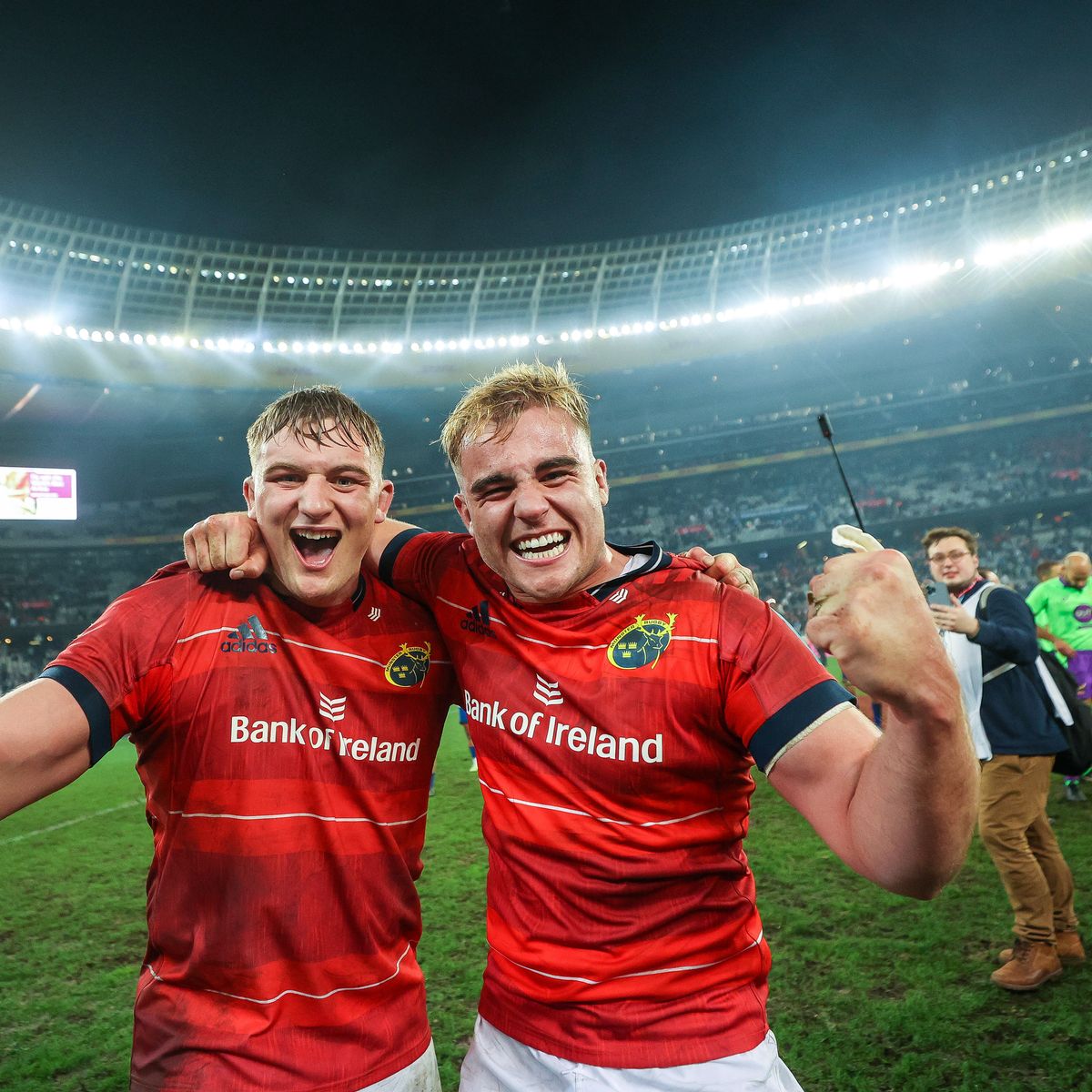
The change in fitness had an impact that can’t really be quantified fully but I’ll try with this stat. Munster didn’t lose a game all season long where the ball-in-play time was longer than 38 minutes. All you need to see for proof is to look at the way we finished the semi-final and final at the end of a long season. Two winning possessions past the 70th minute? An unfit side can’t operate in that rarified air.
Our offensive breakdown improved too, especially where it counted. Nobody in Europe had a quicker ruck than Munster in the opposition’s Q3 zone between the halfway line and 22. All that drives you to new performance levels and it showed, especially when we expelled a lot of nonsense post-Sharks I in the European Cup.
That run from Cape Town to Cape Town is genuinely historic and will stand to this group for years. It’s the launching pad that we can use it to be to bring us back to the elite level in Europe. What did it for us this year? A bit of luck with injury when it counted, a group of young players brought through over the last three years and the kind of coaching bravery that overcame the time constraints that usually come with turning a side that hasn’t won trophies in years to a side that does.
Graham Rowntree and his team weren’t afraid to move fast and break things when it came to making this title-winning outfit and, in throwing out the script of the last few seasons, they realised the potential that Van Graan and Larkham bumped against but could never realize. That bravery, that bollocks, is what allowed this group of players to achieve what no one expected and what we’ll never forget.
In the end, they did it for each other, they did it for their coaches, they did it for the people they lost along the way and they did it for the fans.
It was another one in the win column, another one for the highlight reel, and another win for the Bad Guys.
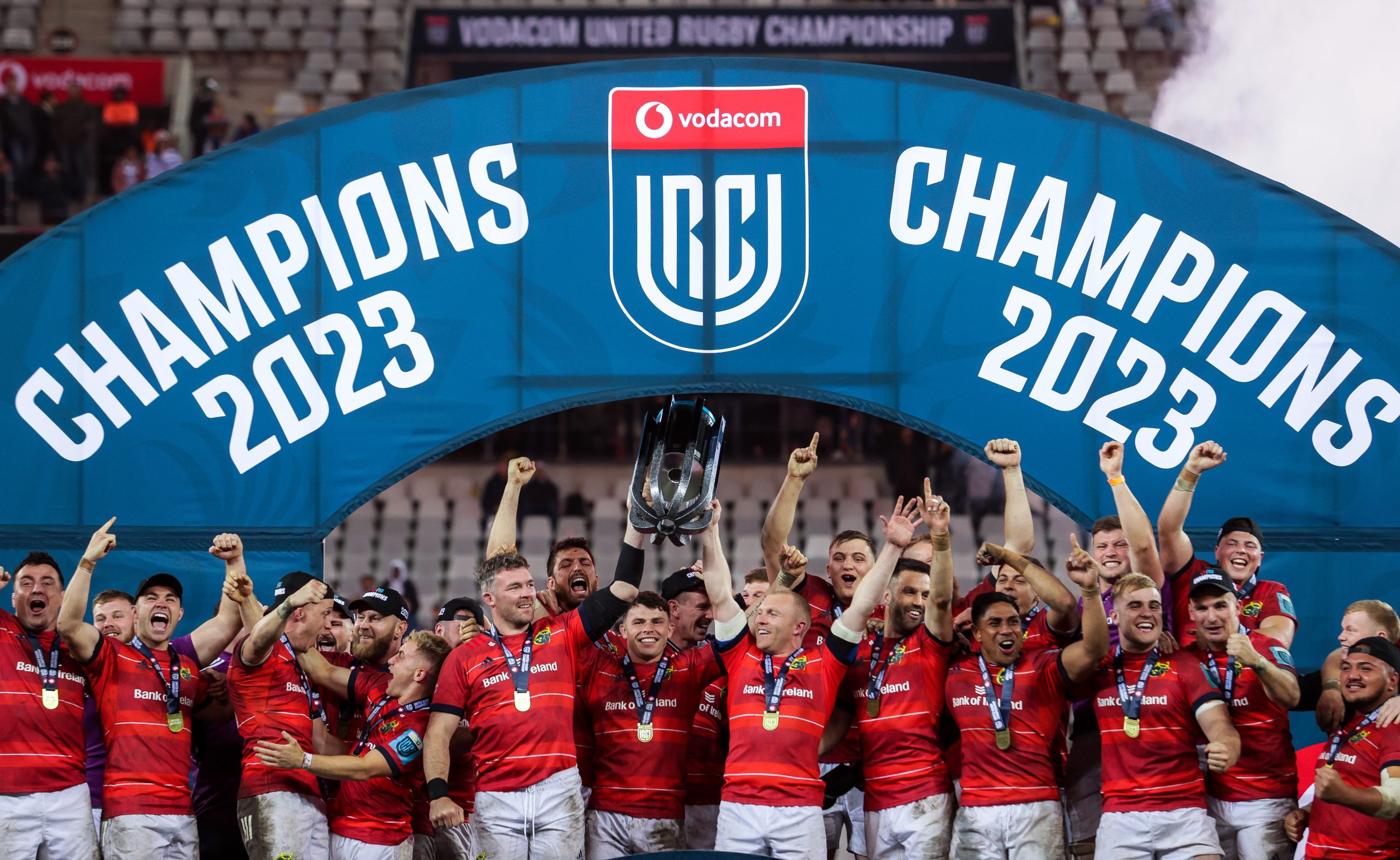
Where do we all go from here? Well, as of the first game of next season, we’re the champions of nothing. We’ll have an enhanced target on our back and a bunch of provincial rivals looking to put us back in the place they caged us into for more than a decade.
It’ll be up to us to take what worked here and build on it, relentlessly, until we’re lifting more trophies and winning more big games. It’ll be hard, but will it be harder than winning this trophy without playing a home game for two months with every single knockout game played on the road?
No.
It won’t.
And if we remember that, we won’t go another 4382 days before we lift another trophy. They always say, winning a trophy gives you a taste for more. We will need to be voracious and I think I can see that hunger building already.
We’re the Champions, but there are so many more levels for this team to hit. Forget about the 2000s. They’re gone, long gone, and they aren’t coming back. This new Munster is building its own legacy and its own grand arc to show the world that, once again, we back up.
