



If the Emerging Ireland tour dictated how the start of Munster’s season would go, three weeks in South Africa will define how it ends.
Two weeks ago, Munster were at the end of a chastening 15-point defeat that had some serious Vaseline put on it during a final 20 minutes where the Sharks took their foot off the accelerator with their business more than done with 27 minutes still to play.
The final score didn’t disgrace us by any means but let’s also be quite clear – when it came to the part of the game where it was actually won and lost, we conceded twenty-six points. A try bonus point dropped on our heads in seventeen disastrous minutes that finished Europe and put real doubt around the place into what this group are doing.
It was put to Graham Rowntree this season that the season was in danger of “fizzling out” – something he took umbrage to – but that is a real danger at this point, as it was last season. The evidence? Look at that insipid opening 20 minutes of both halves against the Sharks. Tell me that’s a team that’s dialled in where they need to be.
If that’s repeated this weekend, we could well be looking at Challenge Cup rugby next season, which would have deeply unpredictable financial consequences for the rebuilding job still in progress at Munster Rugby.
This season alone has seen multiple mid-season departures (and soon-to-be departures in the summer) with a few more to be announced. By the time Rowntree got the job, there was no time to trim the squad in the way he wanted – all the contract work was done while he was still in the interview process – but, even with that starting disadvantage, there was value in seeing how players would respond to the radically new way of doing things that he had planned for the first season.
He will have had a good idea by December but a crystal clear picture over these next two weeks in tandem with the dip in performance since the Scarlets game. Who can be relied on? Who stands up when it counts? Who goes missing when the heat comes on and the pressure of minding people’s jobs in the organisation next year cranks up? That’s the downside of missing out on Europe that we don’t see – the jobs it could cost off the field.
This team have their own aims, their own future next season and their own pride to play for but they have to play for the people who help them do what they do now, too. Win, and whatever else happens the week we’ll be in Europe next year with all the sponsorship deals, bonuses and big gates associated with it with a playoff run to come in May. Lose, and we’ll limp into next week with even more pressure against an even bigger, more imposing team who’ve already slapped us around in the last few weeks.
Big game, this.
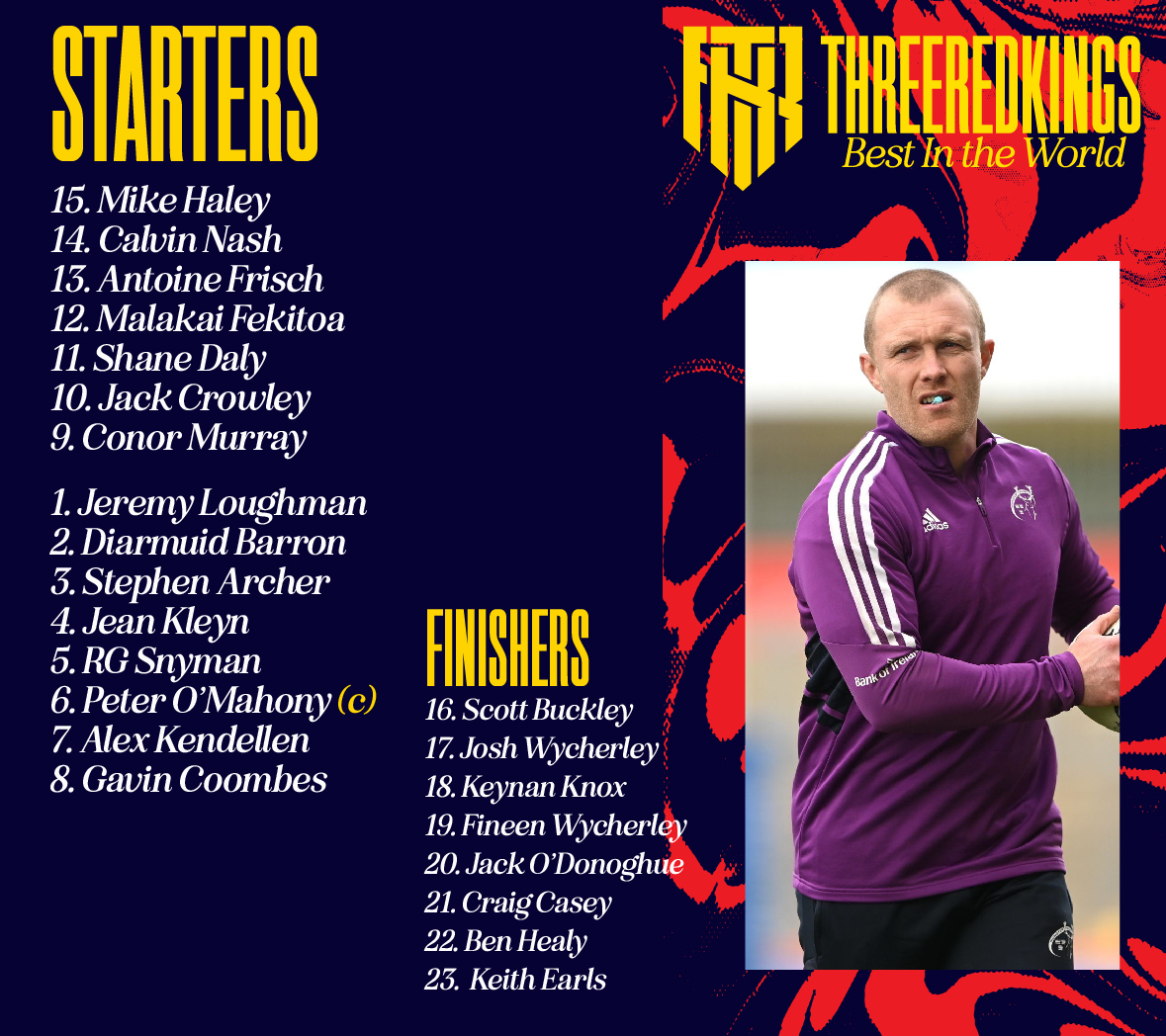
Stormers: 15. Damien Willemse, 14. Suleiman Hartzenberg, 13. Ruhan Nel, 12. Dan Du Plessis, 11. Seabelo Senatla, 10. Manie Libbock, 9. Paul De Wet; 1. Stephen Kitshoff, 2. Joseph Dweba, 3. Frans Malherbe, 4. Ruben Van Heerden, 5. Marvin Orie, 6. Willie Englebrecht, 7. Ben Jason Dixon, 8. Hacjivah Dayimani
Replacements: 16. JJ Kotze, 17. Ali Vermaak, 18. Neethling Fouche, 19. Ernst Van Rhyn, 20. Marcel Theunissen, 21. Evan Roos, 22. Herschel Jantjies, 23. Clayton Blommetjies
It will be impossible to beat the Stormers if we produce the same offensive breakdown performance that we did against the Sharks.
If we play to our potential, we are a nightmare matchup for them this season to the point that we could score 4/5 tries here with a fair wind but with a soft-shoe, ineffective breakdown performance we will lose, and lose by some distance.
Last weekend, the Stormers were blown away by a high-possession, high-phase count game that mostly exited through mid-range contestable box kicks mixed in with the odd long-range grass finder to test out their backfield alignment. This is Munster’s game at its best. The first-half performance against the Scarlets – which seems like it was last season, such is the tide change since then – is a nightmare matchup for the Stormers as they are currently constructed. If we can get back to that, or even close to it, we will have the firepower to hurt the Stormers, even with their imposing home record.
The key to beating the Stormers – and scoring tries against them, more importantly – is ball retention and structural pod width on your passing networks. It’s a cliche to say that you want to work their big front row but there is an element of truth to it. The key is to stretch Malherbe, Kitshoff and Dweba on centre field and then on a wide ruck position. The Stormers don’t really compete at the breakdown in any real, dedicated way. That might change because of the success the Sharks had last time out but, in my opinion, they don’t quite have the firepower to make that kind of defensive play that often. I have no doubt, however, that the Sharks’ counter-rucking ploy will have piqued their interest but only so much. The Stormers’ defensive system relies on heavy two man tackles that slow the entire recycle and numbers in the line. If there’s an opportunity in the wide channels on an exposed ruck they will, of course, look to jackal but it isn’t a constant feature of their game.
They file numbers in the line on defence – watch out for Munster looking to catch a lazy pillar with a pop pass to Nash against the grain to catch them here – and that high line is aided by the Stormers’ aggressive – but imprecise – outside edge blitz.
You can see Exeter going after it here – drawing the two-man stop in midfield, allowing Dayimani and Malherbe to fold – and then stacking numbers back to the blindside to expose Senatla.

Exeter have to latch and drive here because there’s not much of a jackal threat from the Stormers. A lot of our schemes will rely on Stormers sticking to this plan because if they counter-ruck with any regularity it opens up a lot of threats (and opportunities) for us.
If Stormers stick with multi-man hits and active folding, our 3-3-X system should produce a tonne of workable opportunities for us.
You can get a good idea of the principle here;

Multi-man hit, active fold, a 3+1 pod running off the primary playmaker, who finds the outside runner against an aggressive, imprecise blitz.
That edge blitz will expose itself constantly and we have to be able to pass above it.

Once we get behind that edge blitz, Stormers are slow to reset back which means gaps for short balls, offside penalties and misaligned structures.
The key is to make sure you get width off that pass to the pod off #9. Going short against the Stormers just hammers you. The pass has to get beyond the third defender to (a) prevent inside drift poach opportunities (b) open up our offloading game beyond the multi-man hit into their fold lane and (c) drag their front row defenders an extra 2/3 metres per defensive set.
This should have been a try for the Chiefs inside the first five minutes.

Munster play those pod shapes. We play with that depth. We have forwards who can extend the width of the pod and pass into the screen effectively. We have guys like Crowley and Frisch who can stitch together multi-phase sequences.
If we can do all that here for 80 minutes, we’ll win. The Stormers have a big scrum that will win a penalty or three here but we have the defensive lineout to spook Dweba, who can implode on the line with the right kind of pressure.
It’s all there for us to win it and turn the season around. Can we do it? Let’s see.
