


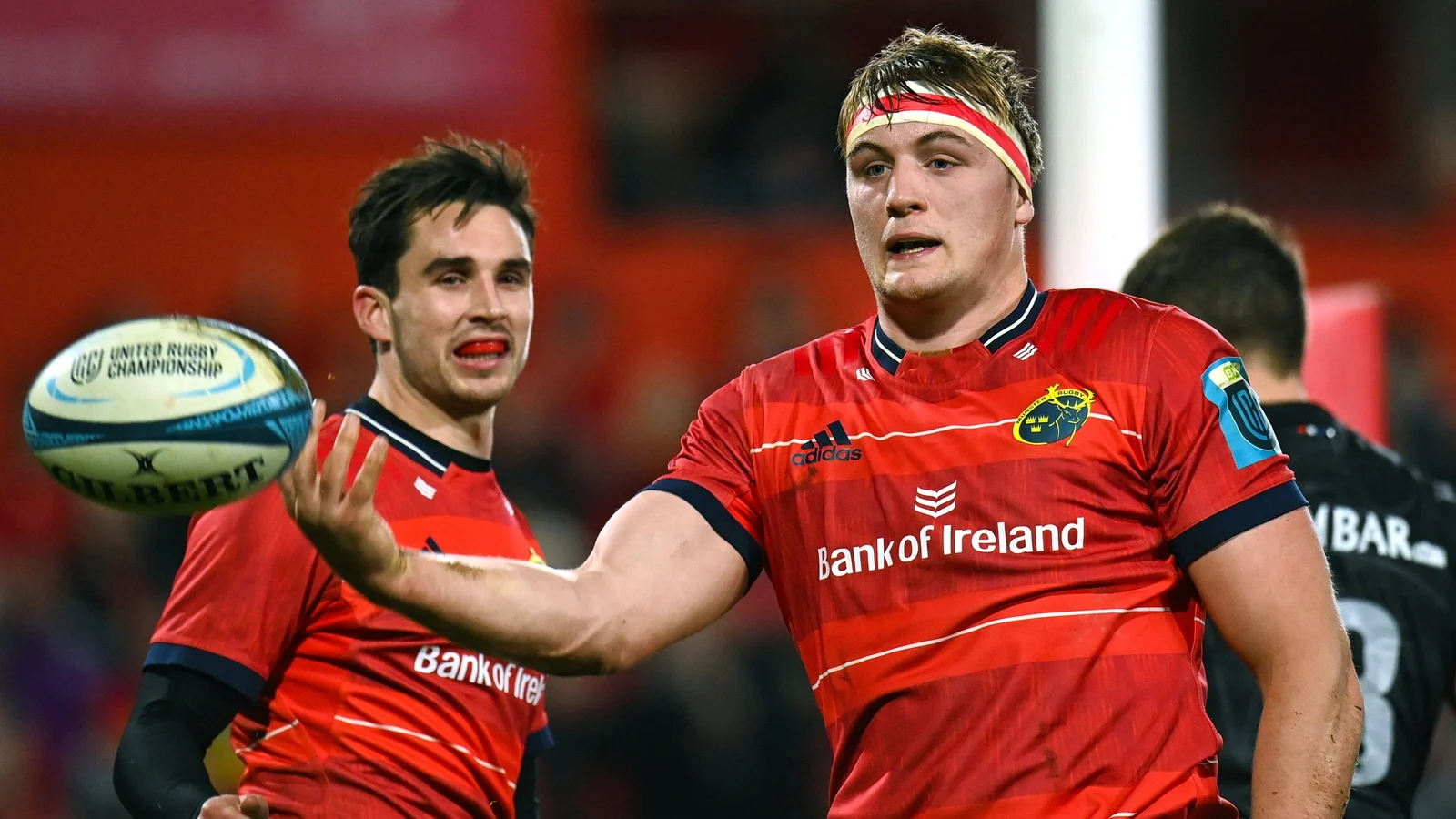
I don’t listen to podcasts. I don’t even listen to the ones I’m on unless you count hearing myself talk into a microphone as I’m recording them, which I don’t so you shouldn’t either. People listen to podcasts for me, though, and regularly send me snippets of something that they are absolutely sure will aggravate me and they’re almost always dead right on that assumption.
It gives me a skewed perspective of what goes on in mainstream Irish rugby media like the 42, RTE, Off The Ball and whatever the Irish Independent are doing these days which, I assume, still involves podcasts. I’m not quite sure.
When you listen to these podcasts by proxy, you start to see a pattern which I like to call the Human Centipede of Takes. Someone will show me a take from one pundit on one podcast and then, throughout the week, you’ll see the same opinion work its way through the other podcasts – the conjoined digestive system of the Human Centipede of Takes in this analogy – until it plops out fully formed into the general consensus of the rugby public at large.
One recent one was “Gavin Coombes could play for Ireland… as a lock”. I was sent it as a “what the fuck is this” take from one pundit on a podcast and then I watched on as that same take began to migrate through the Human Centipede to the other podcasts, with each different segment on each different podcast acting like digital peristalsis pushing the take through. I saw it pop up on another podcast segment – again, from a third party – and then another until this past Tuesday when I met a friend of mine in Supervalu in Newcastle West, we started talking about rugby, because it’s either rugby or babies these days and he said to me “here do you think there’s any chance of Gavin Coombes starting for Ireland… as a second row?”
It will go some way to explaining the level of backlog – and talent – in the Irish back row at the minute that one of the standout Power Forwards in Europe over the last few years has to be conceptually shoehorned into the Irish test squad via a position change, based almost entirely on his ability to cover there when Munster are shorthanded in the second row because of injury which, to be fair, is pretty regularly.
It initially came about because of Coombes’ listed height, which is 6’6″ according to the Munster and IRFU website but Gavin Coombes isn’t 6’6″. He’s 6’4″. He’s him standing right next to Fineen Wycherley, who is listed at 6’4″.
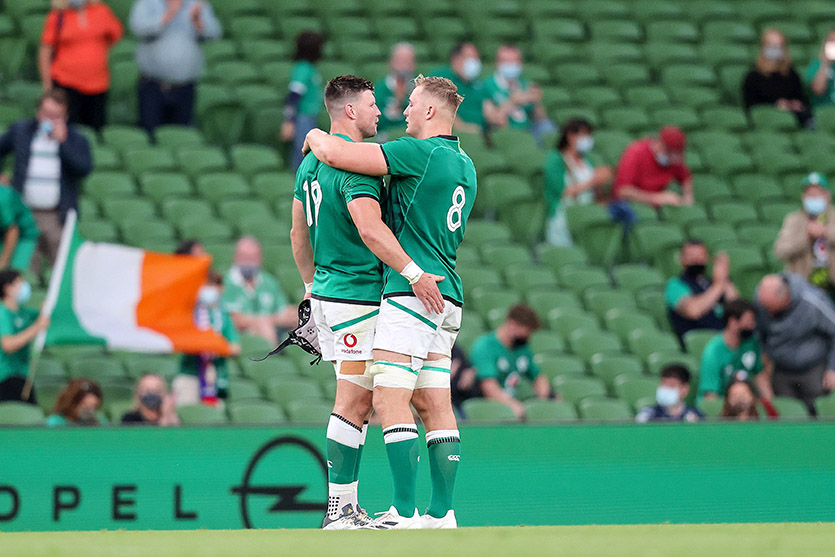
My point is, it was flawed logic to begin with mainly used as a rhetorical vehicle to, on the one hand, accept that Coombes is playing well enough to play for Ireland while simultaneously framing that acceptance in such a way that it will never happen, all to avoid challenging yourself to even hypothetically drop a current Leinster incumbent out of the match day 23.
On the one hand, though, I get it. When people talk about “form” as a guide for who should be playing test rugby they are looking at the wrong markers.
For example, there was a lot of questions in the aftermath of some test window games over the last few weeks that boiled down to this core concept; has Gavin Coombes done enough against the Trailfindospreys to force his way into Andy Farrell’s match-day squad?
No. It doesn’t work like that. The only way Gavin Coombes’ performance against the Ospreys or Scarlets would have made a difference to his Ireland prospects is if he scored a try with such emphasis that it somehow managed to injure Jack Conan. When Coombes was asked that question about potential Ireland selection by Marcus Horan after he scored a hat trick against the Ospreys he didn’t even address it. He skated over that part and just spoke about the Scarlets game coming up that he knew he would be released for.
The Ireland side is not the ruthless meritocracy that it is framed as because… no test rugby side is. You have a way of playing that is dependent on certain pillars of your game and certain systems. Your suitability for the system is all that matters if all other things are equal.
At the moment, Gavin Coombes is in that weird spot of being good enough for test consideration but, for me, there’s nothing he can do in a Munster jersey to force his way into the match-day squad as it currently stands without an injury to an incumbent. So the talk of “consistency” – Coombes supposed lack of it – that made its way through the Human Centipede of Takes as of late is a fundamental misunderstanding of how Andy Farrell has selected this Ireland squad for the last few years. It’s not about form or consistency, it’s about system suitability and your form and consistency within that system and the wider environment.
In test rugby, whoever can play with the most amount of complexity with the least amount of dissonance has a distinct advantage. This is what Ireland have been building since 2020 and it mirrors Jamie Joseph’s build to the World Cup in 2019 in so many ways it would be absolutely mad if it were just a coincidence.
Japan were the innovators of the 3-2-X system that Ireland have used since Farrell took over but the similarities don’t stop there. Jamie Joseph essentially turned Japan into a club side ahead of the 2019 World Cup. They spent over 240 days in camp during 2019 alone because they knew the level of complexity that they wanted to play with could not be achieved by players coming in for the odd camp day and the usual World Cup warm-up pre-season a month or two out.
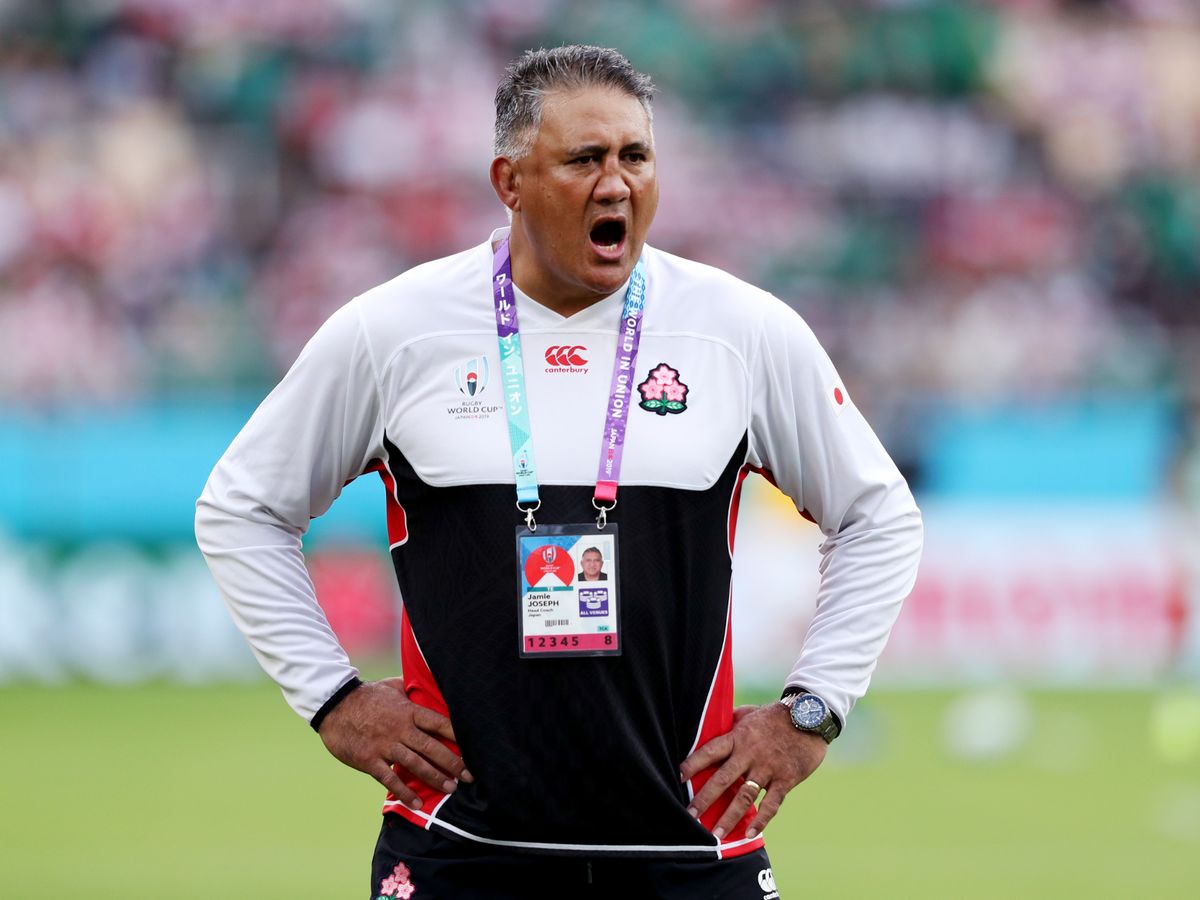
The system they wanted to play in was too complex for that, especially with players coming in from different clubs who all play in different ways. If you want complexity, you need cohesion and to achieve that Joseph needed the bulk of his squad to train together as if they were a club team.
I think Andy Farrell – who had first-hand experience of seeing a relatively incohesive Ireland side get dropped by Japan – saw what they achieved with vastly inferior resources and rugby pedigree. They pulled down Ireland’s and Scotland’s pants at a World Cup and only came a cropper against a South African side who had discovered their own form of rugby that bypassed a need for cohesion by relying on heavy kick pressure and, crucially, fourteen of the biggest human beings you’ll ever see in your life beating the piss out of anyone they came in contact with.
Ireland have duplicated Jamie Joseph’s approach by selecting Leinster players en masse and playing with a level of complexity that is only possible with a team that trains with each other for eight months of the year with a few additions from outside rounding out areas of weakness where possible. No one argues that Leinster isn’t a good team – they are – or that they don’t have excellent players – and they do – but if you’re trying to break into a core unit of a test side that runs on this level of cohesion, it’s all but impossible to do so from outside Leinster unless you get a run at a jersey because of injuries at a key time.
The “key time” is important because stepping in for garbage minutes in November or on a summer tour down-game don’t matter to the system – only showing you can run the system ensures your continued presence in it but even then that might not be enough. A System as rigid as Ireland’s will usually snap back to core players regardless of the performances of the guys who’ve replaced them. Essentially, if Gibson-Park is fit, expect him to slot back in because he’s a core system player.
If we understand this theory about how Ireland have operated since Farrell took over, every selection decision makes sense. Why are Leinster depth guys being called up for camp ahead of starters for other provinces? They have been training with the core of the Irish side for 240-odd days all season so they provide a better system fit at Irish level. There is less dissonance, there is more familiarity, there is less disruption to the training environment.
The Emerging Ireland tour – in tandem with the A games in New Zealand last summer and in November – was an attempt to “system up” guys into the environment from outside, with mixed results because it’s all but impossible to step step into a 240+ day a year set up unless there’s no other option but to work around you or they feel you can fill an area of weakness in the current test side.
The key? Stay patient. Stay hungry. Wait for an opportunity but understand that the only way this changes on a grand scale is with a blown up World Cup or a raft of injuries or a massive sea-change post-Sexton.
