


When it comes to signings, most clubs of Munster’s stature can go two ways.
The first way is witheringly expensive and comes with built-in press and fan approval, but also comes with a lot more risk than it might initially seem. That is signing A World Class Player. The World Class Player has 30+ test caps, a very high profile and a mighty price tag to go along with it because they are well-known quantities. It’s easy to see what someone like Malcolm Marx would bring to a team because, well, he’s Malcolm Marx. But you’ve got to pay for that certainty and there’s value in that. As a general rule, signing capped players is more expensive than signing guys without those test honours but you have a higher chance of getting what you paid for or, if it doesn’t work out, no one can say that you didn’t go after the very best you could in the hope of success. The sting comes in a different way.
Damian De Allende, for example, was probably the biggest-name midfielder that Munster ever signed in context – right up there with Jean De Villiers – but we were never able to use him to his full potential. If you ever got a sense of disappointment with De Allende – who was rarely less than top-class in red – I think a large part of that is due to his stature and the financial outlay involved multiplied by the lack of tangible success.
That’s the risk inherent in signing Big Names on Big Money. Signing Win Now guys on Win Now money has a trap door underneath it with a nasty surprise if you Don’t Win.
The second way is to find guys that should already be capped but, for one reason or another, they aren’t. These are players who, the minute they are announced as leaving, the fan base from their previous club rises as one to say “shit”.
For every Doug Howlett – the most successful marquee signing in Munster’s history – I think we’ve been equally as successful bringing in relatively unheralded players whose faces didn’t fit in their own countries when it came to test rugby and brought them in here to massive success.
Trevor Halstead hadn’t played for the Springboks for two seasons when Munster brought him to the province for a hugely successful one-season spell. Lifeimi Mafi was a decorated New Zealand 7s and a talented underage player who couldn’t make the breakthrough to test level with the All Blacks because of the depth of talent ahead of him. Munster signed him in 2006 and he became a bone fide cult hero here during his six-year spell at the club. Rua Tipoki was broadly the same – unheralded and iconic. Pucciarello. Du Preez. Warwick. The list could go on and on.
When you sign a player like that, you take the risk that they don’t work out as a cost of doing business because they, to an extent, are an unproven entity. The nagging question of “well, why weren’t they capped/capped more regularly” would always be in the back of your mind but that’s offset by getting exactly what your team needs.
It’s very rare in the modern game that a system weakness in your team can be filled with a marquee player. Were the Bristol Bears more or less likely to win a trophy when they signed Semi Radradra on absolutely mad money two or three seasons ago? I would say that nothing changed. Radradra wasn’t a system player. He was an adornment that would make a winning team unstoppable but would act like a racing stripe on a Ford Fiesta to a mid-level team.
When Munster went looking for a midfield signing to replace Fekitoa after it became clear a few months back that the move wasn’t going to work out the way everyone visualised, they already had a name in mind.
Alex Nankivell from the Chiefs.
Graham Rowntree had wanted to add the 26-year-old Māori All Black last season but he was under contract with no out in place and floating around a potential All Blacks call-up. The most he managed was an All Black XV appearance off the bench against Ireland A and, as the All Black’s test summer morphed into winter, it became clear to Nankivell that he would not have much hope of making a World Cup squad as things currently stood. Ian Foster liked Braydon Ennor for that spot a little bit more – a controversial enough decision in New Zealand, relatively speaking – and Nankivell got the message.
Munster did too.
Rowntree wasn’t able to get the business done ahead of his first season but thanks to some happenstance and sliding doors, he got the business done in the last few weeks.
It’s no surprise that the announced Malakai Fekitoa departure at the end of the season on Tuesday was followed up with this announcement two days later. The two moves are linked. Nankivell is Non-Irish Qualified so signing him in a scenario where Fekitoa was also staying just flat out would not happen. This deal also didn’t happen last week or the week before – both Fekitoa’s departure and Munster’s pursuit of Nankivell have been in train for a while.

Fekitoa’s departure was flagged quite a bit before Christmas around the time when he was out of the team. There were unconfirmed rumours that he’d requested a move due, in part, to not properly settling in Limerick and getting an offer closer to a support network for him, his partner and their children, including a recent newborn. This was around the time I also heard about his training performance not really being near what we were looking for. I have a tonne of sympathy for Fekitoa one way or the other as sometimes these moves just don’t work out, especially when there is a new baby involved and all the pressure, strain and emotions involved there. I’ve just had a new baby and I can’t imagine the pressure of moving away from somewhere I’d been living for 3 years prior to a brand new city where my partner and I knew nobody. As good as Munster is at bringing people into the “family”, so to speak, it doesn’t always fit because everyone’s circumstances are different and my read on the situation is that Fekitoa and his family not fully settling in Limerick was a factor here.
We won’t get the full story until Fekitoa is gone but either way, I think this is a win-win for both parties. Fekitoa’s performances have ticked up since the situation was sorted a few months back but, for a while there, Munster weren’t quite sure about what we’d signed on, it must be said, quite a significant deal.
Nankivell is very unlikely to be on anything close to Fekitoa – which brings a little contract wiggle room but not too much as Fekitoa was 1014 funded as far as I’m aware.
So what is the story with Nankivell?
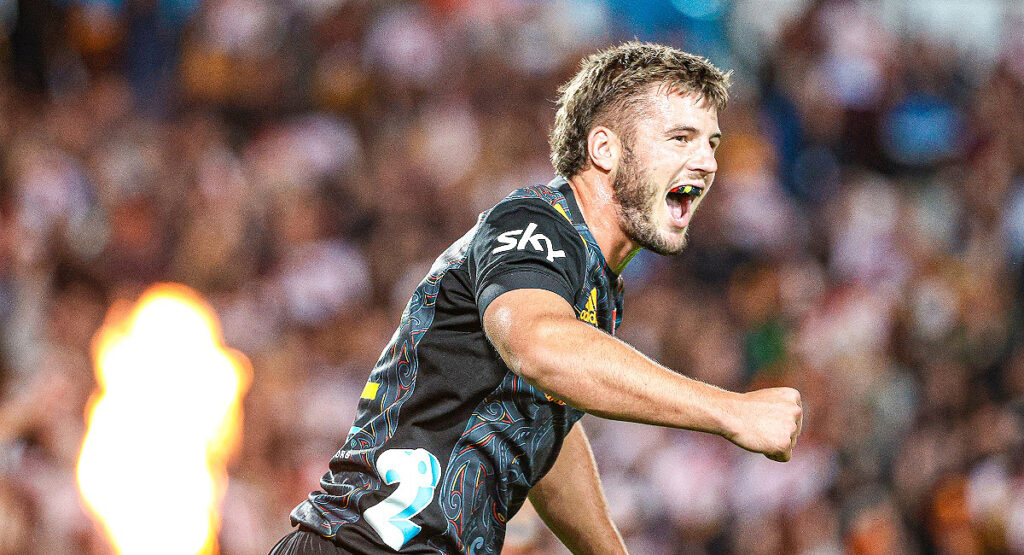
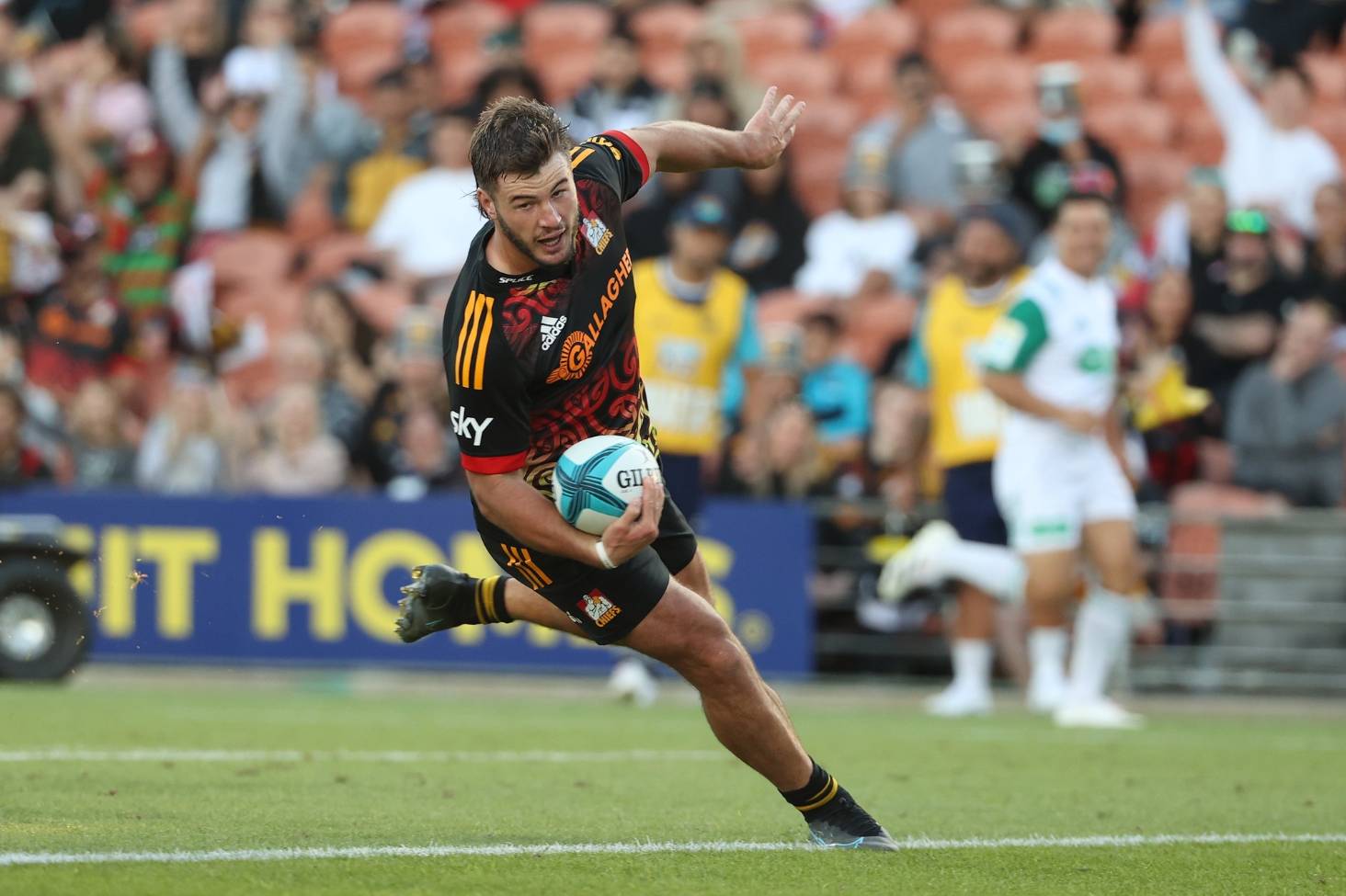
He’s 6’2″, listed between 98-100KG and has minutes at 12/13 and on the wing over his last few seasons with the Chiefs. Those minutes were mostly split between 12 and 13 with only a small few minutes on the wing. In signing this guy, Munster have replaced a lot of what Fekitoa does, and a lot of what he doesn’t really do at all. This is the core difference between signing a Big Name – Fekitoa – and bringing in a guy like Nankivell who isn’t currently capped. In Nankivell we have a better, bigger athlete in my opinion with more system suitability than what we’ve seen from Fekitoa to date. Fekitoa is a very good player, don’t get me wrong, but he’s closer to the end of his career than the beginning. Nankivell has a lot of the same qualities, is younger, taller, plays bigger and has the play-making ability to give us more of what we’re building towards under Prendergast’s attacking system and Rowntree’s overall purview.
Nankivell doesn’t have the big game experience or “aura” of Fekitoa as a big-name player and World Cup winner but he IS a big character who has a big role at the Chiefs when it comes to his role as a leader. That’s a big part of why Munster are signing him – he’s a big personality who demands accountability from those around him.
But his on-field qualities are undeniable. By now you’ll have seen his big-time offload against the Crusaders and, while that’s in his arsenal, he’s a far more complete player than being just a guy who can offload.
Onfield, I feel that he’s best suited in a deeper, wider position. He can play #12 but I’ve seen him do his best work when he’s attacking the edge of the defensive line from deep. Here are some examples;
I think this makes it more likely that we’ll see Frisch at #12 with his high PPC Slashing Playmaker role set and having Nankivell playing outside him in a deeper role where he can be a deep-lying Blitz Breaker. Pair a pocket runner with him and Nankivell has the close skill set and power to unlock all kinds of edge defence. Blitz on him and he’s got the skills to float outside you. Drift on him and he’s got the zip in his game to hit the inside and find runners on both sides.
Defensively, I think he’s got a good pop in his tackles as well as good scragging instincts on the set piece to grab and hold runners. He’s got a poach on him too, and he’s got a strong core to help counter-ruck in wide areas.
From a weakness perspective, I think his kicking is probably the weakest part of his game. He’s got great range but the variety of his kicking needs a bit of work to fully unlock his game. Ultimately, I think he and Frisch have the capacity to be an outstanding combination who can bring the best out of each other.
Get excited about this guy because he’s an outstanding player.
