


Ireland versus France is going to be your classic sledgehammer fight in the box room. The two best sides in the world right now going head to head in front of a sold-out stadium with the eyes of the entire rugby world watching on.
If you want a preview of the raw brutality of the World Cup to come later this year, this is the game to watch.
For Ireland, the equation is simple. Beat France. We have to do it anyway if we are to win a Slam, which I think this team needs, to be honest, but it’s more than that too. We have to show that we can beat this French side in a serious game. The last three years have seen a real drift in what I would consider the gold standard of the game. New Zealand were the gold standard in rugby for 11, maybe 12 years – from the 2005 Lions tour to the 2017 Lions tour, roughly – but they haven’t been at the pinnacle of this game in a real sense since then, and arguably were a spent force directly after the 2015 World Cup win. All of Ireland’s landmark “ascension” games have come against the All Blacks. 2016, 2018, 2021 and then that series win in 2022.
Andy Farrell’s Ireland has played the All Blacks four times and only lost once, which itself was a bit of a freak performance, as well as being a statistical outlier. Ireland was the better team every single time.
Andy Farrell’s Ireland, on the other hand, has played France three times and lost all three games. On each occasion, France was the better side and on more than a few occasions, the losing scoreboard flattered us.
It’s my contention – and has been all season – that Ireland beating the All Blacks in New Zealand, as novel and as special as it was to get that scalp, was an excellent side with a good reputation (Ireland) beating a good side with an excellent reputation (New Zealand). As in, that series played out as it should have.
It would be a mistake, for me, to read anything more into it because the New Zealand Ireland played in 2021/22 are not a truly elite side. They will be again in the near future, it’s all but inevitable, but right now? No. There are two, maybe three elite sides in the world right now – Ireland, France and South Africa (on their day).
Ireland’s performance against these elite teams is what interests me at the moment.
In that regard, the Autumn Nations Series posed as many questions as it provided answers. Ireland edged out the Springboks, yes, but a Springbok side with their worst possible combination of starting halfbacks and no Lukhanyo Am. If everything else stayed the same about that game but only changed the quality of the Springbok goal-kicking, they win that game in my opinion. You could say broadly the same about a deeply flawed Australian side who, if not for their red card, could easily have edged Ireland out instead of the other way around.
But all of that is nothing except ifs and buts. Ireland could have lost those games but didn’t. That is the hallmark of an excellent side, which this Irish side absolutely – without question – is. I’ll say this, though; excellent sides win trophies and that’s the challenge that faces this Ireland side. I feel any Six Nations trophy worth winning this season runs through this French team.
Now is as good a time as any for Andy Farrell’s Ireland to break the losing streak of the last three years.
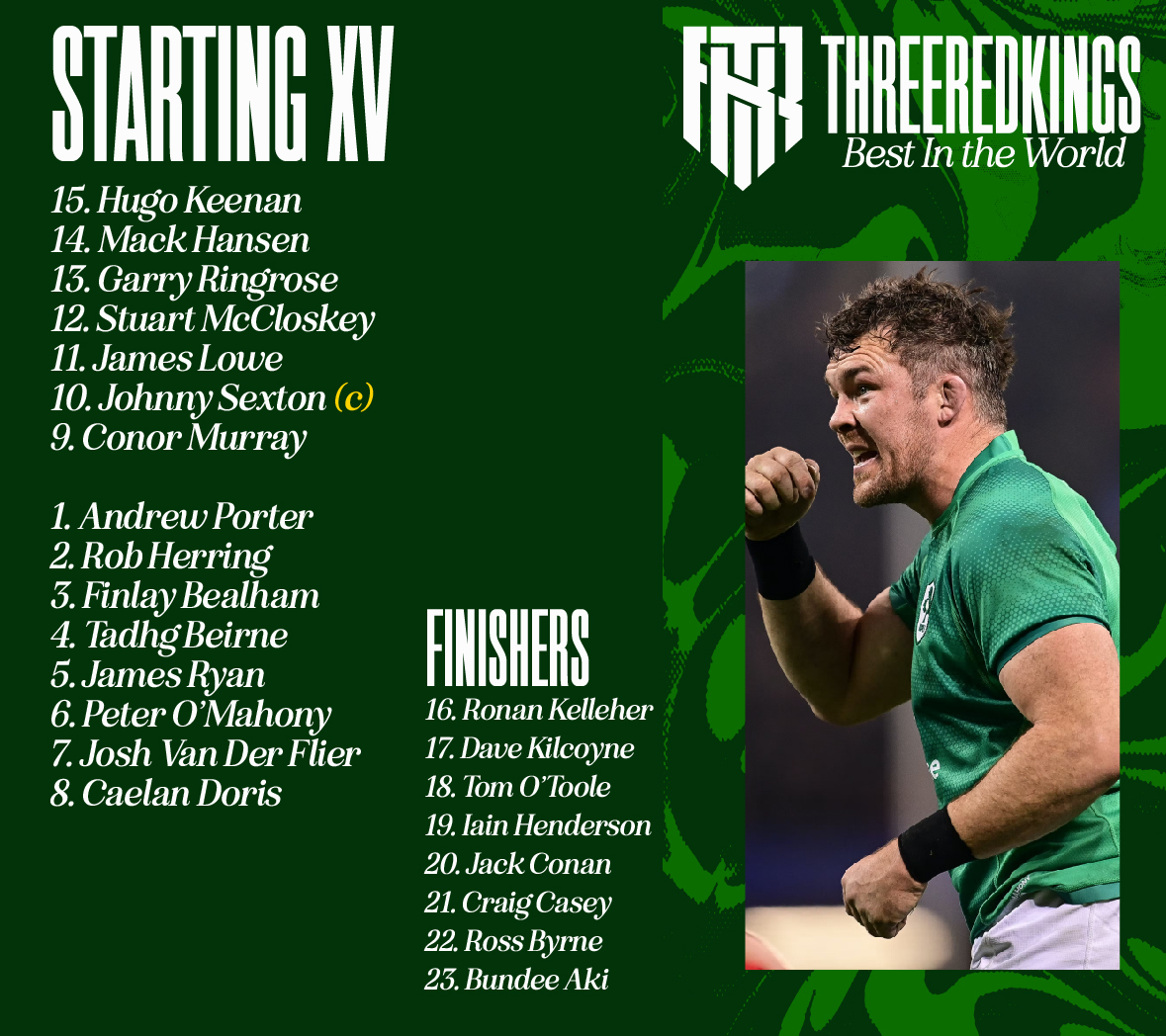
France: 15. Thomas Ramos; 14. Damian Penaud, 13. Gael Fickou, 12. Yoram Moefana, 11. Ethan Dumortier; 10. Romain Ntamack, 9. Antoine Dupont (c); 1. Cyril Baille, 2. Julien Marchand, 3. Uini Atonio, 4. Thibaud Flament, 5. Paul Willemse, 6. Anthony Jelonch, 7. Charles Ollivon, 8. Gregory Alldritt.
Replacements: 16. Gaetan Barlot, 17. Reda Wardi, 18. Sipili Falatea, 19. Romain Taofifenua, 20. Francois Cros, 21. Sekou Macalou, 22. Baptiste Couilloud, 23. Matthieu Jalibert.
For me, the best recent test for Ireland that could be compared to this upcoming French test – outside of last season’s game against them – is probably South Africa from back in the Autumn Nations Series.
Our starting backline and back five are almost identical to the units that started against the Springboks (bar any late changes between now and kickoff) and the physical dominance shown by the South Africans is analogous to what we’ll see from France, who have gone with a hefty 6/2 split for this game.
Fundamentally, France will believe that this game is a statement opportunity for them to put down an emphatic end-of-cycle exclamation mark on the team they see as Leinster & Friends. Four games, four years, four wins. Even then, it’s more than that again. This is France’s chance to send the wind up the entire sport by beating the #1 team in the world rankings at home for the first time in two years.
How will they do it? Again, there are parallels to South Africa without being an exact match. Back in November, South Africa outkicked Ireland from a length perspective but both sides were evenly matched with the volume of kicks. We kicked 8.8% of our possessions, South Africa kicked 8.9% of theirs.
France’s kicking volume will be way, way higher as will their distance gained. In the reverse fixture last season, Melvyn Jaminet only passed or carried the ball 58% of the time and kicked the ball 238 metres. Antoine Dupont kicked for 351 metres. Last week against Italy, France didn’t kick with the same volume or distance which could be for a few reasons – the main one being that they had a really high turnover rate which limited their ability to kick pressure – but I would expect them to kick around 13% of their possessions here and those kicks will be banged long.
The French believe that this Irish side has very little for them physically but the crux of this game will hinge on how Wayne Barnes referees the defensive breakdown. If the restrictions on poaching are as strict as they were last weekend, that could disrupt France’s heavy kick-pressure game. The new interpretations designed to speed up the game have “players must not support their body weight by placing their hands on the floor” as a core part with the clarification that “players are off their feet when any other part of the body is supported by the ground or players on the ground” being something that could really hurt players like Atonio, Marchand and others in that French pack. Last weekend, France conceded 14 of their 18 penalties at the breakdown or on the ground. If that’s repeated here, Ireland will win and win well. So how does France approach this game tactically? They can’t change up from their kick-pressure game at this stage, surely, so they will have to be super clean with their off-ball approach.
The key for Ireland, I feel, will be retaining the ball in between the 10m lines and baiting French indiscipline at the breakdown when they kick back to us. Our back three will have to be on it with their own counter-transition kicking strategies but also balancing that with runbacks at the right time. We need a massive day at the offensive breakdown from all of our back five on those transition rucks, while also balancing the loss of Dan Sheehan as an explosive power forward from our ball-carrying rotation.
One way to counteract this, for me, is by upping the on-ball usage of Stuart McCloskey during phase play as a primary ball carrier. He made 9 carries in 60 minutes last weekend but I’d up that usage again here. Irish midfielders are usually pretty busy with their all-round game – especially at the offensive breakdown. Last week, McCloskey was far more active than Ringrose at the offensive breakdown which is a little unusual in this Irish system. Ringrose is usually a guy with an Offensive Ruck Work score closer to a flanker but he was used differently here in a more off-ball role.
I suppose the question is this; how is Ireland going to structure this game? We tend to start with a high kicking volume, high-PPC counter-transition game so that means long infield kicks, high tempo phases post-kick receipt and then offensive-focused kicking for territory. That relies, in part, on the opposition making kicking errors and giving up quick ball or penalties in those transition phases. If we don’t threaten that big heavy middle line of the French pack, we won’t do either of those and could find ourselves in a world of hurt where we’re constantly resetting through Murray or Sexton contestables and looking for a French error in hope, rather than in expectation.
The key to winning this game is error-free rugby on the possession France kick to us, which is easier said than done. The initial defensive sequences here will be beyond brutal so look for Ireland to start with a heavy PPC screen game to play outside that blitz. If we don’t score inside that first 10/15 blitz, this could be a very, very long and painful day at the office for all involved because when France senses a dropoff – which tends to happen to this Irish side in the middle block of the game, they have the physical tools at the scrum and maul to punish us, as well as some of the best transition players in the game.
Enjoy this one, because games of this scale between teams this good only come along every now and then.
