


Nothing on the rugby pitch is unseen if you know what you’re looking at.
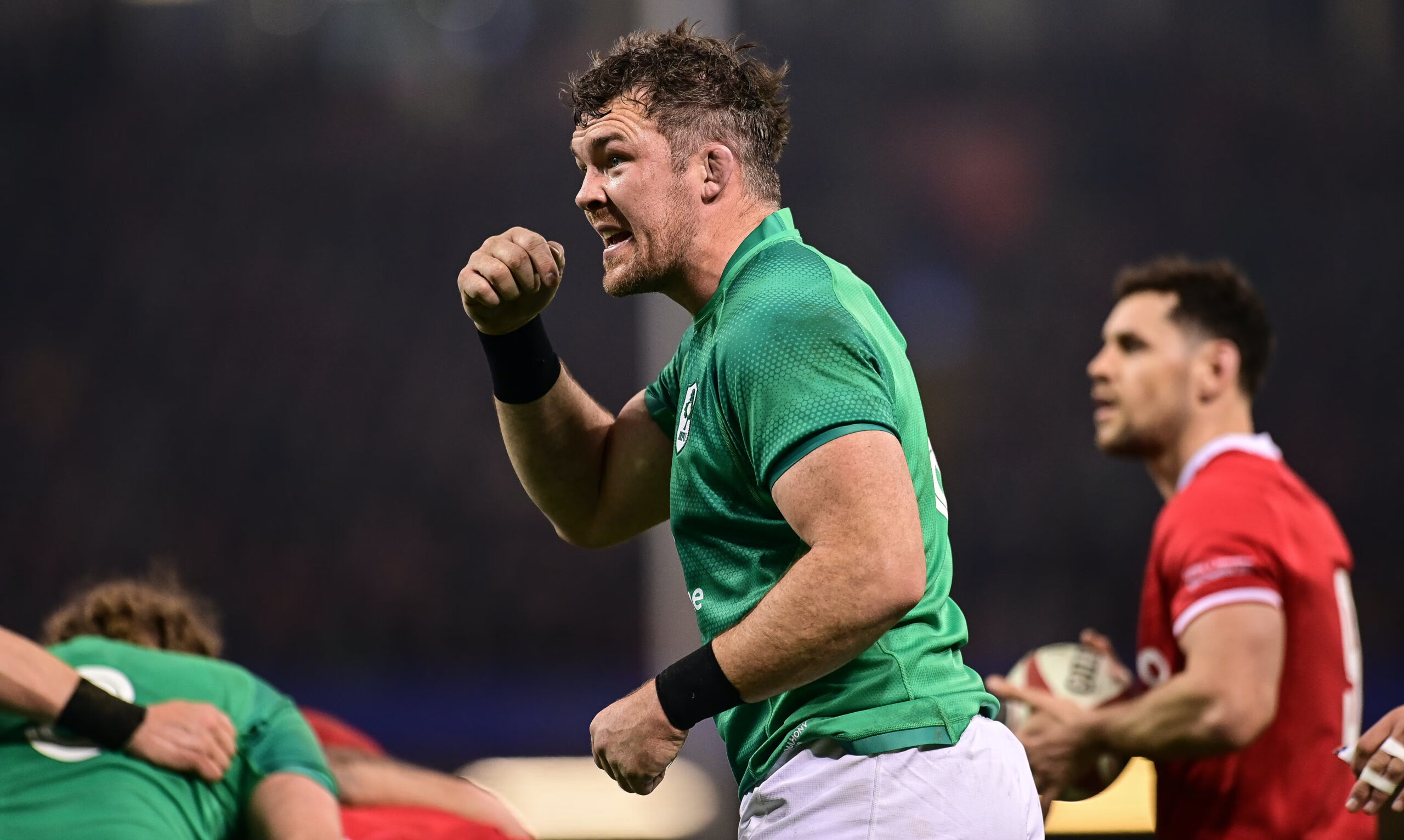
So last weekend, I was more than a little taken aback by the panel on Virgin Media making a big stand on how Peter O’Mahony should lose his place in the starting Ireland back row ahead of the upcoming game against France. They’re entitled to their opinion, of course, but having watched the game back a good few times (once in punishing detail) I think Peter O’Mahony is more important to the current Irish pack build than he ever has been.
My contention before the Six Nations was that O’Mahony, as a flanker who’ll be 34 just before the World Cup, needs to be consistently better than his younger competitors to retain his starting place. That is still true so when I say that, after his performance against Wales, O’Mahony has more than earned his place to start again this coming weekend it is with those conditions in mind.
Peter O’Mahony has always divided opinion, usually along provincial lines as is almost always the case. He’s one of the best backrows Ireland have ever produced without question but that fact – and it is a fact – would be quite controversial in certain parts of Ireland, despite O’Mahony captaining the Lions in a test, earning 90 test caps for Ireland where he’s been a part of multiple trophy winning sides and being the Munster captain for 10 years in the first era post-O’Connell/O’Gara/Wallace/Foley.
I think a lot of it comes down to O’Mahony being a complex role player in a jersey number that evokes a very simple definition. The Blindiside. When people think of a Blindside Flanker, they tend not to picture a player like Peter O’Mahony. Most people I’ve spoken to when I’ve asked about this have described a few different players but if you squished all the qualities mentioned in the same breath as “blindside” the player that pops out the other side probably looks a little like prime Dan Lydiate.
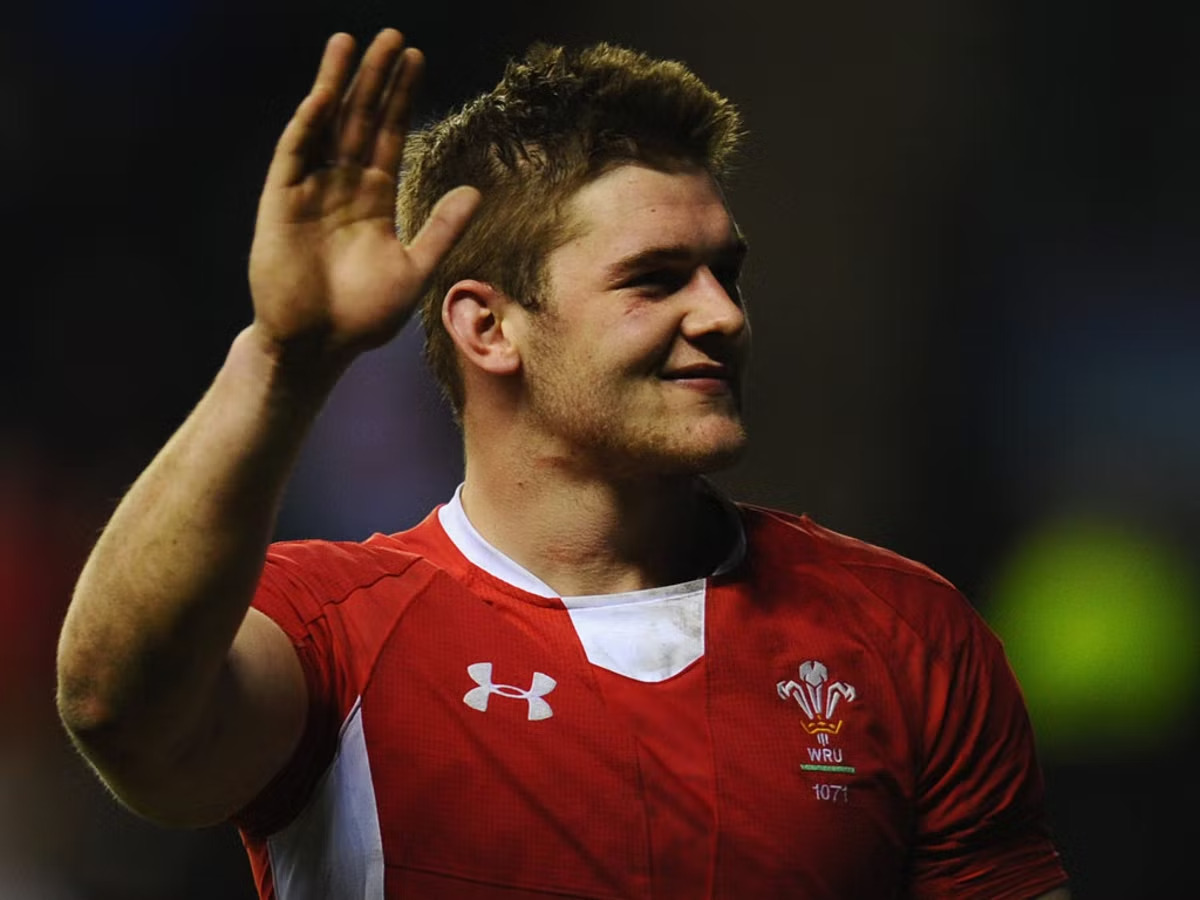
Lydiate was a dominant, high-volume tackler with a chop focus, decent carrying and good lineout work.
Peter O’Mahony is a different type of player that you can only begin to understand properly as part of a unit. Plenty of players are higher-volume tacklers than O’Mahony. Plenty of players are better tight carriers than him, too. There are probably better poachers than him and I can probably think of two or three right off the top of my head. But O’Mahony isn’t there to be the best at any of these things. As a Heavy Combo Flanker, O’Mahony’s purpose and top quality are only unlocked as part of a functional pack build.
When I talk about “roles” I’m actually talking about jobs. What jobs do we need to be done by our back row? Who is best placed to do those jobs? Who will perform the jobs we need to be done to the highest level possible?
When we break down who is best suited to what, we can start to see what a player’s role actually is in practicality. For me, there are eight base jobs that you need your backrow to complete in a functional pack build. They are Offensive Lineout Jumping, Defensive Lineout Jumping, Tackle Volume, Defensive Organisation, Offensive Breakdown Work, Defensive Breakdown Work, Tight Carrying and then Edge Carrying.
The only player that would be elite at all of these is if Clark Kent decided that he wanted to give rugby a go for a few years. So if all of these jobs need to be done, how do we fill them? In the aggregate.
With that in mind, let’s break down the Irish back row with their role strengths in each of these categories. I’ve got three levels of comfort that are based on my read of their performances over the last two years.
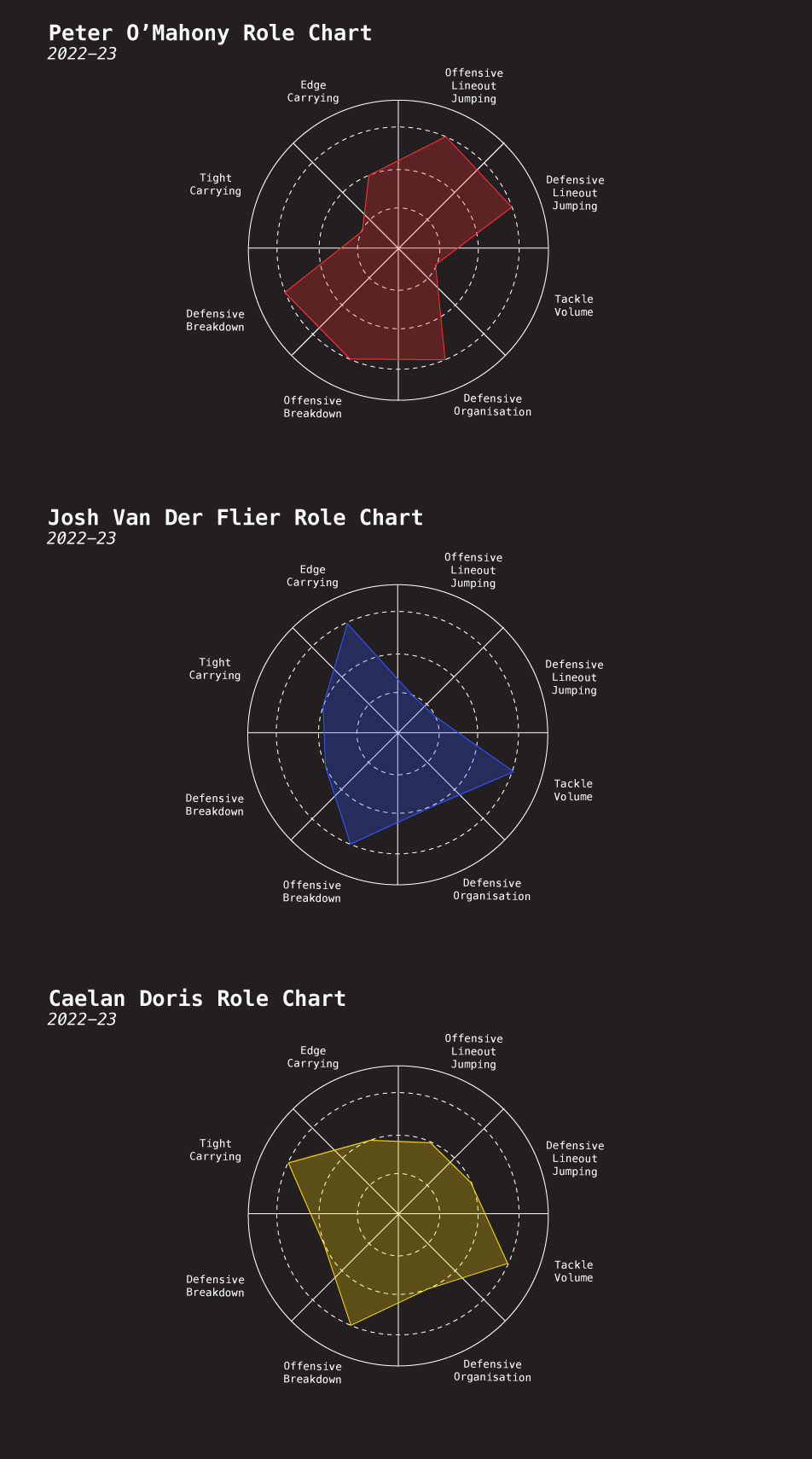
What do we notice here? All three of the starting forwards fill different job categories at different levels. Peter O’Mahony is not a very comfortable tight carrier and would be a decent edge carrier at this stage in his career. If you go back to the game on Saturday against Wales you’ll see him mostly holding width where his good footwork and excellent passing can put others away from range but, mainly, that’s where his fantastic offensive breakdown work can help to secure wide position at speed if needs be. You’ll then usually see him tracking across with the ball once Ireland enter the 22 where he offers himself at pace as a handler but primarily nails down and secures our ruck possession.
Judging O’Mahony on how many tackles he doesn’t make is like criticising Van Der Flier for never jumping in the lineout. Both are equally important to a functioning pack.
My key point is that no one player is expected to do everything – except maybe Doris, who is the highest usage player there – but you get the full picture when we combine these three roles onto the same chart.
What do you see?
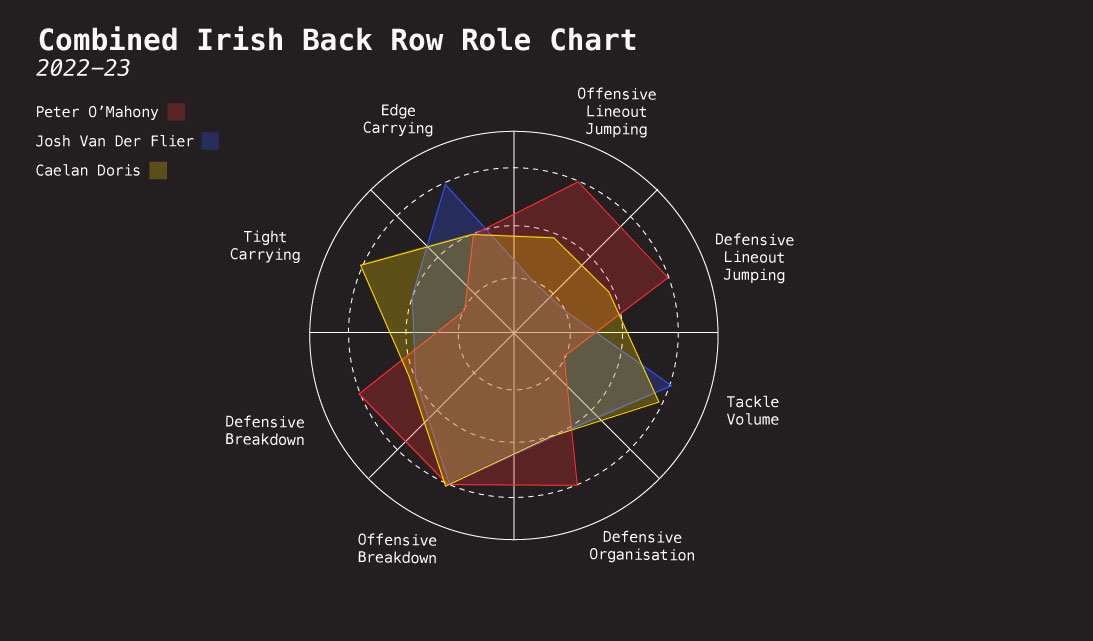
High-level coverage in every department with a focus on high offensive breakdown output. Doris and Van Der Flier max out on Tackle Volume but they are, in turn, covered by O’Mahony’s elite lineout work on both sides of the ball.
One player’s strengths cover the other player’s weaknesses. So when you see people looking to drop O’Mahony because he’s not carrying the ball 15 times or making 18 tackles per game, you need to realise that he’s judged on what he is best at producing.
What will see for O’Mahony as an elite-level option is a degradation in his lineout work on both sides of the ball or a drop in offensive breakdown efficiency.
There might come a time – or an opposition – that Ireland need to move more emphasis onto tight carrying and, if/when that happens, you could make an argument that a Peter O’Mahony a year from now with some of his qualities diminished should make way but I would counter with this – as long as Josh Van Der Flier is a starter for Ireland, the best player to balance out his role set at test level is Peter O’Mahony.
