


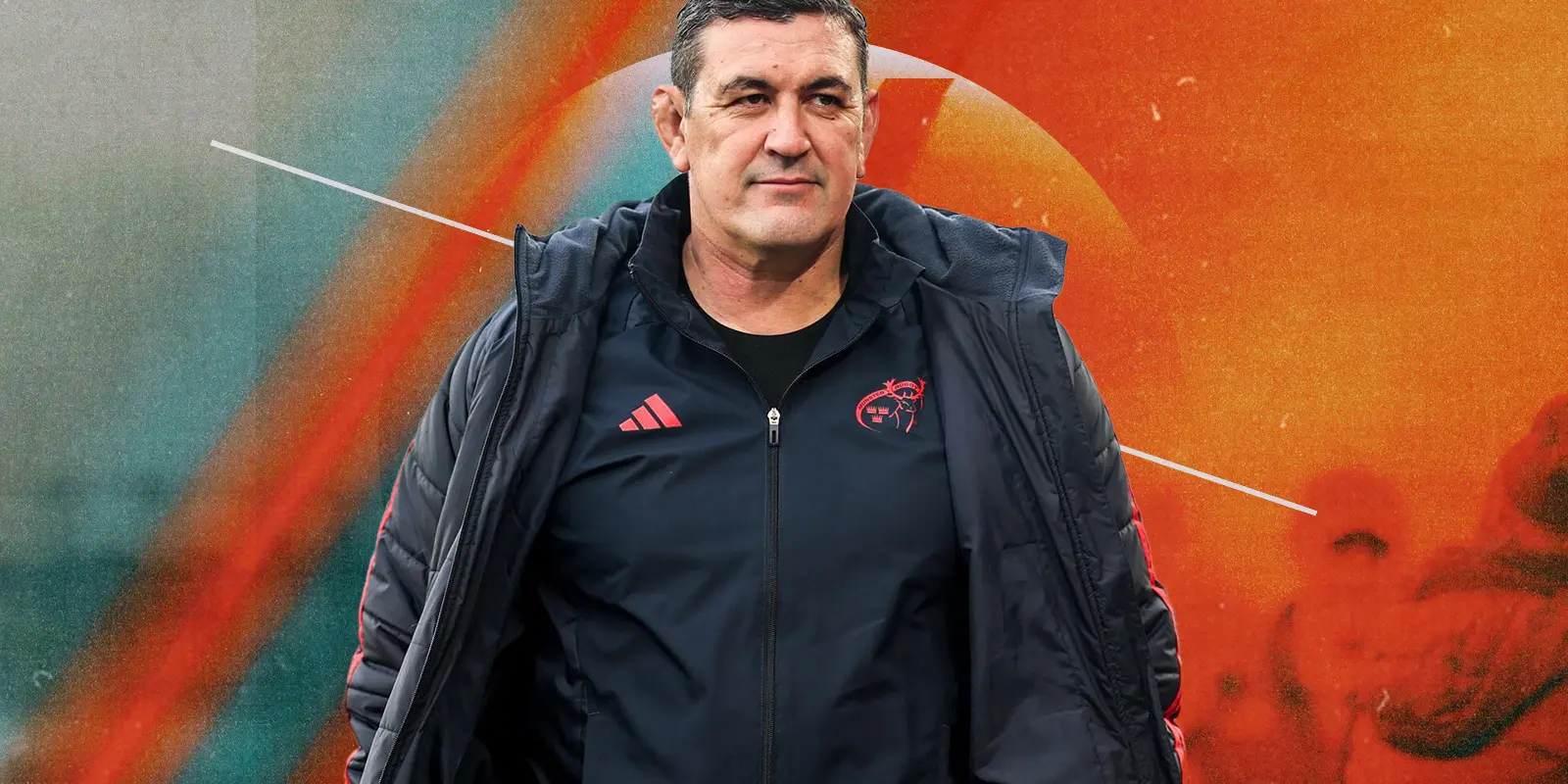
There are two types of head coaches in this game.
There are builders, and there are teachers.
With teachers, a lot of that depends on the career of the coach; if they were a specific unit coach — forwards, backs, attack, defence, scrum — they will generally retain that speciality as they progress through their career ladder, or take a complementary position in some cases. Defence coaches often make good attack coaches, and vice versa.
Guys like Joe Schmidt, Stuart Lancaster, Pat Lam, Jacques Neinaber — these guys fit the mould of a “teacher” coach. They have a specific approach to their work as a senior/head coach that determines the approach of the team itself, as they are often coaching that specific facet of the team’s structure.
Pat Lam, for example, is Bristol’s Director of Rugby, but his approach to attack and how the game should be played filters all the way through the club. Jacques Neinaber is Leinster’s senior coach, under Leo Cullen, but Leinster’s style of play since hiring Neinaber has taken on large facets of his preferred game.
The other approach is the “builder”. This is a head coach in the more traditional sense. Their speciality is that they don’t really have one. They assemble their coaching staff to fit in with the vision they determine is the right one, while also leading the “culture” of the squad and the organisation as a whole, and developing the squad as a collective.
Notable coaches who fit this description would be Mark McCall, Declan Kidney in his pomp at Munster, Scott Robertson at the Crusaders (and, to an extent, the All Blacks), Franco Smith, Ronan O’Gara, Johann Van Graan and Rassie Erasmus.
Some of those coaches might have been unit coaches at different points in their careers, but almost all of them are now what I’d consider builders. They have a vision of what they want from their team, so they build that vision through the coaches they hire — although they might not directly do the hiring — and the team takes shape from there.
Clayton McMillan is a builder.
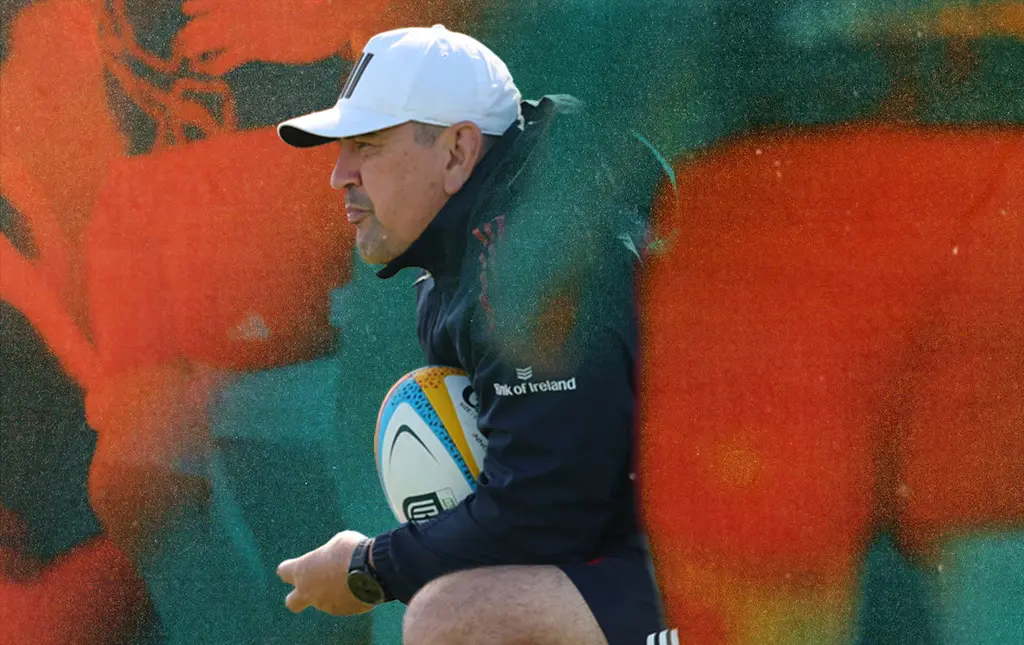
Earlier in his career at the Chiefs, McMillan assisted as a defence coach and did a bit of lineout work in a pinch, too, while getting the lay of the land of the squad shadowing then head-coach Warren Gatland. For the vast majority of his coaching career, he has been a builder head coach who assesses what is required in a team — be it the Bay of Plenty, the All Blacks XV, Barbarians or Maori, and then the Chiefs — and then sets about getting the pieces in place to execute that vision with the right coaches, and the right players.
To talk about this properly, we have to get into the weeds a little on structures, specifically Munster’s current structure with a General Manager (Ian Costello), a head coach (Clayton McMillan) and a senior coach (Mike Prendergast).
In a general sense — and this has been true at Leinster with Lancaster and Neinaber as senior coach, and Munster with Larkham as senior coach under Van Graan — your senior coach is almost always a “teacher” archetype. They will have a specific approach to the game that must sync up with the vision from the top. In my experience of this — speaking at length with Johann Van Graan right after Larkham was hired — he had a massive say in who that coach would be, as he felt that the structure of head coach/senior coach would allow him to take on a more big picture role. This is often confused with the General Manager position, which has elements of big picture thinking in it, too, but deals with it practically. When a contract is being renewed, or not, or if someone is being brought into the club, the practicalities of that will run through the general manager.
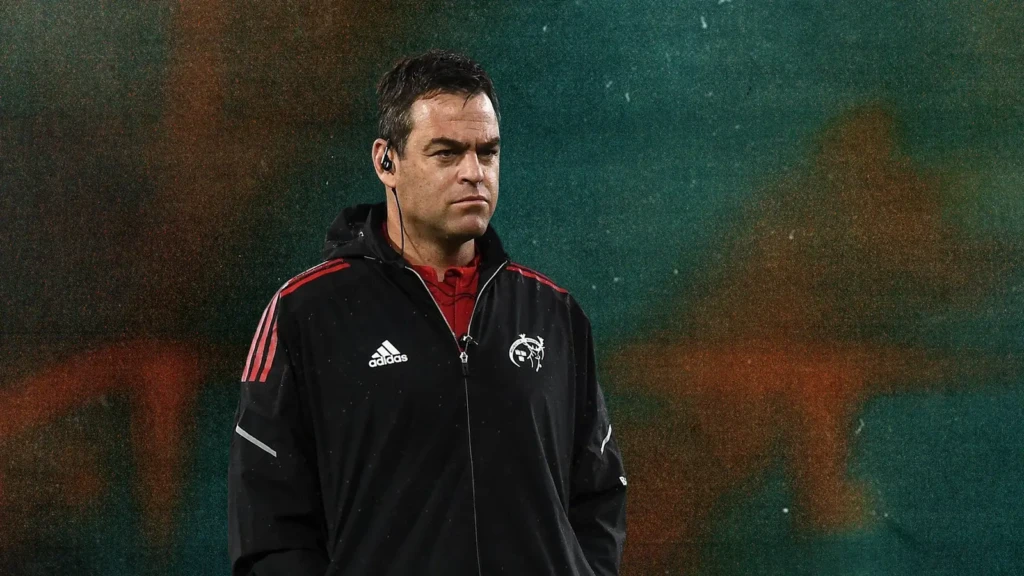
The senior coach, most importantly, implements the vision of the head coach because of who they are, and what they do.
When you sign a coach like Stuart Lancaster, for example, as a senior coach, or Jacques Neinaber, the sell is that they get to implement the “tracksuit” side of the game, away from the majority of the pressures that come with the head coach role, which always tends to have more squad politics and other complexities added to it.
Depending on the hire, a senior coach can be empowered with enhanced selection responsibilities because, naturally, it’s their template that is being applied, so players who suit that template will come to the fore as part of that.
Jacques Neinaber is a senior coach with a big emphasis on his specific defensive approach, so, naturally enough, that will filter certain players and role types in and filter others out.
In Neinaber’s case — because I’ve studied him quite closely — that means big impact defenders, defensively intelligent outside backs to close the door on the high blitz, and halfbacks who can facilitate the managed turnover of possession to empower the defensive side of the ball to win the game.
If you’re a winger who isn’t as impactful on the defensive side of the ball, or comfortable with a lot of chasing and pressurising as most of your game, or something that you can adapt to, you will be filtered out.
If you’re a dominant defender in the back five or midfield, with good work rate, ruck pressure and a lineout game, even without necessarily being a dominant ball carrier or attacking threat, you’ll be filtered in.
The approach of the senior coach, when the visions are aligned, feeds the right players into the right system, creating a positive feedback loop and filtering out bad system fits.
What builder head coaches need, most of all, is time.
Time allows them to assess where the squad is at, first of all. Who’s a leader you can rely on? Who’s a core player you can build around? Who’s a young player you can build around? Who’s a bad fit — either culturally or systemically — that needs to be moved on? What is the actual identity of the team as it stands? What coaches can empower that identity? Is there any part of the coaching system that isn’t working? How can that be changed, and by whom?
Builder coaches aren’t going to be marching on the training ground and changing attack structures, or tearing up the lineout scheme, or coaching the scrum — unless that was a previous speciality — for the most part, they are reliant on the unit coaches themselves, feeding into the players, to adjust this.
To understand this fully, you have to know what a coach does, especially someone you might hire as a senior coach. Any coach — senior or unit — is the sum of their experiences in the game, and they are judged primarily on what they coach and how they coach. Sure, some unicorn coaches can coach multiple different styles and philosophies, but for almost everyone else working in the pro game, they have the approach and “style” that got them the job in the first place.
If you want an expansive, high-tempo, high-risk, high-reward attacking game, you would hire a coach in the mould of Pat Lam. If you wanted a more conservative, set-piece-oriented game, you probably wouldn’t make that hire. The inverse would apply to a Jacques Neinaber-type of hire.
For the coach in question, there’d be no value in them trying to coach a way of playing that strays too far away from what they know and trust in themselves as coaches to deliver.
Jacques Neinaber’s career has been built on a specific way of defending, and he knows that when it’s done well, with the entire game leaning on it, with complementary unit strengths, that it will be successful. Changing that might be successful; it might not, but it’s the potential negative side of that equation that will directly affect his career.
This is why the next coaching hires at Munster — senior coach, if we stick with that structure, attack coach if not, and scrum/lineout — are so important. It leans directly into the vision that McMillan is trying to build.
