


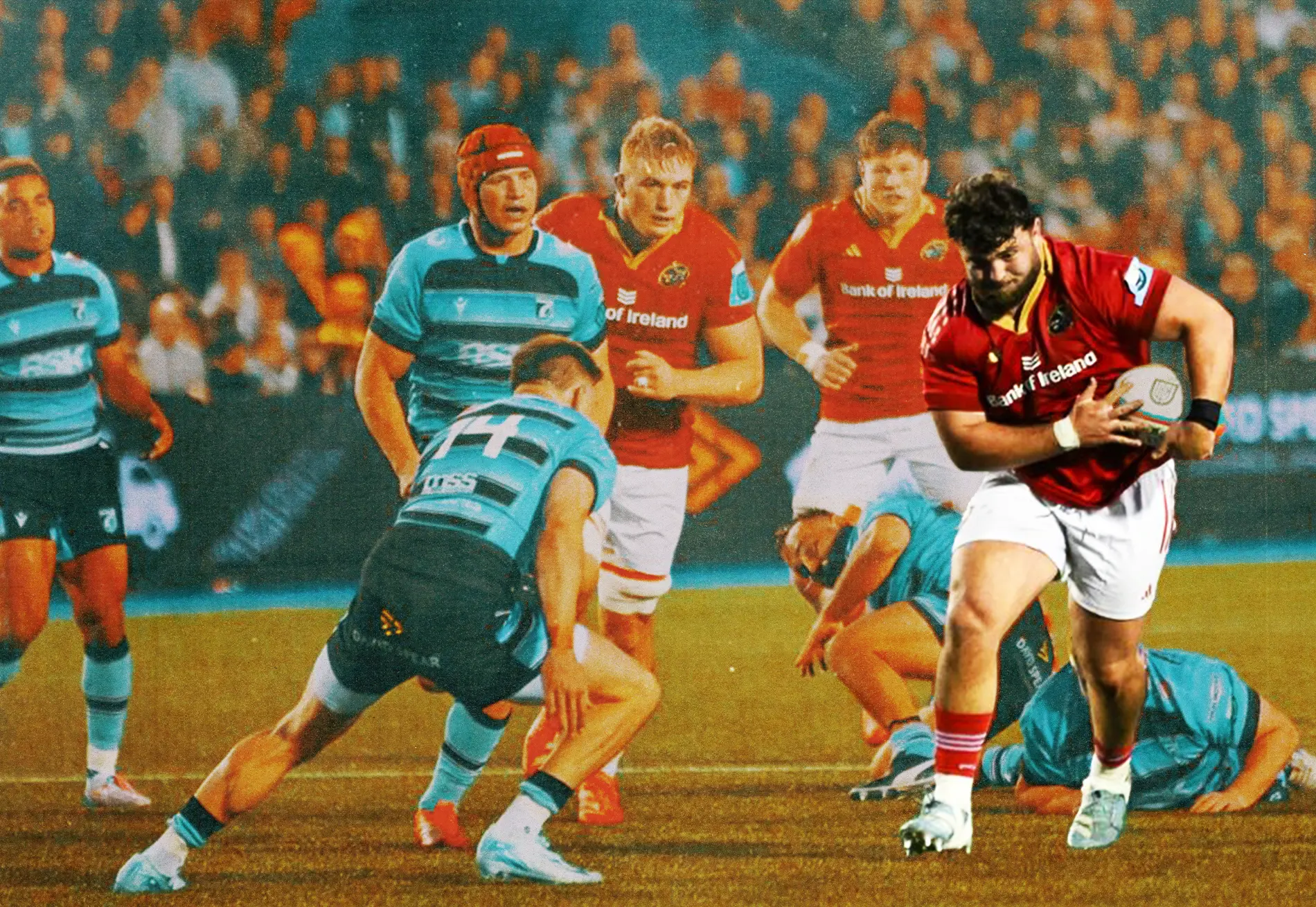
Developing a Power Forward profile prop is incredibly difficult; signing one is even harder.
The reasons behind this are related.
Finding guys who are in and around 6’0″ and north of 115kg is easy. Look around your local Centra and you’ll find a few just standing there. One of them might be me, if you’re in West Limerick.
Finding guys of those dimensions who can move that heft around at the pace and power needed to impact against the various freaks, mutants and aliens who make up elite packs in 2025, while also being able to dominate in the meat grinder of the modern scrum is incredibly rare. Not as rare as a Tighthead Lock Power Forward, but not far off it.
So when clubs develop someone with this profile, they tend to hang onto them. Which makes signing them very difficult. Which makes Munster’s signing of Michael Milne all the more notable.
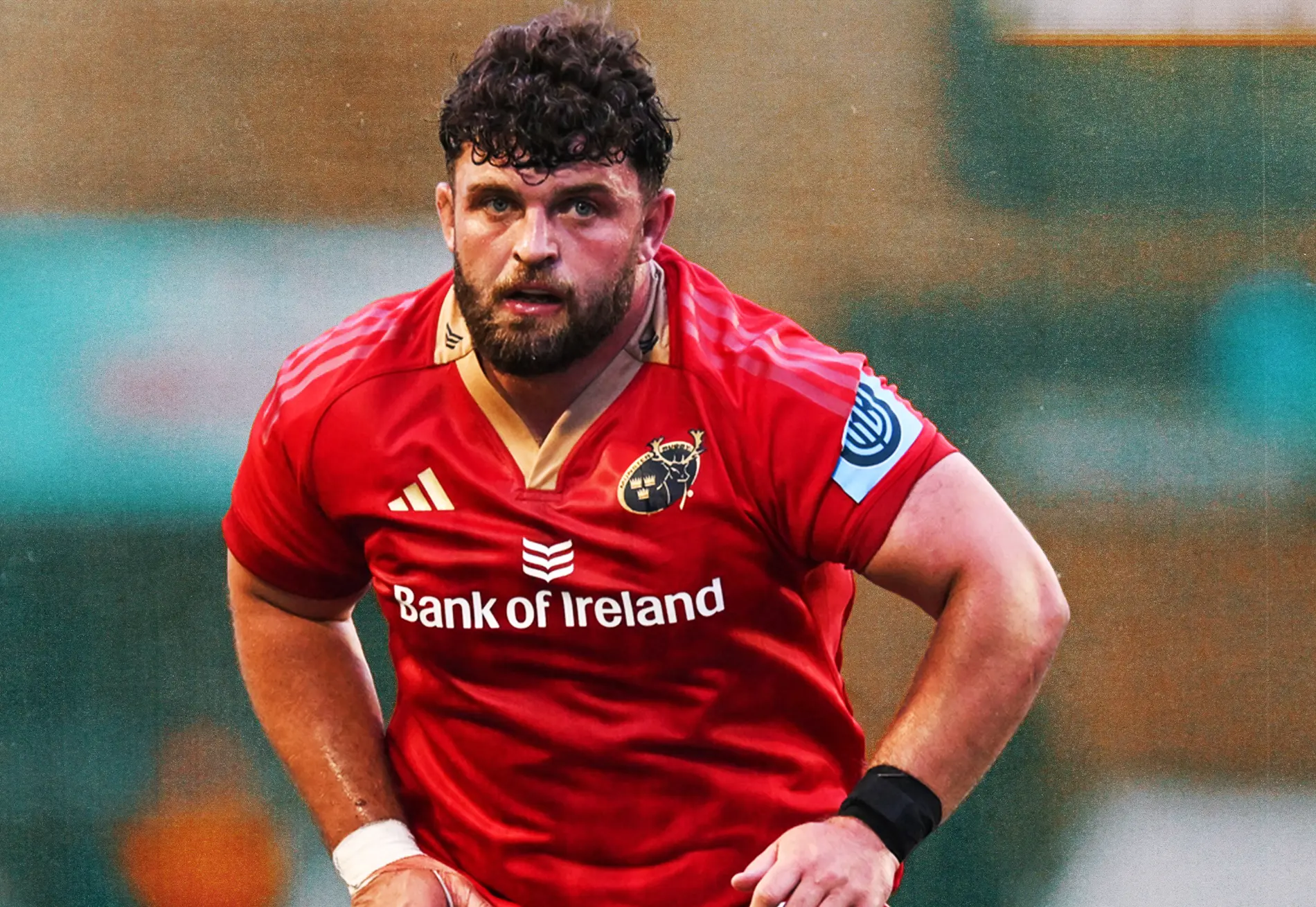
Guys with Milne’s profile don’t really come up to be signed all that often, but Leinster’s situation at loosehead is… unique. With Andrew Porter on a central contract — and unlikely to ever come off one — that put a cap at the top of Leinster’s depth chart in that position. However, with Healy retiring at the end of last season, something that was in the offing the season before, Leinster were in a position where they had to try and keep two of the ascendant players in their loosehead chart happy, namely Michael Milne and Jack Boyle.
Munster tried to sign both players in 2023/24 for 2024/25 for obvious reasons. Both Boyle and Milne provided variants of the thing Munster badly needed in our front row — power.
We went after Milne first, but he went with Leinster’s offer. Then Munster went after Boyle, only to find the same thing happened again. However, later that year — August 2024 — rumours swirled around Limerick (and elsewhere) that Michael Milne wanted a move after all. It’s hard to know the truth of these things because the truth is often tangled up with competing parties. There’s he said, we said, they said and then the truth, which is a little bit of everything.
One thing became pretty clear early in the season; it was either going to be Boyle or Milne getting that #17 jersey post Healy. It was not going to be possible for Leinster to retain both, especially with Paddy McCarthy waiting in the wings and “fortunately” for Leinster, he was injured for almost the entire season. I use inverted commas there because while it was unfortunate for the player, sometimes injuries turn selection dilemmas into just regular selection decisions. A three-way problem became a two-way one.
All of a sudden, Milne was in play, and Munster made another play to get him — as far as I know, we’ve tried to sign him four times — and it turned out the fourth time was the charm. Late in the season, Milne (along with Lee Barron) joined Munster early due to an injury crisis in our front row.
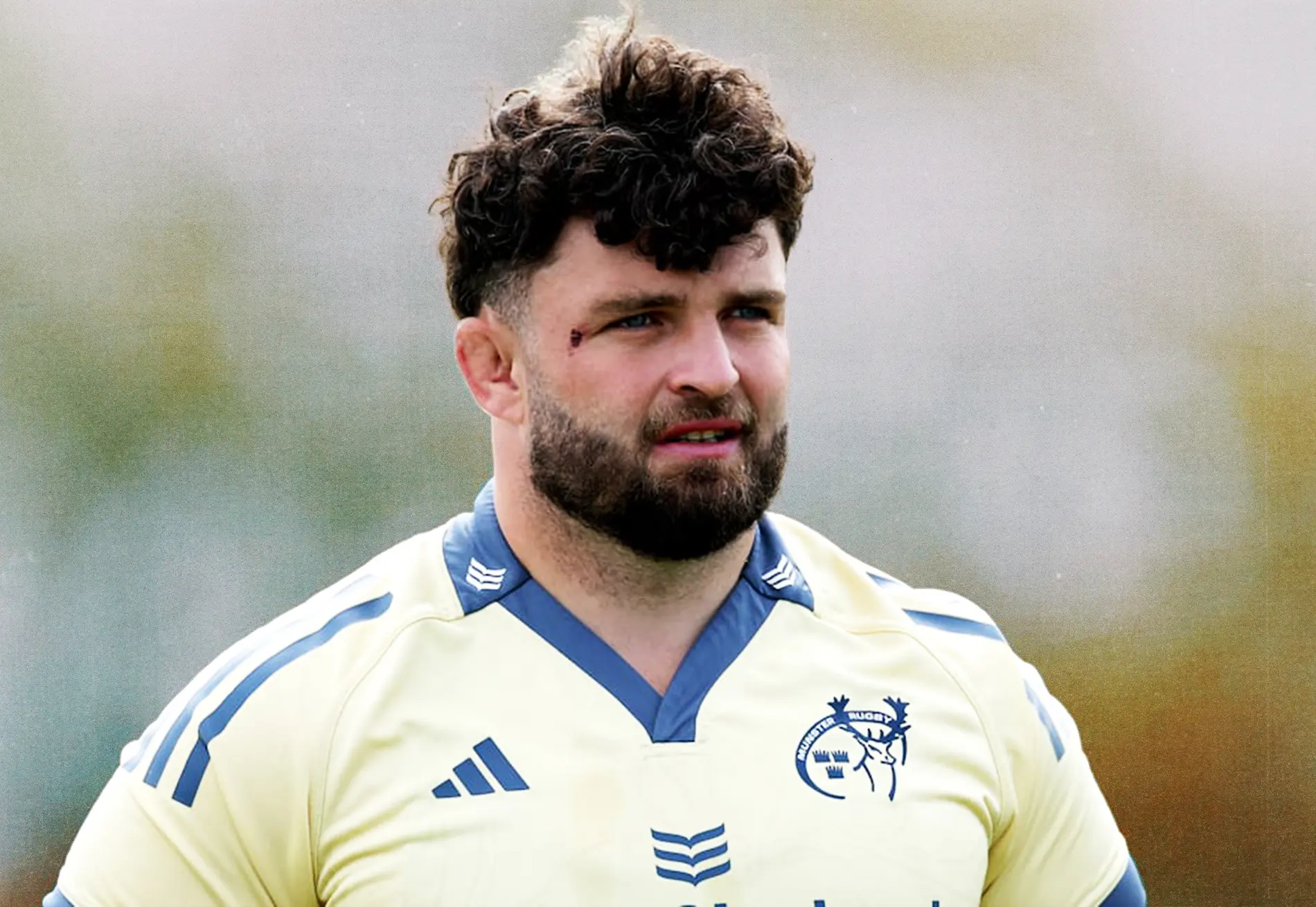
So, for the last four games of the season, we got a look at what Michael Milne would look like ahead of schedule, and it was… formidable. But how does it stack up to Boyle across the season on a per-80 basis?
| Metric (raw) | Boyle 714 min | Per‑80 | Milne 491 min | Per‑80 | Edge |
|---|---|---|---|---|---|
| Carries | 64 | 7.2 | 59 | 9.6 | Milne busier |
| Dominant‑carry % | 43.5 % | — | 39 % | — | Boyle more powerful |
| Gain‑line % | 60.9 % | — | 49.2 % | — | Boyle |
| Commit 2+ % | 75 % | — | 81.4 % | — | Milne |
| Attack rucks | 183 | 20.5 | 118 | 19.3 | Near‑par (Boyle +1) |
| Attack‑ruck eff % | 83.6 % | — | 83.9 % | — | Dead‑even |
| Tackles | 84 | 9.4 | 89 | 14.5 | Milne much busier |
| Tackle success % | 88.1 % | — | 86.5 % | — | Boyle marginally cleaner |
| Def‑rucks | 68 | 7.6 | 46 | 7.5 | Even |
| Def‑ruck eff % | 8.8 % | — | 6.5 % | — | Boyle more disruptive. |
| Turnovers (tot) | 5 | — | 0 | — | Boyle |
But, of course, per-80 doesn’t tell you the whole story. Jack Boyle played 843 minutes for Leinster last season, and Milne played a total of 491 minutes between Munster and Leinster. Boyle’s heavy usage is partly related to Milne’s announced departure in January, which was in the offing from mid-to-late December. As is fairly standard, once a talent announces they are leaving a province, their usage usually dries up considerably, unless you have no other option but to use them.
But what we then got to see was Milne getting used to Andrew Porter-like volume for Munster for the end of the season. He went from averaging 31 minutes a game at Leinster to averaging 68 minutes a game for Munster.
So the metrics you see above don’t reflect their team role. Boyle won a URC and Ireland caps in the Six Nations, but only as a 10-minute special covering for Porter, even including a humiliating 22-minute cameo in Thomond Park designed to make sure Porter played most of the game. Boyle got 6 minutes in a final that Leinster were winning by 18 points, only when Leinster made the lead 25 points.
So, for most of last season, Boyle’s minutes came off the bench against beaten teams. The majority of Milne’s minutes — well over half — were spent as Munster’s starting loosehead.
But even with that, we can see that Boyle’s defensive impact is greater, while his ball-carrying impact in an off-ball team is more impactful.
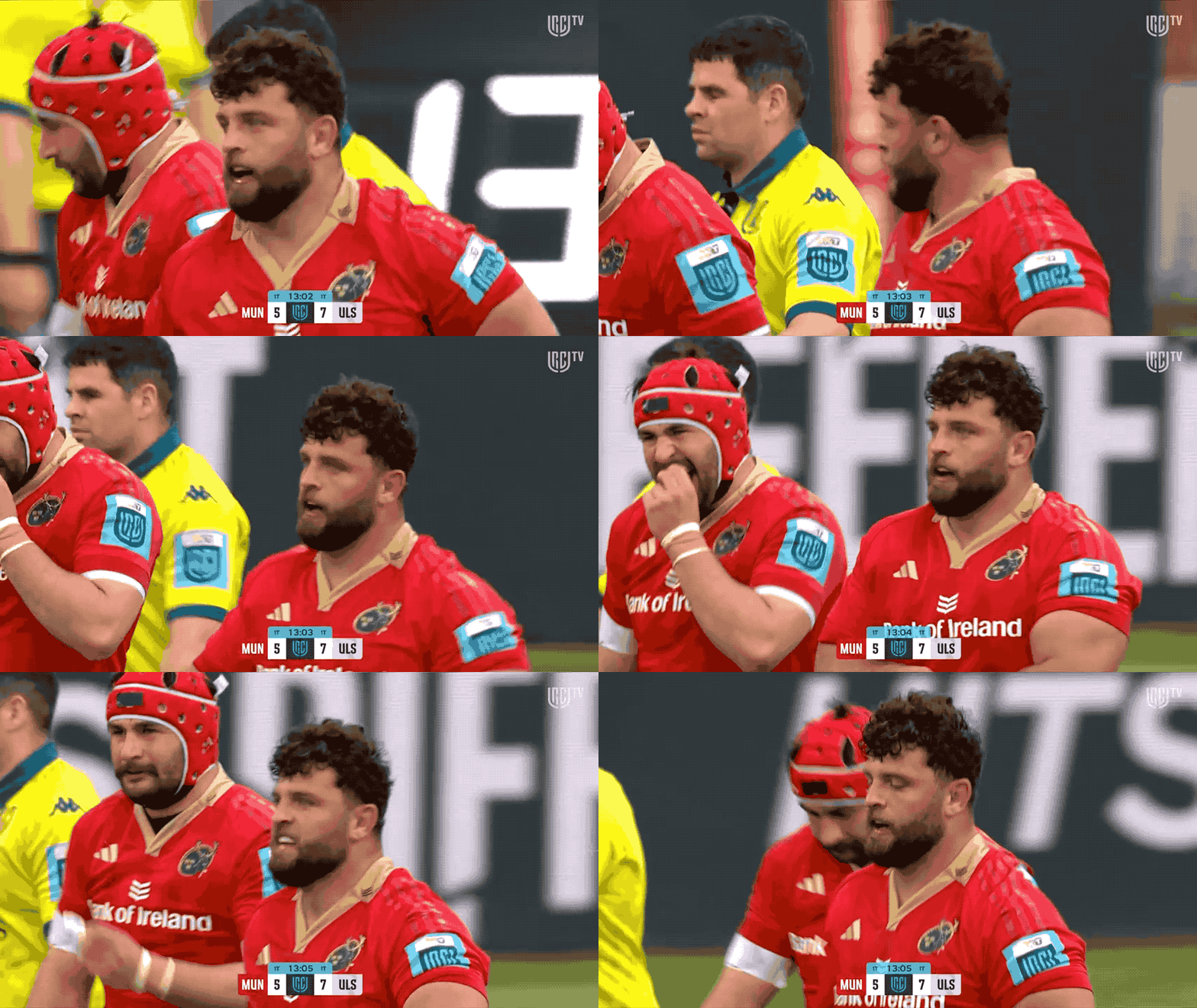
At Munster, Milne’s expected role is different. He was expected to carry and tackle at a higher volume because the context of the games he played was much different. From a scrummaging perspective, I think Milne is the much better, more seasoned of the two players, but that might well change as Boyle matures.
If Leinster were forced to choose between the two, I can see why they’d go with Boyle. He’s younger and has a bigger sting on both sides of the ball, as well as being a better defensive disruptor at the breakdown. He also hasn’t had to deal with the usual injury flurry that hits most young props at some stage, so that’s another positive, or a negative, depending on your view on statistics.
For Munster, Milne’s ability to draw defenders and carry at volume is a much more valuable commodity. When you judge Milne’s metrics against those of other elite starting looseheads, you can see why the organisation thinks his signing is such a coup. In this instance, the starting looseheads deal with fresh impact defenders, fresh tight carriers and fresh tighthead opponents in the scrum, so all their numbers reflect this. That isn’t to denigrate the game-changing impact of a good #17, but the two roles are different and have different key metrics.
Starting looseheads set the platform and establish dominance, finishing looseheads smash down tired bodies and hammer home the game.
With that, let’s have a look at Milne’s starts — frontloaded towards his key starts for Munster in the last four games of the season — relative to other elite looseheads.
Milne vs Elite Looseheads Attack
| Player | Carries / 80 | Dominant % | Gain‑line % | Commit 2+ % | Tackle Ev % | A. Rucks / 80 | A. Ruck Eff % |
|---|---|---|---|---|---|---|---|
| A. Porter | 7 | 31.8 | 47.8 | 63.0 | 4.7 | 25.3 | 83.1 |
| E. Genge | 11 | 32.6 | 48.5 | 63.1 | 28.2 | 14.3 | 75.9 |
| O. Nche | 10 | 33.0 | 41.9 | 75.3 | 14.9 | 11.4 | 81.8 |
| P. Schoeman | 14 | 32.0 | 57.1 | 62.7 | 8.5 | 14.7 | 70.5 |
| M. Milne | 10 | 39.0 | 49.2 | 81.4 | 11.9 | 19.2 | 83.9 |
Milne vs Elite Looseheads Defence
| Player | Tackles | Tackles / 80 | Tackle % | Dominant % | Def Rucks | Def Rucks / 80 | Def Ruck Eff % |
|---|---|---|---|---|---|---|---|
| A. Porter | 98 | 13.5 | 89.8 | 6.1 | 45 | 6.2 | 8.9 |
| E. Genge | 91 | 9.7 | 87.9 | 7.7 | 20 | 2.2 | 15.0 |
| O. Nche | 109 | 11.3 | 85.3 | 5.5 | 36 | 3.7 | 8.3 |
| P. Schoeman | 104 | 11.8 | 88.5 | 5.8 | 61 | 6.9 | 3.3 |
| M. Milne | 89 | 14.5 | 86.5 | 4.5 | 46 | 7.5 | 6.5 |
Ball‑Carrying
| Metric | Milne | Best in group | Notes |
|---|---|---|---|
| Carries per 80 min | 9.6 | Schoeman 14.3 | Solid volume—mid‑pack. |
| Dominant‑carry % | 39 % | Milne | Highest; shows real power. |
| Commit 2+ tacklers % | 81 % | Milne | Converts power into compressions for his side. |
| Gain‑line % | 49 % | Schoeman 57 % | Good, though not elite. |
| Tackle‑evasion % | 12 % | Genge 28 % | Not a sidestepper—he busts through. |
Attacking Ruck Work
| Metric | Milne | Best in group |
|---|---|---|
| Rucks per 80 min | 19.2 | Porter 25.3 |
| Ruck effectiveness % | 83.9 % | Milne (narrowly) |
Translation: Milne’s workload is high, and his clean‑outs are the most accurate of the lot — exactly the point of difference in his game that stacks well with his ball carrying power.
Defence
| Metric | Milne | Group high | Comment |
|---|---|---|---|
| Tackles per 80 min | 14.5 | Milne | He’s the busiest tackler here. |
| Tackle success % | 86.5 % | Porter 89.8 % | Solid but not top. |
| Dominant tackle % | 4.5 % | Genge 7.7 % | Lowest; hits more upright. |
| Defensive rucks per 80 | 7.5 | Milne | High effort but |
| Defensive ruck effect % | 6.5 % | Genge 15 % | Needs a better return. |
| Turnovers (tackles/steals) | 0 / 0 | Nche 2 / 2 | No real jackal threat yet. |
Summary
Strengths
- Elite power carrier — wins the collision and drags extra defenders more often than anyone else listed. Now, the corollary to this is that Munster’s front row outside of Milne was so old and lacking in top-end power that teams could double-tackle Milne without fear of getting too badly hurt on the next phase, but that makes his collision-winning even better.
- Heavy ruck contribution with best attacking‑clean‑out accuracy.
- Huge defensive work‑rate (tackles + ruck arrivals).
Areas to grow
- Turn some of that defensive volume into dominant tackles — lower the target and chop more.
- Develop jackal skills to turn high defensive‑ruck involvements into turnovers. He might feel that this part of the game brings too many injuries with it, but his counter-rucking is an area I’d look to work on.
- A slight rise in carry count or adding a bit of angle changing late in his carry could lift his overall offensive value.
At 26, Milne already does two premium loosehead jobs — ball‑carrying collisions and tidy attacking clean‑outs — at an elite level. If he sharpens his defensive impact (dominance and counter-ruck threat), he projects as someone in an excellent position to make a run at the Ireland squad.
His scrummaging is a key point of difference too, and it’s why I think Leinster were so reluctant to lose him before it became inevitable.
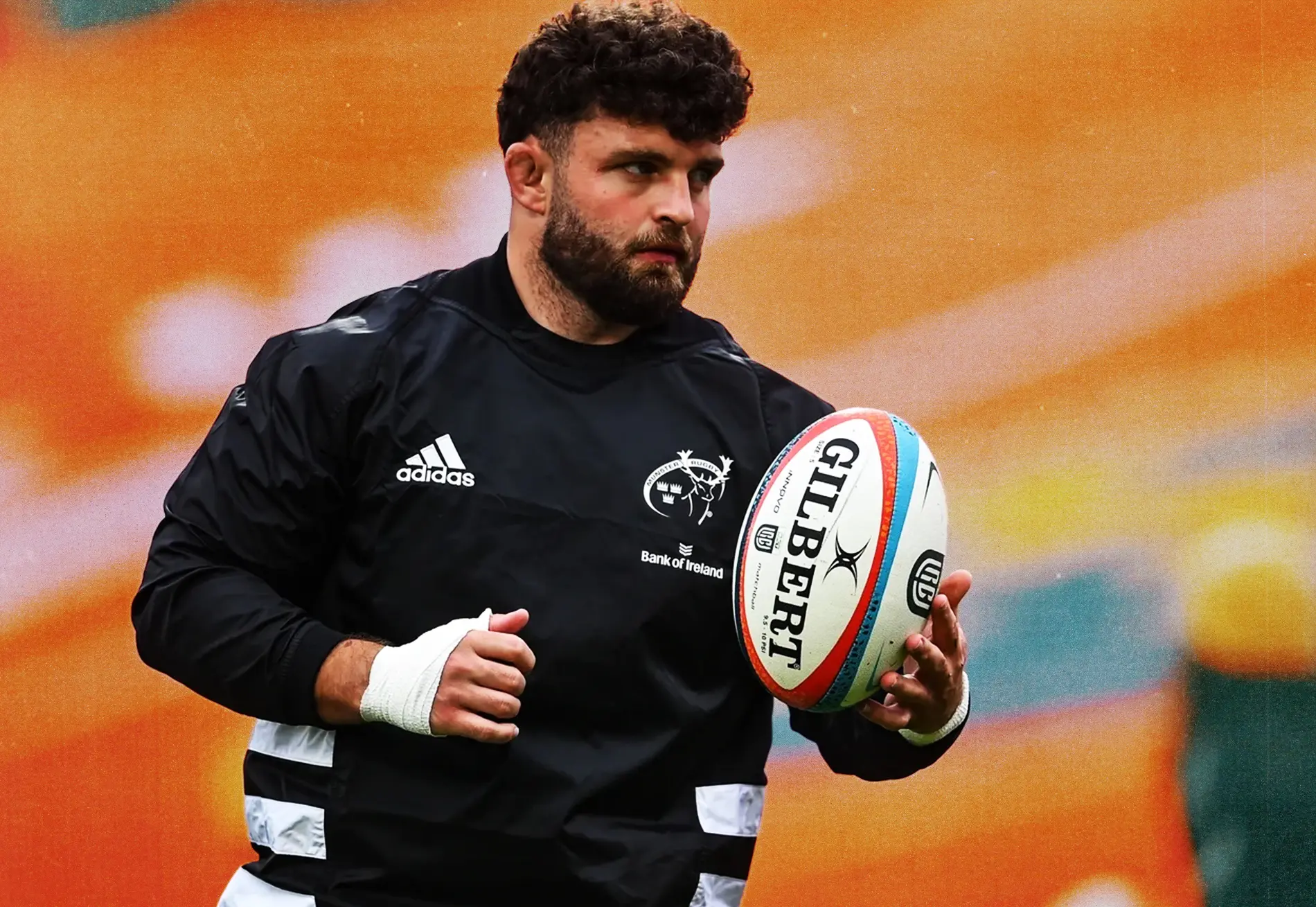
Boyle is still very raw as a scrummager. The same was true of Milne earlier in his career, but he’s developed into a really aggressive, tight-bore loosehead who uses his nuggety frame and massive upper body strength to bore-and-pop tightheads.
I know what you’re thinking; it’s very similar to Andrew Porter’s, let’s call it, controversial style as a loosehead. Milne has a lot of the same qualities as a scrummager. He’s really strong — not as strong as Porter, but more balanced in my opinion — and has the kind of squat shape that allows him to work an angle on taller tightheads
In a way, I wonder if his excellent work as a starting loosehead for Munster last season is proof that he should be Munster’s #17 when the bigger games roll around this season. Give him 25/30 minutes off the bench for Loughman to get after tired props and inside defenders.
Is that the kind of role that would allow him to bump those metrics and put him into the frame to chase that green #17 jersey? I really think it could.
Whatever way Munster uses Milne, I don’t think there’s a downside. He’s an explosive Power Forward Prop with the scrummaging power to lay a marker down in McMillan’s system next season.
