



You only realize how long 12 years actually is when you sit down and think about it. And, having wound my way through the joyous hysteria gripping the Thomond Suite, it was that very thought that I found preoccupying my mind as I dipped down in the elevator, and walked back out through the reception doors, the once blue canopy overhead now awash in the reds and oranges of dusk.
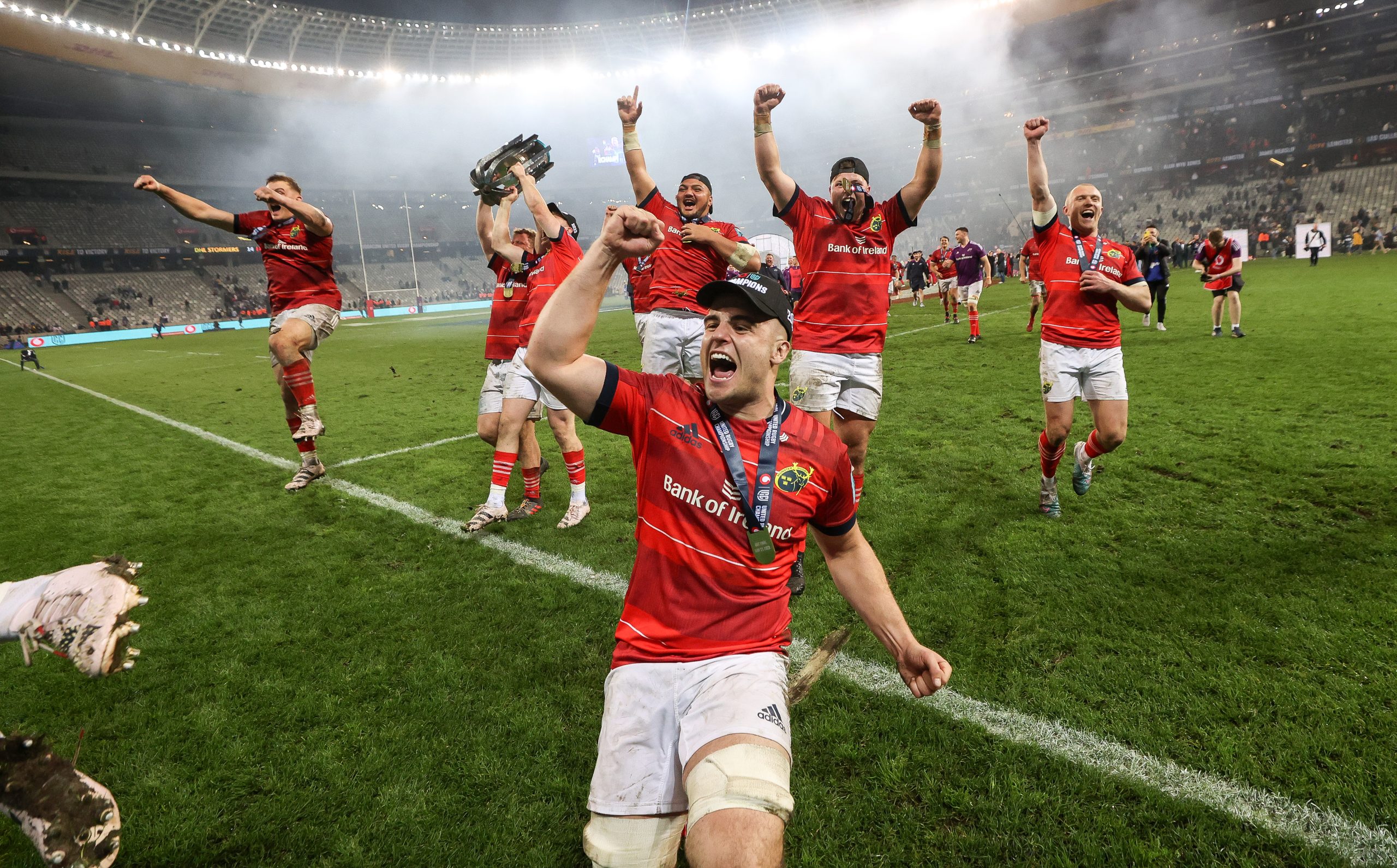
Munster’s homecoming as URC Champions (!) was everything I’d hoped it would be and then some. I’ve been writing and talking about Munster for eight years now. September 11th 2015 was when I set up this here website but Munster has been everpresent in my life for a lot longer than that. When I had nothing else, I always had this club.
I’ve gone from being ruined and broken in 2011, to homeless and hopeless in 2015 to being a family man with my beautiful fiance and my daughter, the light of my life. Twelve years is a long time.
This club has helped me to make that journey to get from one place to another. I owe everything to this club and its fans. The only thing missing was a trophy. We’d all come so close so many times. Finals, semi-finals, and worse, like last season and they all hurt because I love this club and the people around it.
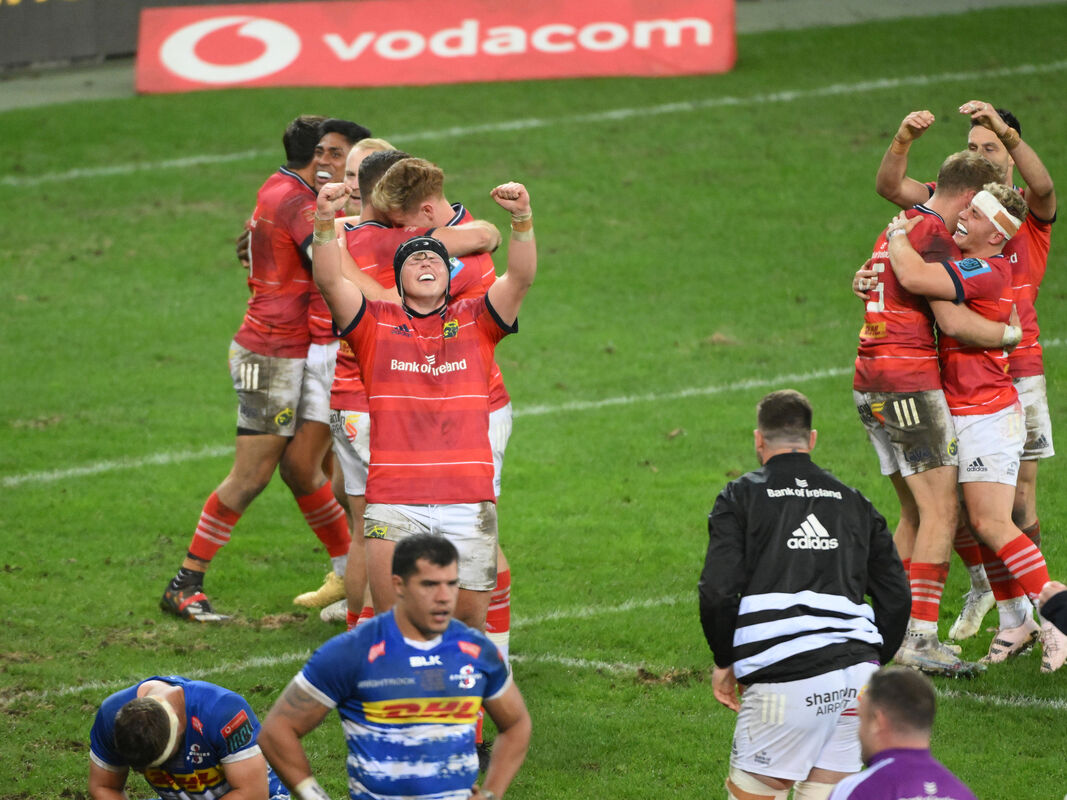
So when Andrea Piardi crouched down onto his haunches before extending his right arm and blowing his whistle to signal the end of the game on Saturday, I cried. I just sat down in the mobile home we were staying in down in Kerry and I sobbed away quietly – I couldn’t sob too loudly or I’d have woken the four-month-old baby lying next to me who I’d just gotten back to sleep a few minutes before John Hodnett’s try. When my partner came back from getting us a takeaway, she’d heard the score and hugged me coming in the door, burgers and all, with me red-eyed and snuffling.
It just meant so, so much.
So much, in fact, that when I realised that I’d spent the last few minutes blubbing and hugging instead of doing my job, I posted the tweet I’d dreamed about for years without the GIF I’d specifically made for it and spent years getting over with the audience.
IT'S A FIRST TITLE IN 12 YEARS FOR THE BAD GUYS!
MUNSTER WIN IT AT THE DEATH! #STOvMUN #SUAF
— Three Red Kings (@threeredkings) May 27, 2023
But I don’t care. I’ve been bimbling away since Saturday evening a mixture of hungover, euphoric, crying again and then emotionally hungover. Monday’s homecoming was like two Solpadeine, a two-hour nap and a breakfast roll for the soul. It topped me back up.
I forgot I was there in a media capacity and couldn’t help but sing along to SUAF, the Fields and Zombie. If I had a flag I’d have waved it too. As I drove home, I saw kids, teenagers, people in their 20s and 30s, mams and dads, older people –
Sport is about hope, for me. It isn’t real life so we can escape into sport when times get tough. For twelve years, Munster supporters have been living off the rationed hope earned three World Cup cycles ago. This win was like stumbling onto an oasis in the desert when the map in your hand said it was another year or two’s walk away.
On Saturday and then again on Monday, we all topped up on our hope as a new Munster, in more ways than one, showed a rugby world that had forgotten who we are that, once again, to the Brave and Faithful, Nothing is Impossible.
***
The Hard Way Championship of 2023 will be remembered, that’s for sure.
I’m struggling to think of a contextually similar run to a major club trophy in the last decade or more. The Scarlets’ play-off run away from home in 2016/17 is up there. They played Leinster and Munster away from home in the knockouts but there was only a semi-final and final involved around an hour’s flight away.
Leinster’s run to the Heineken Cup in 2010/11 was pretty difficult too when you consider they beat two multi-time champions back to back in the quarter-finals (Leicester) and semi-finals (Toulouse) before beating Northampton in the final with a big comeback win… but both of their knock-out games before the final were played at home.
I’ve gone through Super Rugby too and I can’t find any example where a team who were the lowest seed in every knockout game they played, all of whom were away from home and then managed to win the tournament in question.
A must-win two-game, two-week tour to South Africa, an away quarter-final, an away semi-final and an away final back in South Africa against higher-seeded opponents with enough kilometres travelled to go a quarter of the way to the moon in between?
There is only one entry on that list – Munster.
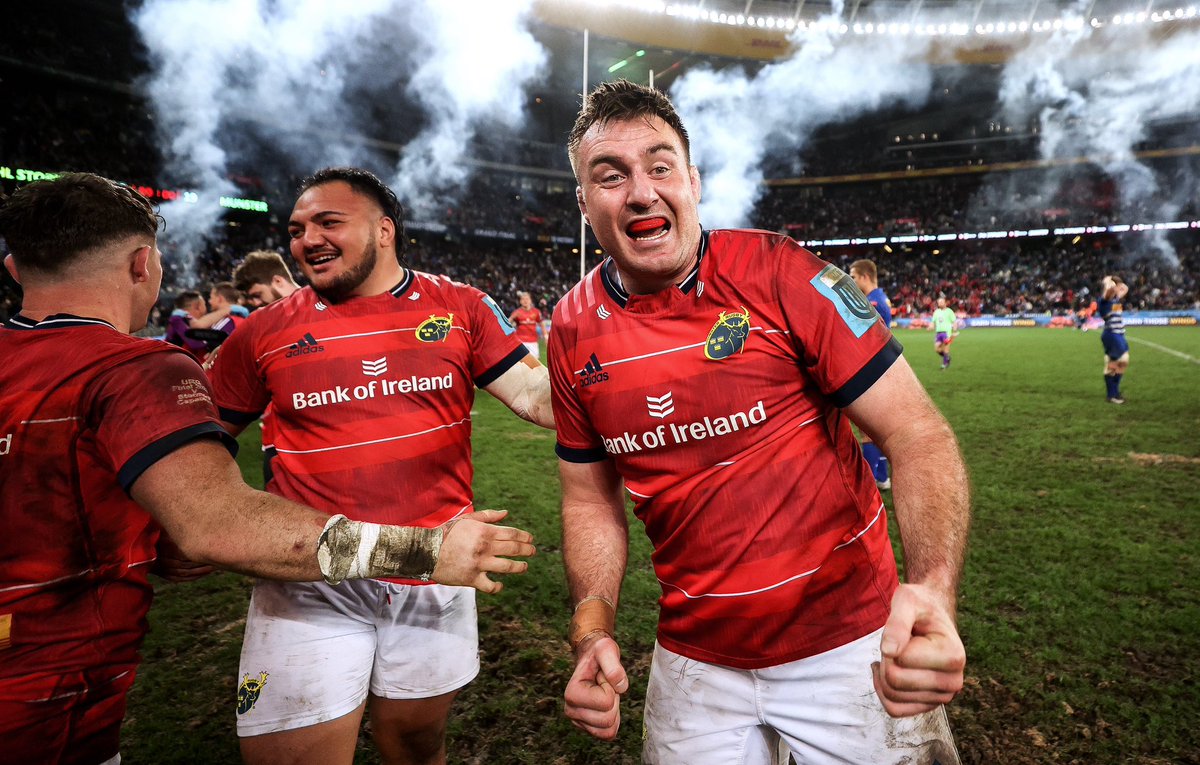
You can’t tell me that it’s “just the league”. That has zero credibility to me. This run that Munster went on is as arduous as anything you’ll find in the Champions Cup or Super Rugby and when you roll in that we haven’t played at home in two months (three games every month with one down week) it becomes a significant achievement.
This title was won on the hardest possible road against the toughest in-context opposition available. Glasgow made the Challenge Cup final this year and were top of the form chart over the last 10 games of the season where they earned 43 points. That was two more match points than the second-highest-ranked form team in the league over the same period, Leinster, who we would beat in the semi-final.
A lot has been made about Leinster’s supposed “B team” in that game but it featured 10 current internationals, three Lions (Henshaw, Kelleher and Conan), a capped Springbok, a one-cap All Black and the current Samoan captain along with the majority of the team that were one game from an unbeaten regular season. Nine of the matchday 23 will go to the World Cup with Ireland.
Prior to this game, the Stormers had only lost to one team at home since 2021 – that was Munster.
After that win two months ago, I wrote the following;
It shouldn’t be. We were as good there as we have been in years, genuinely, and if we can keep that level of execution up we have the tools to hurt any team in this league – and I mean, any team.
This was the kind of fundamentally impressive performance that can change the course of a team’s trajectory, not just for this season but for seasons to come. This team now know that when the heat came on in Cape Town when everyone expected them to wilt, they stood up, fought, and won.
They should make a song about that.
To go back and do it again, against a forewarned opponent in front of their biggest-ever home crowd in the Cape Town Stadium when the pressure was at its most intense is, well, doing it the Hard Way.
That win over the Stormers back in April was a turning point for the season so it was fitting, in a way, that the revival ended in the same stadium against the same opponent.
It’d be easy – fun, too – to immediately compare this win to the Munster Of Old but I don’t think it tracks. Sure, Munster won this and older Munster teams also won big games in tough circumstances but that’s where the comparisons end. This is a new Munster, winning in a way that is theirs, completely and uniquely.
This New Munster wins things their own way.
I want you to put the word out there that we back up.
***
This game was another installation in the “On-Ball vs Counter-Transition” battle that has raged over the last two seasons.
Chalk up another win for On-Ball rugby and Munster’s brand of it, specifically. Honestly, we should have won this game by 20+ points and, at the very least, had a victory lap second half with the Stormers chasing down a lead they weren’t built to ever achieve. I’ll put it like this; having watched the game back they didn’t create anything that we didn’t hand to them on a plate. We were that much better than these guys.
For me, a perfectly good Gavin Coombes try was chalked off that would have put real breathing room between the teams but it was the quality of our attacking work that stood out the most. The Stormers kicked long to us, as we knew they would, but we mixed up our multi-phase kick returns with a short, contestable box-kicking game they couldn’t live with, especially in the first half, so they had no means to generate the sort of unbalanced, highly vertical game they rely on to create the chaos they score tries off.
Munster could return their longer counter-transition starters to the 10m line at least, fight for position and then draw their back pin guards up into the primary defensive line.

Willemse is coming a long way for the ball there, to the extent that he overran his screen. He’s always likely to miss that kick on that approach. What do we do after the retained kick?
We go right after the transit of their front five behind the rucks, something we spoke about in the Red Eye.
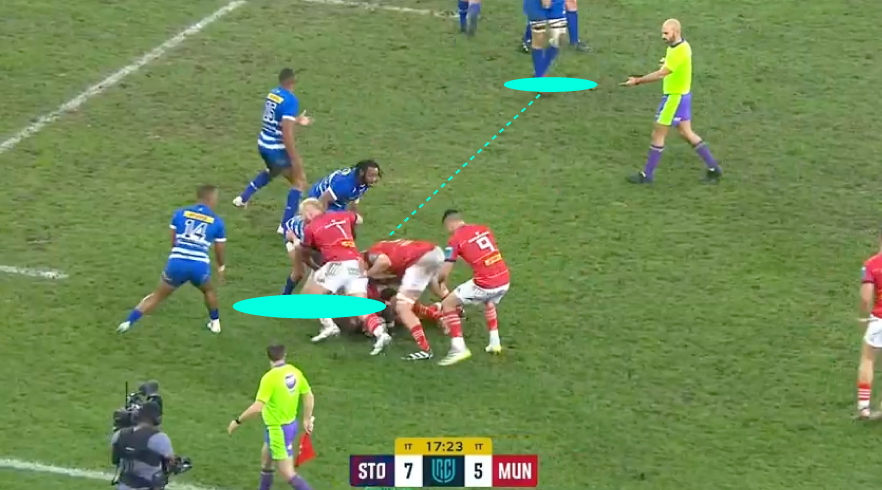
We went after this all game long because the Stormers kept leaving it. Watch Dweba here too, by the way – making a big deal of the ref getting in the way to the point he’s standing still. That’s a man whose head is gone.
Stormers are not closing the gap, to the point that Willemse is looking for the heavy cover to pillar up. We got right after it when Archer lays off the inside ball to Barron.

That gainline and resulting compression led to a cascading system failure that the Stormers couldn’t defend legally. When they managed to reset their defence, they left gaps elsewhere for Munster to target and we did so relentlessly.
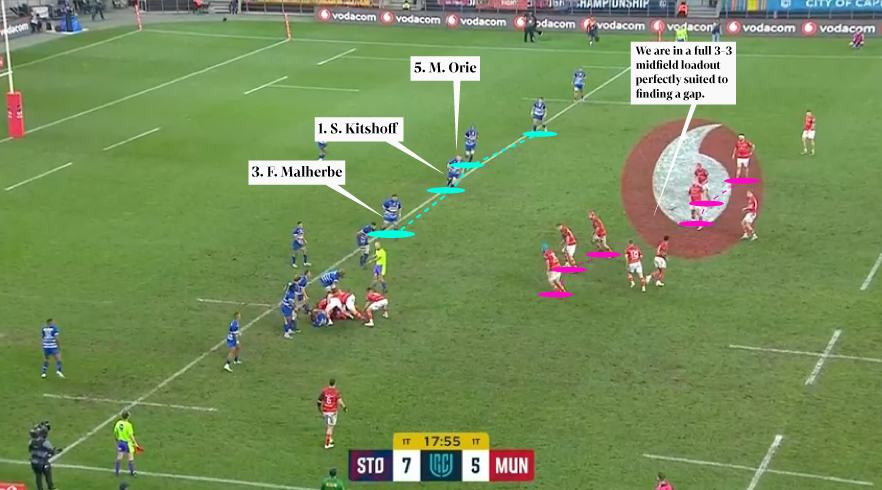
There’s too much space for that Stormers front five to cover and when we run the exact screen pass sequence that would hurt that very same set up, Orie had to slap down the ball to stop Crowley from picking two or three different linebreak options.

He’s got Loughman on the short ball running right through a gap with Haley, Fekitoa, Daly and Nash isolating Davids on the wing.
But we’re always looking to react and reload. When Haley takes the slapped-down ball, he finds Crowley looking for action with Hodnett and Daly as threat options.

Jack Crowley is an explosive athlete but he’s also very “video aware” in that he knows what opposition defence coaches are looking at when they try to clip him up. As a result, he’s building a tonne of pass feints into his game that makes him almost unreadable in any kind of space. Is it a pass or a feint? There’s no way to know and, because he establishes early and often that he will break around the corner and win collisions, you have to pick the pass or the carry – you can’t cover both. Dayamani is not a bad player but Crowley slices him up here and only a very good last-ditch tackle prevents him from going under the posts here.
Between the 20th and 3oth minute, we should have scored four tries. We were absolutely destroying the Stormers on back-to-back possessions while they had Roos in the bin.
But time and again, we went back to attacking the transit behind the ruck. We went after Malherbe here with a deliberate attack at that spacing;

One of those ones where the pitch was just heavy enough to give Malherbe a chance. When we attacked the ruck transit, it consistently opened up opportunities directly and indirectly as the Stormers scrambled.
Our Pass Per Carry ratio was where it always is – 1.4 – and that opened up lanes of attack all over the pitch as the Stormers zig-zagged back and forth to cover the gaps.
What principle did John Hodnett’s winning try operate on? How was the key compression forced?

RG’s tip on to Beirne traps the Stormers’ front five on the wrong side of the ruck and one pass from Casey to Crowley takes five forward defenders out of the game. From there, good players nail chances like that and that’s what we have. Good players playing in a system that suits them down to the ground.
 Look at Wycherley’s beautiful block line to take out the last forward just enough to make sure he won’t make it across in time.
Game over.
We shouldn’t have needed a late winner like this but… the Hard Way. We’re devotees to it. When we start putting away all of these opportunities there’s genuinely no team in this game we can’t beat and I genuinely believe that.
This game works for us. It allows our mostly heavy support forward build front row to nuke rucks and pick lanes in between our rampaging – if you’ll forgive my sublime verbiage there – back five and back five replacements who are all perfectly suited to what we’re trying to do.
The Stormers’ counter-transition game produced moments of real “swing” for them, as that style of play often does but when we grabbed any kind of settled possession, we looked capable of hurting them. Even when we were down by two points heading into the last 10 minutes I just… knew. I knew that if they gave us a shot, that would be all we’d need to take it all.
And when the opening came, we pulled the trigger.
Three minutes later, we’d won it all.
Defensively, we’d done a job on their maul for the majority of this contest by deliberately staying on the floor and denying them any kind of momentum. I think we made a fairly calculated decision that allowing them to play off the top was worth the risk because their set-piece strike game never really looked like hurting us.
Without that platform – outside of the one they scored from five metres out off the back of three or four handy penalties in a row – they always looked like losing this game because they had no reliable way to keep the ball out of our hands. And for this Munster team, that ball is a dangerous thing.
So it was fitting that a stuffed maul from just outside the 22 won the game for us.
We’d earned it.
The Hard Way.
Because that’s what Bad Guys do.
| Names | Rating |
|---|---|
| Jeremy Loughman | ★★★★★ |
| Diarmuid Barron | ★★★★★ |
| Stephen Archer | ★★★★★ |
| Jean Kleyn | ★★★★★ |
| Tadhg Beirne | ★★★★★ |
| Peter O'Mahony | ★★★★★ |
| John Hodnett | ★★★★★ |
| Gavin Coombes | ★★★★★ |
| Conor Murray | ★★★★★ |
| Jack Crowley | ★★★★★ |
| Shane Daly | ★★★★★ |
| Malakai Fekitoa | ★★★★★ |
| Antoine Frisch | ★★★★★ |
| Calvin Nash | ★★★★★ |
| Mike Haley | ★★★★★ |
| Niall Scannell | ★★★★ |
| Josh Wycherley | ★★★★ |
| Roman Salanoa | ★★★★ |
| RG Snyman | ★★★★★ |
| Alex Kendellen | ★★★★ |
| Craig Casey | ★★★★★ |
| Ben Healy | ★★★★★ |
| Keith Earls | ★★★★ |
